


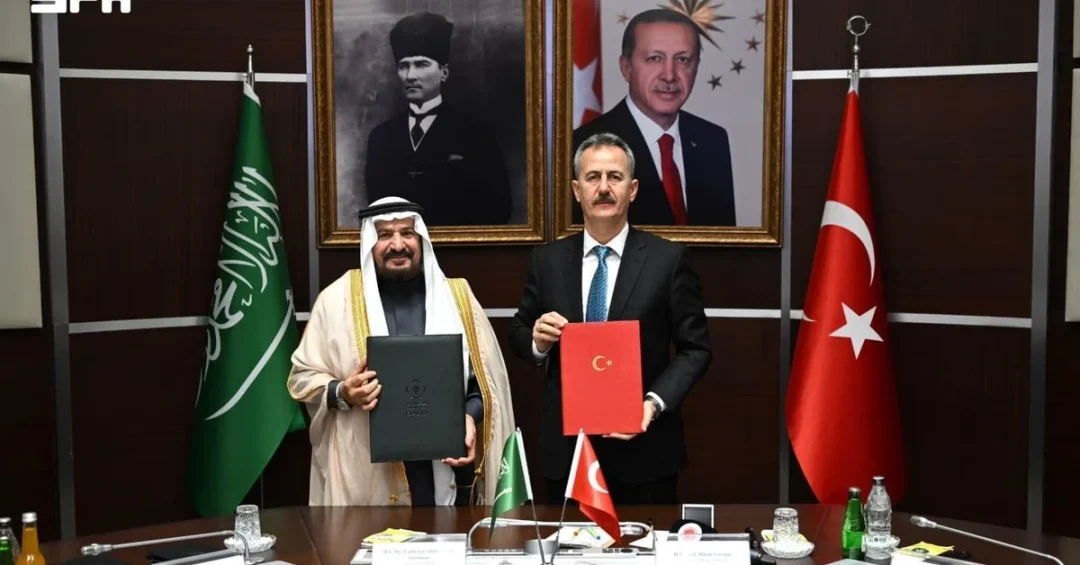
The General Authority for Defense Development (GADD) signed two memoranda of understanding (MoUs) in Ankara on Thursday, November 27, 2026, with Türkiye’s Secretariat of Defence Industries (SSB) and the Scientific and Technological Research Council of Türkiye (TÜBİTAK), aiming to strengthen cooperation in defense research, development, and innovation. The agreements were signed by GADD Governor Dr. Faleh bin Abdullah Al-Sulaiman, SSB Secretary of Defence Industries Professor Haluk Görgün, and TÜBİTAK President Professor Orhan Aydın. This development marks a significant step in Saudi Arabia’s efforts to enhance its defense technological capabilities and foster international partnerships aligned with Vision 2030.
Why does this matter now? As global security dynamics evolve, Saudi Arabia is proactively building alliances that promote technological self-sufficiency and strategic autonomy. The MoUs with Türkiye, a nation with a growing defense industry, underscore the Kingdom’s commitment to diversifying its partnerships and accessing cutting-edge expertise. This collaboration is expected to accelerate research in military technologies, facilitate knowledge exchange, and open doors for joint projects that could benefit both nations. It also reflects Saudi Arabia’s broader strategy to localize defense manufacturing and reduce dependency on foreign suppliers.
Context and Background
What led to this pivotal agreement? Saudi Arabia has been steadily expanding its defense sector under Vision 2030, which aims to localize 50% of military spending by 2030. The General Authority for Defense Development, established in 2021, is at the forefront of this effort, tasked with fostering research, development, and innovation in defense technologies. Türkiye, with its robust defense industry and technological prowess, emerges as a natural partner. The two countries have deepened ties in recent years, with high-level visits and prior agreements in defense and trade. The signing of these MoUs in Ankara signals a mutual desire to institutionalize cooperation and leverage complementary strengths.
Moreover, the partnership with TÜBİTAK, Türkiye’s premier scientific research institution, highlights a focus on foundational research and technological innovation. TÜBİTAK’s expertise in areas such as testing, qualification, and standards development can aid Saudi Arabia in building a robust defense R&D ecosystem. Meanwhile, SSB, which oversees Türkiye’s defense industry, brings experience in managing large-scale defense projects and fostering public-private partnerships. Together, these agreements create a framework for sustained collaboration that goes beyond mere procurement to encompass joint development and knowledge sharing.
Key Details of the MoUs
What exactly do these memoranda entail? The MoU with SSB focuses on expanding cooperation in defense research, development, and innovation. It aims to strengthen the exchange of knowledge, expertise, and technical capabilities, and to explore opportunities for joint research projects and programs. This could include collaborative work on emerging technologies such as unmanned systems, cybersecurity, and advanced materials. The MoU with TÜBİTAK is more specific, covering the organization of reciprocal technical visits, training programs, workshops, and scientific conferences and seminars. It also includes the exchange of expertise in testing, qualification, and evaluation, as well as in technical specifications and standards. These activities are designed to build capacity and ensure that Saudi Arabia’s defense industry adheres to international best practices.
The signatories emphasized the importance of these agreements in fostering a long-term partnership. Dr. Faleh bin Abdullah Al-Sulaiman, Governor of GADD, stated that the MoUs represent a strategic step toward achieving the Kingdom’s defense localization goals. Professor Haluk Görgün of SSB highlighted Türkiye’s readiness to share its experience and collaborate on innovative projects. Professor Orhan Aydın of TÜBİTAK noted that scientific and technological cooperation is essential for addressing future security challenges. The agreements are expected to facilitate the transfer of technology and the development of human capital, which are critical for Saudi Arabia’s defense industrialization.
International and Regional Impact
How will this partnership resonate beyond Saudi Arabia and Türkiye? The MoUs signal a strengthening of ties between two influential nations in the Middle East and beyond. For Saudi Arabia, it diversifies its defense partnerships, traditionally dominated by Western countries, and opens avenues for cooperation with a technologically advanced Muslim-majority nation. This aligns with the Kingdom’s foreign policy of building bridges and fostering South-South cooperation. For Türkiye, the agreements provide access to Saudi Arabia’s growing defense market and opportunities for joint ventures. Regionally, the collaboration could contribute to stability by enhancing the defense capabilities of a key player in the Gulf. It also underscores the growing trend of intra-regional defense cooperation, reducing reliance on external powers.
On the international stage, the MoUs reflect a multipolar approach to defense procurement and development. Saudi Arabia’s engagement with Türkiye complements its existing partnerships with other nations and reinforces its position as a responsible global actor. The focus on research and innovation aligns with global trends toward technological superiority in defense. Moreover, the agreements could pave the way for trilateral or multilateral initiatives, potentially involving other friendly nations. As Saudi Arabia continues to modernize its armed forces, such collaborations are essential for maintaining a qualitative edge and contributing to regional security architectures.
Economic and Strategic Significance
What are the economic and strategic benefits for Saudi Arabia? The localization of defense industries is a core component of Vision 2030, aimed at creating jobs, fostering innovation, and reducing military expenditure abroad. By partnering with Türkiye, Saudi Arabia can accelerate the development of its domestic defense sector, benefiting from Türkiye’s experience in cost-effective production and indigenous development. The MoUs are expected to stimulate investment in R&D, create high-skilled employment opportunities, and nurture a ecosystem of small and medium-sized enterprises. Strategically, the collaboration enhances Saudi Arabia’s defense self-reliance, ensuring a steady supply of critical technologies and reducing vulnerability to external pressures.
Furthermore, the agreements bolster Saudi Arabia’s position as a regional leader in technology and innovation. They align with the National Industrial Development and Logistics Program (NIDLP), which aims to transform the Kingdom into a global industrial powerhouse. The defense sector is a key pillar of this program, with targets to increase local content and exports. By working with TÜBİTAK and SSB, Saudi Arabia can tap into Türkiye’s advanced research infrastructure and manufacturing capabilities, shortening the learning curve and avoiding costly pitfalls. This partnership also opens doors for Saudi defense products to access new markets, leveraging Türkiye’s export networks.
Vision 2030 Alignment
How do these MoUs fit into Saudi Arabia’s long-term vision? Vision 2030, launched in 2016, seeks to diversify the economy, reduce dependence on oil, and develop a knowledge-based society. The defense sector is a critical enabler, with goals to localize 50% of military spending and create a sustainable defense industry. The partnership with Türkiye directly supports these objectives by enhancing research and development capabilities, fostering innovation, and building human capital. It also strengthens international cooperation, a key pillar of the Vision, by positioning Saudi Arabia as a collaborative global partner. The MoUs exemplify how the Kingdom is leveraging international partnerships to accelerate its transformation.
Looking ahead, the collaboration with Türkiye is expected to yield tangible outcomes in the coming years, including joint research projects, training programs, and technological breakthroughs. These will not only benefit the defense sector but also spill over into civilian industries, driving economic growth and diversification. As Saudi Arabia continues to invest in its defense R&D ecosystem, partnerships like this will be instrumental in achieving self-sufficiency and global competitiveness. The Kingdom’s leadership remains committed to fostering such alliances, which contribute to regional stability and prosperity. In essence, these MoUs are more than agreements; they are a testament to Saudi Arabia’s forward-looking approach and its determination to shape a secure and prosperous future.
20 Questions
Q1. What did the General Authority for Defense Development sign in Ankara?
A1. GADD signed two memoranda of understanding with Türkiye’s Secretariat of Defence Industries and the Scientific and Technological Research Council of Türkiye on November 27, 2026.
Q2. Who signed the MoUs on behalf of Saudi Arabia?
A2. Dr. Faleh bin Abdullah Al-Sulaiman, Governor of the General Authority for Defense Development, signed both agreements.
Q3. Who signed on behalf of Türkiye?
A3. Professor Haluk Görgün, Secretary of Defence Industries, signed for SSB, and Professor Orhan Aydın, President of TÜBİTAK, signed for his institution.
Q4. What is the main objective of these MoUs?
A4. The MoUs aim to strengthen cooperation in defense research, development, and innovation, and to enhance the exchange of knowledge, expertise, and technical capabilities.
Q5. What areas does the cooperation with TÜBİTAK cover?
A5. It covers reciprocal technical visits, training programs, workshops, scientific conferences, and the exchange of expertise in testing, qualification, evaluation, and technical standards.
Q6. How does this partnership align with Saudi Vision 2030?
A6. It supports Vision 2030 by advancing defense localization, fostering innovation, and building human capital, which are key goals of the Kingdom’s transformation plan.
Q7. What is the significance of partnering with Türkiye?
A7. Türkiye has a growing defense industry and advanced research capabilities, making it a valuable partner for Saudi Arabia’s defense industrialization efforts.
Q8. Will these MoUs lead to joint research projects?
A8. Yes, the MoUs explore opportunities for joint research projects and programs in defense technologies and systems.
Q9. How does this affect Saudi Arabia’s defense self-reliance?
A9. It enhances self-reliance by facilitating technology transfer, capacity building, and the development of local defense industries.
Q10. What role does GADD play in Saudi Arabia’s defense sector?
A10. GADD is responsible for fostering research, development, and innovation in defense technologies to support the Kingdom’s localization goals.
Q11. Are there any training components in the agreements?
A11. Yes, the MoU with TÜBİTAK includes training programs, workshops, and seminars to build technical expertise.
Q12. How will this cooperation benefit Türkiye?
A12. It provides Türkiye with access to Saudi Arabia’s defense market and opportunities for joint ventures and technological exchange.
Q13. What is the expected timeline for implementation?
A13. The MoUs establish a framework for cooperation; specific projects and timelines will be developed through joint committees and working groups.
Q14. Does this partnership include technology transfer?
A14. Yes, the exchange of knowledge and expertise implies technology transfer, which is essential for localizing defense capabilities.
Q15. How does this impact regional security?
A15. It contributes to regional stability by enhancing the defense capabilities of Saudi Arabia, a key player in the Gulf region.
Q16. Will other countries be involved in this cooperation?
A16. The MoUs are bilateral, but they may open doors for broader multilateral initiatives in the future.
Q17. What economic benefits are expected for Saudi Arabia?
A17. The agreements are expected to stimulate investment in R&D, create high-skilled jobs, and support the growth of local defense industries.
Q18. How does this fit into Saudi Arabia’s foreign policy?
A18. It reflects the Kingdom’s strategy to diversify partnerships and strengthen ties with influential nations, promoting South-South cooperation.
Q19. What are the next steps after signing these MoUs?
A19. The parties will establish joint working groups to define specific projects, exchange visits, and begin implementing cooperative activities.
Q20. What does this mean for the future of Saudi-Türkiye relations?
A20. It marks a deepening of bilateral ties, with potential for expanded cooperation in defense, technology, and economic sectors, benefiting both nations.
Reader Feedback
We value your thoughts. Please share your feedback on this article.
Your feedback helps us improve our coverage.
Related articles
 GEA and Misk Launchpad Partner to Boost Entertainment Tech Startups
 Saudi Weather Forecast for Friday: Thunderstorms, Fog, and Dust Winds
 Bahrain Condemns Houthi Attacks on Saudi Facilities
 KSrelief Distributes 1,006 Food Baskets in Aden, Yemen
 MENA Effie Awards Honor 100+ Winners in Riyadh
 KSrelief Distributes 1,100 Food Baskets in Yemen’s Al-Mahrah