


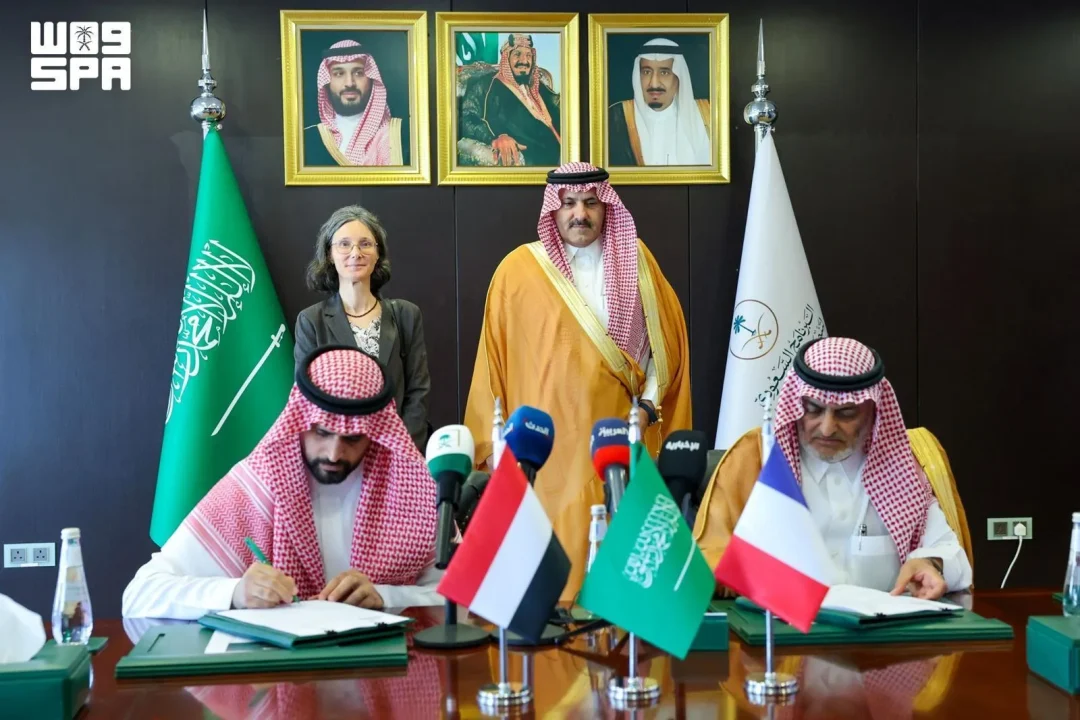
TAIZ, YEMEN — The Saudi Development and Reconstruction Program for Yemen (SDRPY) has launched a project to enhance urban water systems in Taiz, valued at SAR3.5 million, in partnership with Selah Foundation for Development. The initiative coincides with the launch of a French project aimed at improving the efficiency and sustainability of water and sanitation services in the same governorate.
Seperti dilaporkan kantor berita Saudi SPA pada 9 September 2026, the integration of these projects has resulted in a total funding amount of SAR7.4 million, as part of cooperation between SDRPY and the Crisis and Support Centre of the French Ministry for Europe and Foreign Affairs.
The projects aim to enhance the resilience of urban infrastructure to climate change-related impacts, directly benefiting more than 139,000 people and indirectly benefiting over 242,000 others. The SDRPY project is part of a broader initiative to coordinate international efforts, integrate roles, and mobilize resources to support development in Yemen.
The projects include building the institutional and technical capacities of the local water and sanitation corporation, developing asset management and operation and maintenance processes, and reducing water losses.
The SDRPY project is one of 62 water-sector initiatives the program has undertaken across various Yemeni governorates, supporting basic services and improving the quality of life for the Yemeni people. The SDRPY has provided 300 projects and initiatives in various Yemeni governorates, some completed and others underway, across eight key sectors: education, health, transport, water, energy, agriculture and fisheries, development programs, and government capacity building and support.
What does this Saudi-French collaboration mean for the future of water infrastructure in Yemen? How will the integration of these projects address the urgent needs of Taiz residents? Why is international cooperation essential for rebuilding Yemen’s urban systems? What impact will the SAR7.4 million in combined funding have on the ground? How does this project fit into SDRPY’s broader strategy across Yemen? These are the questions that underscore the significance of the latest development in Taiz.
The launch of the SDRPY project in Taiz, valued at SAR3.5 million, marks another step in Saudi Arabia’s ongoing efforts to support Yemen’s recovery. Implemented in partnership with the Selah Foundation for Development, the project focuses on enhancing urban water systems, a critical need in a governorate that has suffered from years of conflict and neglect. The timing of the project is notable, as it coincides with the launch of a French initiative aimed at improving the efficiency and sustainability of water and sanitation services. Together, these projects represent a coordinated international approach to addressing Yemen’s water crisis.
The integration of the Saudi and French projects has resulted in a total funding amount of SAR7.4 million, reflecting a joint effort between SDRPY and the Crisis and Support Centre of the French Ministry for Europe and Foreign Affairs. This collaboration is part of a broader initiative to coordinate international efforts, integrate roles, and mobilize resources to support development in Yemen. The combined funding underscores the importance of partnerships in tackling complex challenges that no single actor can address alone.
The projects are designed to enhance the resilience of urban infrastructure to climate change-related impacts. Yemen, like many countries in the region, faces increasing pressure from water scarcity, erratic rainfall, and extreme weather events. By strengthening the capacity of local water and sanitation corporations, the projects aim to ensure that communities can withstand and adapt to these challenges. The direct beneficiaries of the projects number more than 139,000 people, while over 242,000 others are expected to benefit indirectly. These figures highlight the scale of the impact that even relatively modest investments can have when targeted effectively.
Key components of the projects include building the institutional and technical capacities of the local water and sanitation corporation, developing asset management and operation and maintenance processes, and reducing water losses. These measures are essential for ensuring the long-term sustainability of water services. Capacity building helps local institutions plan, manage, and maintain infrastructure more effectively, while asset management and maintenance processes ensure that investments are protected over time. Reducing water losses is particularly important in a context where every drop counts.
The SDRPY project is one of 62 water-sector initiatives the program has undertaken across various Yemeni governorates. This portfolio reflects a sustained commitment to supporting basic services and improving the quality of life for the Yemeni people. Water is a foundational sector, and investments in it have ripple effects across health, education, and economic opportunity. By addressing water needs, SDRPY is helping to create conditions for broader recovery and development.
Overall, SDRPY has provided 300 projects and initiatives in various Yemeni governorates, some completed and others underway, across eight key sectors: education, health, transport, water, energy, agriculture and fisheries, development programs, and government capacity building and support. This comprehensive approach recognizes that development is multidimensional and that progress in one sector can reinforce progress in others. The water projects in Taiz are a case in point, as they contribute not only to water security but also to public health, economic productivity, and social stability.
What does the future hold for Taiz’s water infrastructure? How will the local community experience the benefits of these projects? What lessons can be drawn from the Saudi-French cooperation for other regions in Yemen? These questions remain open, but the launch of the projects provides a concrete basis for optimism. The involvement of the Selah Foundation for Development, a local partner, suggests that the projects are rooted in community needs and priorities. Local ownership is often a key factor in the success and sustainability of development interventions.
The French project, launched in parallel, focuses on improving the efficiency and sustainability of water and sanitation services. France’s involvement, through the Crisis and Support Centre of the French Ministry for Europe and Foreign Affairs, brings additional resources and expertise to the table. The alignment of Saudi and French efforts demonstrates a shared recognition of the urgency of Yemen’s water crisis and the value of coordinated action. By working together, the two countries can achieve more than they could separately.
Climate change adds a layer of complexity to water management in Yemen. Changing rainfall patterns, rising temperatures, and more frequent droughts threaten water availability and quality. The projects in Taiz explicitly aim to enhance the resilience of urban infrastructure to these impacts. Resilience means not only withstanding shocks but also adapting to changing conditions over time. The emphasis on capacity building and asset management is central to this goal, as it equips local institutions with the tools they need to respond to evolving challenges.
The direct and indirect beneficiary figures—more than 139,000 and over 242,000, respectively—provide a sense of the human dimension of the projects. Behind these numbers are families, communities, and individuals whose daily lives will be affected by improved water and sanitation services. Access to clean water is a basic human right, and its provision is a prerequisite for health, dignity, and development. The projects in Taiz are therefore not just about infrastructure; they are about people.
How will the international community build on this momentum? What role will other donors and partners play in supporting Yemen’s water sector? These are questions that will shape the next phase of recovery. The Saudi-French cooperation in Taiz offers a model of how countries can pool resources and expertise to address shared challenges. It also highlights the importance of aligning with local institutions and priorities.
The SDRPY’s broader portfolio of 300 projects across eight sectors illustrates the scale of Saudi Arabia’s engagement in Yemen. The program’s work in water is particularly critical, given the country’s acute water scarcity. By supporting 62 water-sector initiatives, SDRPY is helping to build a foundation for long-term water security. The project in Taiz, with its focus on urban water systems, is a vital part of this effort.
What can be learned from the integration of the Saudi and French projects? How can similar collaborations be replicated in other sectors and regions? The answers to these questions will emerge as the projects are implemented and their impacts are assessed. For now, the launch of the projects represents a tangible step forward for Taiz and a demonstration of what international cooperation can achieve.
The source material does not provide details on the specific timelines for the projects, the exact scope of the French project, or the mechanisms for monitoring and evaluation. It also does not specify how the SAR7.4 million in total funding is allocated between the Saudi and French components, beyond the SAR3.5 million figure for the SDRPY project. These omissions leave some questions unanswered, but the core facts of the collaboration and its intended benefits are clear.
As Taiz moves forward, the success of these projects will depend on continued commitment from all partners, effective implementation on the ground, and the active participation of local communities. The stakes are high, but so is the potential for positive change. The Saudi-French cooperation in Taiz is a reminder that even in the most challenging contexts, coordinated action can make a difference.
What is the value of the SDRPY project in Taiz? The SDRPY project to enhance urban water systems in Taiz is valued at SAR3.5 million. It is implemented in partnership with the Selah Foundation for Development. The project coincides with a French initiative, and together they have a total funding amount of SAR7.4 million. This funding is part of cooperation between SDRPY and the Crisis and Support Centre of the French Ministry for Europe and Foreign Affairs.
How many people will benefit from the water projects in Taiz? The projects aim to directly benefit more than 139,000 people and indirectly benefit over 242,000 others. These figures reflect the scale of the impact on the local population. The projects focus on enhancing the resilience of urban infrastructure to climate change-related impacts, improving water and sanitation services for communities in Taiz.
What are the main components of the projects? The projects include building the institutional and technical capacities of the local water and sanitation corporation, developing asset management and operation and maintenance processes, and reducing water losses. These measures are designed to ensure the sustainability and efficiency of water services. The integration of Saudi and French efforts supports these objectives through combined funding and expertise.
How does this project fit into SDRPY’s broader work in Yemen? The SDRPY project is one of 62 water-sector initiatives the program has undertaken across various Yemeni governorates. Overall, SDRPY has provided 300 projects and initiatives in Yemen, some completed and others underway, across eight key sectors including education, health, transport, water, energy, agriculture and fisheries, development programs, and government capacity building.
What is the role of France in these projects? France, through the Crisis and Support Centre of the French Ministry for Europe and Foreign Affairs, is cooperating with SDRPY on the integrated projects. The French project aims to improve the efficiency and sustainability of water and sanitation services. The collaboration has resulted in a total funding amount of SAR7.4 million, combining Saudi and French resources to support development in Taiz.
What does the source not specify about the projects? The source does not provide specific timelines for the projects, the exact scope of the French project, or mechanisms for monitoring and evaluation. It also does not detail how the SAR7.4 million in total funding is allocated between the Saudi and French components beyond the SAR3.5 million figure for the SDRPY project. These details remain unspecified in the SPA report.
Selengkapnya tentang topik ini: Berita KSA, Ekonomi
Related articles
 Aljazair kutuk serangan terhadap kota-kota di Arab Saudi
 Dewan Kurma Internasional dan Inisiatif Hijau Timur Tengah jajaki kerja sama
 Pusat Operasi Keamanan Nasional terima 2,79 juta panggilan 911 pada Agustus 2026
 Riyadh jadi tuan rumah Forum Global UNESCO tentang Etika AI 2026
 NCVC daftarkan 26 taman nasional Saudi ke register kawasan lindung
 Raja Salman ucapkan selamat Hari Kemerdekaan Tajikistan kepada Presiden Rahmon