
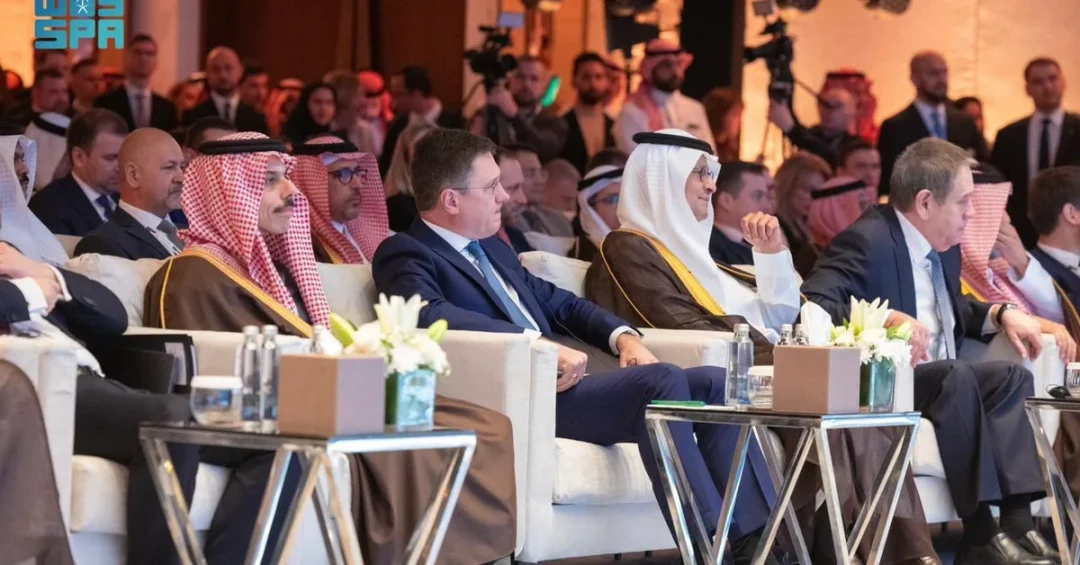
Saudi Arabia and Russia have signed a landmark agreement granting mutual visa exemptions for their citizens, signaling a new chapter in bilateral engagement that spans tourism, business, and people-to-people ties. The accord was concluded in Riyadh on the sidelines of the Saudi-Russian Investment and Business Forum on December 1, 2025, an event inaugurated by Minister of Energy Prince Abdulaziz bin Salman bin Abdulaziz and Russian Deputy Prime Minister Alexander Novak. The agreement itself was signed by Saudi Minister of Foreign Affairs Prince Faisal bin Farhan bin Abdullah and Deputy Prime Minister Novak.
\\n
Under the terms of the deal, holders of all passport categories—diplomatic, special, and regular—will be eligible for visa-free entry. Travelers may visit for tourism, business, or to see relatives and friends, for stays of up to 90 days within a year, whether in a single continuous trip or across multiple visits. This broad coverage reflects a shared commitment to streamline entry procedures and to make short-term travel more accessible to ordinary citizens as well as officials.
\\n
The exemption, however, is not a blanket waiver. It does not apply to travel for work, study, residency, or the Hajj pilgrimage, all of which will continue to require special visas. By clearly delineating permitted and excluded purposes, both governments aim to encourage legitimate short-term mobility while maintaining established processes for longer-term or specialized stays.
\\n
For Saudi Arabia, the agreement represents a notable first: Russia is the inaugural country with which the Kingdom has concluded a mutual visa exemption that explicitly includes holders of regular passports. The step underscores the Kingdom’s accelerating efforts to open its doors under its economic transformation agenda, while reinforcing the practical infrastructure that supports two-way exchanges in investment, trade, and culture.
\\n
The timing alongside the Saudi-Russian Investment and Business Forum underscores the economic logic. Easier travel can catalyze deal-making, site visits, and follow-on negotiations, lowering friction for entrepreneurs and investors. For tourism operators and cultural institutions, the reduction in paperwork can translate into more predictable itineraries, joint events, and exchange programs that deepen mutual understanding.
\\n
Energy coordination has long anchored Saudi-Russian engagement, but the new travel regime broadens the relationship’s foundation. By facilitating thousands of low-cost, short-duration visits, both countries can seed partnerships in sectors as varied as hospitality, sports, entertainment, education exchanges, healthcare services, and advanced manufacturing. This people-centered connectivity complements government-level coordination and creates more resilient ties that extend beyond commodity cycles.
\\n
Implementation details typically proceed through administrative guidance by border and consular authorities, and travelers should expect clear instructions from both governments as the exemption takes effect. Airlines, tour operators, and chambers of commerce are also poised to adjust their offerings in anticipation of increased demand, from additional routes to tailored business delegations.
\\n
Ultimately, the visa waiver is a practical instrument with symbolic weight. It announces an intent to make the Saudi-Russian relationship more immediate and personal, enabling spontaneous travel for meetings, exploration, and family connections. By lowering barriers for regular passport holders and codifying straightforward rules for short stays, Riyadh and Moscow have set the stage for a wider arc of cooperation that can be measured not just in signed agreements, but in the steady flow of visitors and ideas between the two nations.