


<![CDATA[
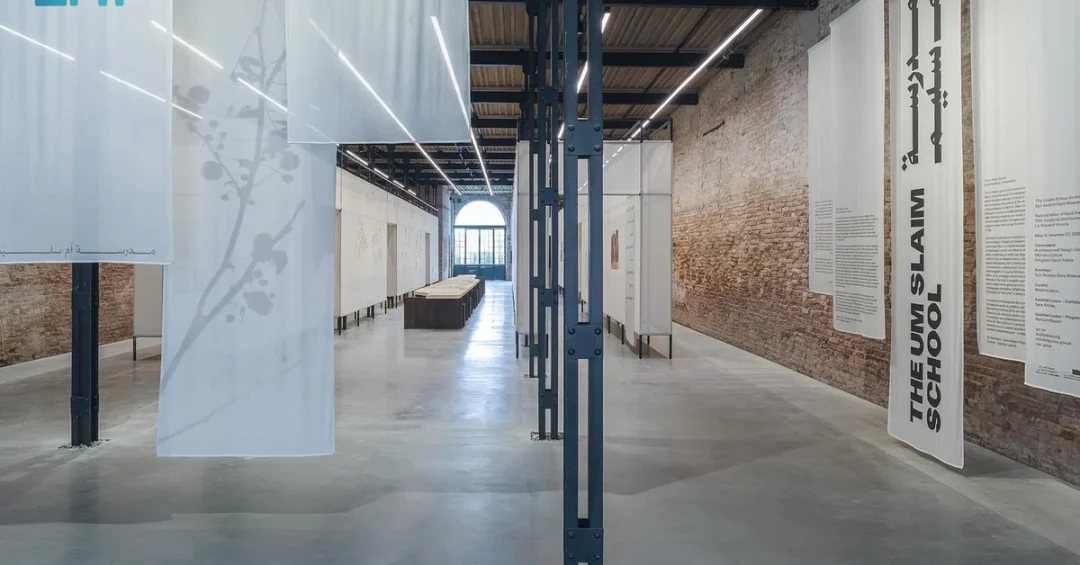
The Saudi Pavilion concluded its participation in La Biennale di Venezia 2025 on 1 December with the architectural exhibition “Um Slaim School: An Architecture of Connection,” a six-month program that ran from 10 May to 23 November and spotlighted research on Najdi architecture in Riyadh, according to the Saudi Press Agency. Presented by Syn Architects, led by architects Sara Alissa and Nojoud Alsudairi, the exhibition was curated by Beatrice Leanza with support from assistant curator Sara Almutlaq.
The pavilion’s curatorial approach brought Saudi heritage and contemporary practice into conversation, offering international audiences a structured, evidence-based exploration of building traditions from the Kingdom’s central region. The conclusion of the program underscores Saudi Arabia’s growing cultural presence on leading global platforms and its commitment to knowledge sharing within the international architecture community.
Context and Background
La Biennale di Venezia is among the world’s most influential cultural forums, convening national pavilions and practitioners to present cutting-edge ideas in art and architecture. The Saudi Pavilion’s 2025 participation centered on the Um Slaim Lab, a research initiative launched in 2021 that documents the evolution of Najdi architecture and examines how local methods, materials, and spatial practices adapt to contemporary life in Riyadh.
By framing the exhibition as an open, interactive archive, the pavilion emphasized rigorous documentation and public engagement. Visitors encountered traditional and contemporary building materials alongside archival and recent photographs, models, films, and audio recordings, enabling a multi-sensory understanding of how Najdi forms and techniques continue to inform present-day urban and domestic environments.
Key Details
The “Um Slaim School” exhibition highlighted the architectural language of central Saudi Arabia—characterized historically by earthen construction, courtyards, and climate-responsive design—and explored how these elements are being reinterpreted amid rapid urban development. The pavilion’s research-driven format offered tangible points of reference, from material samples to recorded testimonies, demonstrating how documentation can bridge academic inquiry and practice.
At the close of its cultural program, the pavilion hosted a panel titled “Building Participatory Infrastructures – Hyperlocal Practices and Connective Organizations.” The session brought together the project team from Syn Architects with regional and international voices, including architect Noura Al-Sayeh Holtrop and writer-curator Shumon Basar. The discussion examined how locally grounded initiatives can generate broader networks of collaboration, and how architectural research can translate into policy, education, and community-centered design.
Throughout the six months, the exhibition created a platform for dialogue on preservation, adaptation, and innovation. By making primary research accessible to a broad audience, the pavilion demonstrated how curated archives can function as living classrooms—deepening appreciation of heritage while informing sustainable, human-centered design solutions.
Implications and Impact
The Saudi Pavilion’s program contributes to a wider regional conversation on architecture’s role in cultural continuity and urban resilience. For international visitors, the exhibition provided a clear, authoritative reference point for understanding Najdi architecture’s typologies and their relevance to contemporary practice. For Saudi Arabia’s creative ecosystem, it offered a visible stage for architects and researchers to exchange methodologies with peers from Europe, the Middle East, and beyond.
This knowledge exchange reinforces Saudi Arabia’s cultural diplomacy, positioning the Kingdom as a proactive contributor to global debates on vernacular design, sustainability, and community engagement. The pavilion’s focus on participatory infrastructures aligns with emerging best practices that value local knowledge, artisanal techniques, and data-driven documentation—principles that can support restoration projects, adaptive reuse, and climate-appropriate building strategies.
Beyond professional discourse, the exhibition’s accessible format is likely to deepen international interest in Saudi heritage and contemporary culture. As travelers and scholars seek authentic encounters with place-specific design, the research showcased in Venice can catalyze future collaborations, residencies, and academic partnerships centered on Riyadh and the wider Najd region.
Vision 2030 Alignment
The Saudi Pavilion’s Venice program advances national priorities to grow the cultural and creative industries, preserve heritage, and diversify the economy under Vision 2030. By translating research on Najdi architecture into an engaging public archive, the exhibition supports cultural education, strengthens international cultural ties, and highlights the capabilities of Saudi architects and curators on a world stage. This outward-looking approach—rooted in evidence, inclusion, and dialogue—reflects the Kingdom’s broader commitment to a vibrant cultural sector that is globally connected and locally grounded, ensuring that Saudi traditions inform the sustainable cities and cultural exchanges of the future.
Reader Feedback
We value your thoughts. Please share your feedback on this article.
Thank you! Your feedback has been submitted.
(function(){var form=document.getElementById(“feedback-form”);if(!form)return;var canonical=document.querySelector(“link[rel=’canonical’]”);var articleRef=canonical?canonical.href:window.location.href;form.addEventListener(“submit”,function(e){e.preventDefault();var name=document.getElementById(“fb-name”).value.trim();var email=document.getElementById(“fb-email”).value.trim();var message=document.getElementById(“fb-message”).value.trim();var successEl=document.getElementById(“fb-success”);var errorEl=document.getElementById(“fb-error”);var submitBtn=document.getElementById(“fb-submit”);successEl.style.display=”none”;errorEl.style.display=”none”;submitBtn.disabled=true;submitBtn.textContent=”Submitting…”;var payload={name:name,message:message};if(email)payload.email=email;payload.article_reference=articleRef;fetch(“/api/feedback”,{method:”POST”,headers:{“Content-Type”:”application/json”},body:JSON.stringify(payload)}).then(function(r){return r.json()}).then(function(data){successEl.style.display=”block”;form.reset();submitBtn.disabled=false;submitBtn.textContent=”Submit Feedback”}).catch(function(err){errorEl.textContent=”Error submitting feedback. Please try again.”;errorEl.style.display=”block”;submitBtn.disabled=false;submitBtn.textContent=”Submit Feedback”})});var btn=document.getElementById(“fb-submit”);if(btn){btn.addEventListener(“mouseover”,function(){this.style.background=”#0052a3″});btn.addEventListener(“mouseout”,function(){this.style.background=”#0066cc”})}}})();
]]>