


<![CDATA[
Ancient grain storage systems in Saudi Arabia’s Aseer region have emerged as remarkable examples of traditional engineering and communal cooperation, showcasing centuries-old practices that ensured food security and social cohesion. These sophisticated storage networks, discovered through recent cultural heritage documentation efforts, demonstrate the ingenuity of early Saudi communities in managing agricultural resources.
Historical Significance and Innovation
In the mountainous terrain of Aseer Province, local communities developed an intricate system of grain preservation that went far beyond mere storage. The network of silos, particularly evident in heritage sites like Al Yanfa village, featured underground chambers extending more than two meters deep, ingeniously designed to maintain ideal preservation conditions for wheat, corn, and barley.
According to Dr. Ghithan Jrais, a leading researcher in Saudi agricultural heritage, these storage systems incorporated sophisticated environmental controls that protected grain from heat, humidity, and pests – challenges that remain relevant to modern food storage technology.
Community Management and Social Security
The silos operated under a remarkable social framework known as the ‘tithe’ system, where farmers contributed a portion of their harvest to community reserves. This practice was secured through an innovative multiple-lock mechanism that required all designated trustees to be present for access, ensuring transparent and accountable management of community resources.
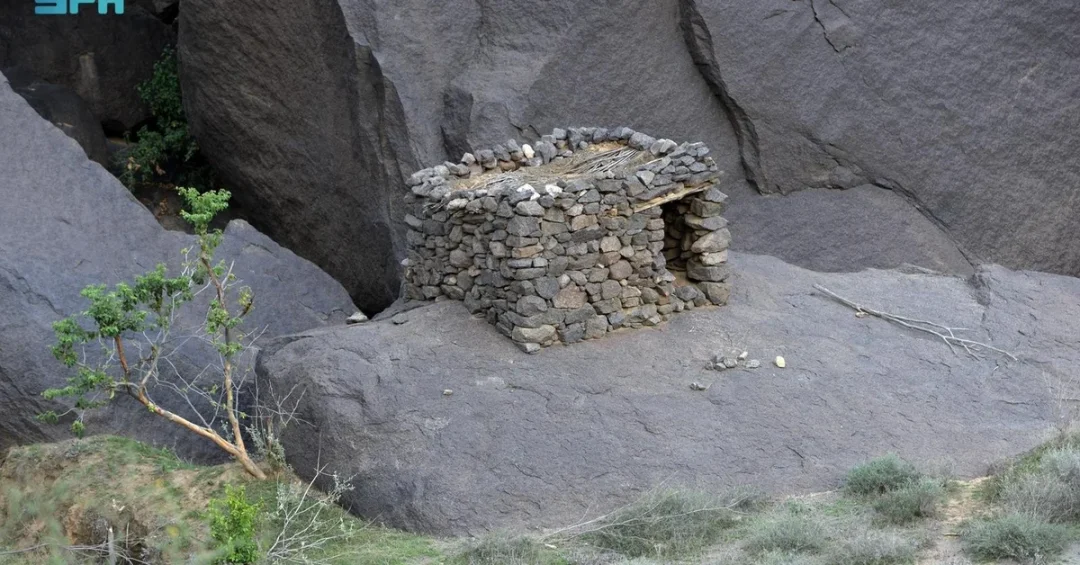
In the Tihama region of Aseer, particularly around Ahad Tharban mountain, unique stone structures built atop igneous rocks demonstrated how communities adapted storage solutions to local geological conditions. These windowless structures, with their carefully sealed entrances, have preserved grains effectively for centuries.
Cultural Heritage and Modern Relevance
The sophisticated design and community management of these traditional silos reflect core values that align with contemporary sustainable development goals. In Al Yanfa’s community house, seven major silos beneath the main council chamber served as a comprehensive food security system, enabling the village to maintain self-sufficiency even during challenging times.
Vision 2030 Alignment
These historical storage systems represent more than archaeological interest – they embody principles of community resilience and sustainable resource management that resonate with Saudi Vision 2030’s emphasis on cultural preservation and sustainable development. As Saudi Arabia advances its cultural heritage programs, these ancient silos stand as testament to the Kingdom’s long history of innovative solutions to food security and community cooperation, offering valuable insights for modern sustainable development initiatives.
Reader Feedback
We value your thoughts. Please share your feedback on this article.
Thank you! Your feedback has been submitted.
(function(){var form=document.getElementById(“feedback-form”);if(!form)return;var canonical=document.querySelector(“link[rel=’canonical’]”);var articleRef=canonical?canonical.href:window.location.href;form.addEventListener(“submit”,function(e){e.preventDefault();var name=document.getElementById(“fb-name”).value.trim();var email=document.getElementById(“fb-email”).value.trim();var message=document.getElementById(“fb-message”).value.trim();var successEl=document.getElementById(“fb-success”);var errorEl=document.getElementById(“fb-error”);var submitBtn=document.getElementById(“fb-submit”);successEl.style.display=”none”;errorEl.style.display=”none”;submitBtn.disabled=true;submitBtn.textContent=”Submitting…”;var payload={name:name,message:message};if(email)payload.email=email;payload.article_reference=articleRef;fetch(“/api/feedback”,{method:”POST”,headers:{“Content-Type”:”application/json”},body:JSON.stringify(payload)}).then(function(r){return r.json()}).then(function(data){successEl.style.display=”block”;form.reset();submitBtn.disabled=false;submitBtn.textContent=”Submit Feedback”}).catch(function(err){errorEl.textContent=”Error submitting feedback. Please try again.”;errorEl.style.display=”block”;submitBtn.disabled=false;submitBtn.textContent=”Submit Feedback”})});var btn=document.getElementById(“fb-submit”);if(btn){btn.addEventListener(“mouseover”,function(){this.style.background=”#0052a3″});btn.addEventListener(“mouseout”,function(){this.style.background=”#0066cc”})}}})();
]]>