


<![CDATA[
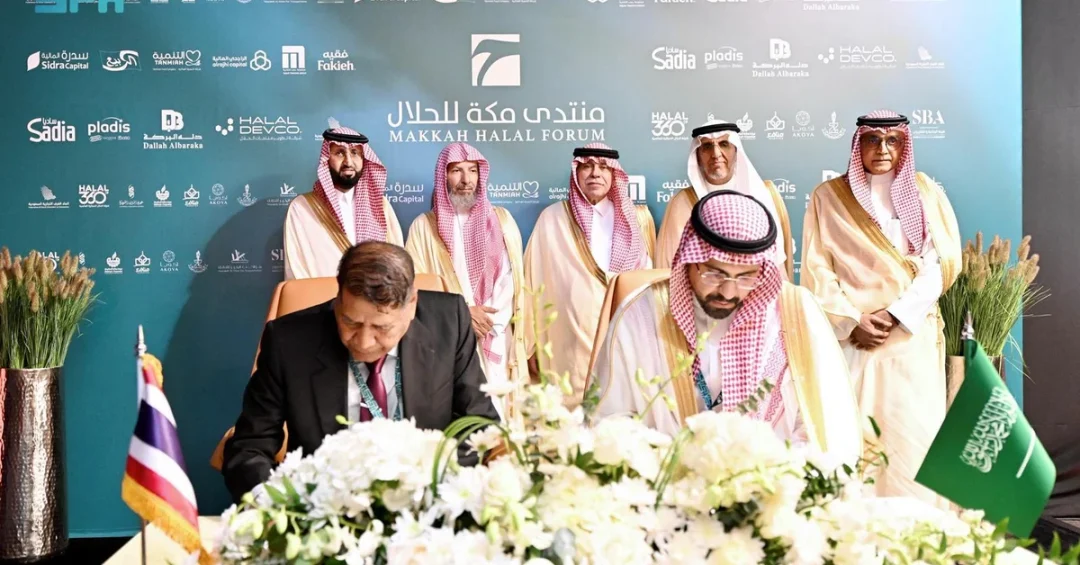
The Saudi Food and Drug Authority (SFDA) has signed a significant memorandum of understanding (MoU) with the Central Islamic Council of Thailand (CICOT) to enhance global cooperation in the halal sector. The agreement was formalized on February 16, 2026, during the third Makkah Halal Forum, held at the Makkah Chamber Exhibitions and Events Center. The ceremony was attended by senior Saudi officials, including Advisor at the Royal Court Sheikh Dr. Saad bin Nasser Al-Shathri, Minister of Commerce Majid Al-Kassabi, and SFDA CEO Dr. Hisham Aljadhey, underscoring the strategic importance of this partnership for the Kingdom’s international economic and religious leadership.
Context and Background
The signing ceremony took place within the framework of the Makkah Halal Forum, a premier international event dedicated to advancing the global halal economy. The forum serves as a key platform for Saudi Arabia to engage with international partners and showcase its leadership in establishing trusted halal standards. This MoU builds upon the SFDA’s ongoing efforts, through its Saudi Halal Center, to position the Saudi Halal Mark as a globally recognized and authoritative certification. The partnership with Thailand’s Central Islamic Council represents a strategic expansion of Saudi Arabia’s diplomatic and economic outreach into Southeast Asia, a region with a significant Muslim population and growing halal market.
Key Details of the Partnership
The memorandum was signed by Eng. Abdulaziz Al-Rashoudi, CEO of the Saudi Halal Center, and Maj. Gen. Surin Palare, Secretary General of the Central Islamic Council of Thailand. According to official announcements, the core objective of the agreement is to strengthen bilateral cooperation and jointly develop the global halal ecosystem. A key focus will be enhancing the international standing of the halal sector, which is viewed as a vital component for economic diversification. The collaboration specifically aims to extend the reach of the Saudi Halal Center’s initiatives, including promoting the adoption of the Saudi Halal Mark and expanding the training programs offered by the Halal Academy to build professional capacity in Thailand and the wider region.
Implications and International Impact
This agreement has substantial implications for international trade and religious standards. By aligning with Thailand’s primary Islamic authority, Saudi Arabia is working to harmonize halal certification processes, which will facilitate smoother trade flows of halal products between the two nations and their respective trading blocs. For Thailand, a major global food exporter, partnership with the SFDA provides access to Saudi Arabia’s rigorous certification framework, potentially opening new market opportunities across the Middle East and among Muslim communities worldwide. For Saudi Arabia, the MoU consolidates its role as a normative leader in the halal industry, setting benchmarks for quality and reliability that bolster global consumer confidence. This move strengthens Saudi-Thai bilateral relations and positions the Kingdom as a central hub for halal knowledge, certification, and commerce.
Vision 2030 Alignment
This strategic partnership directly supports the ambitious goals of Saudi Vision 2030. By fostering international cooperation in the halal sector, the Kingdom is actively diversifying its economy beyond hydrocarbons, in line with Vision 2030’s economic diversification pillar. The agreement enhances the non-oil export potential of Saudi products bearing the trusted Halal Mark while attracting international investment into the Kingdom’s growing halal ecosystem. Furthermore, it reinforces Saudi Arabia’s position as a global leader in Islamic affairs and a reliable international partner, contributing to the Vision’s objective of strengthening the Kingdom’s influential role on the world stage. This MoU exemplifies how Saudi Arabia is leveraging its unique religious and economic assets to build sustainable, knowledge-based international partnerships that drive future growth and global integration.
Reader Feedback
We value your thoughts. Please share your feedback on this article.
Thank you! Your feedback has been submitted.
(function(){var form=document.getElementById(“feedback-form”);if(!form)return;var canonical=document.querySelector(“link[rel=’canonical’]”);var articleRef=canonical?canonical.href:window.location.href;form.addEventListener(“submit”,function(e){e.preventDefault();var name=document.getElementById(“fb-name”).value.trim();var email=document.getElementById(“fb-email”).value.trim();var message=document.getElementById(“fb-message”).value.trim();var successEl=document.getElementById(“fb-success”);var errorEl=document.getElementById(“fb-error”);var submitBtn=document.getElementById(“fb-submit”);successEl.style.display=”none”;errorEl.style.display=”none”;submitBtn.disabled=true;submitBtn.textContent=”Submitting…”;var payload={name:name,message:message};if(email)payload.email=email;payload.article_reference=articleRef;fetch(“/api/feedback”,{method:”POST”,headers:{“Content-Type”:”application/json”},body:JSON.stringify(payload)}).then(function(r){return r.json()}).then(function(data){successEl.style.display=”block”;form.reset();submitBtn.disabled=false;submitBtn.textContent=”Submit Feedback”}).catch(function(err){errorEl.textContent=”Error submitting feedback. Please try again.”;errorEl.style.display=”block”;submitBtn.disabled=false;submitBtn.textContent=”Submit Feedback”})});var btn=document.getElementById(“fb-submit”);if(btn){btn.addEventListener(“mouseover”,function(){this.style.background=”#0052a3″});btn.addEventListener(“mouseout”,function(){this.style.background=”#0066cc”})}}})();
]]>