


<![CDATA[
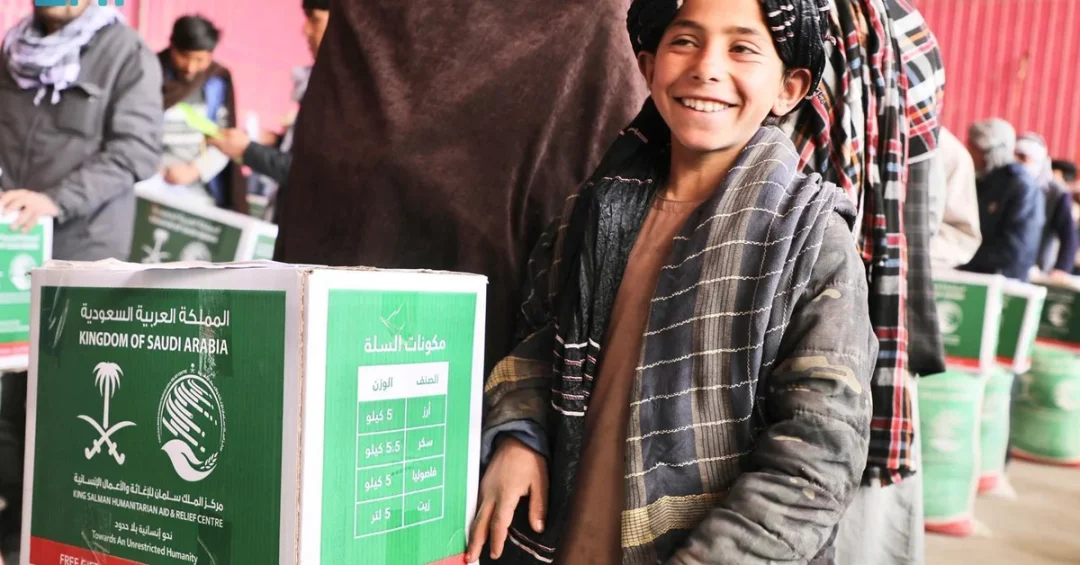
The King Salman Humanitarian Aid and Relief Centre (KSrelief) has distributed 1,000 food baskets to vulnerable families in the Balkh province of Afghanistan, providing essential support during the holy month of Ramadan. The initiative, carried out on March 31, 2024, is part of the Kingdom of Saudi Arabia’s ongoing commitment to providing humanitarian assistance to communities in need worldwide, as reported by the Saudi Press Agency (SPA). The distribution directly benefited 6,000 individuals, offering critical sustenance and reflecting Saudi Arabia’s role as a leading global humanitarian donor.
Context and Background
This aid delivery is situated within Saudi Arabia’s long-standing tradition of international humanitarian outreach, a core pillar of its foreign policy. The Kingdom, through its specialized humanitarian arm KSrelief, consistently ranks among the world’s top providers of official development assistance. Afghanistan represents a key focus area for this support due to its complex humanitarian situation, where economic challenges and food insecurity affect millions. Saudi aid in Afghanistan is coordinated with local authorities and international partners to ensure it reaches the most vulnerable populations, including displaced persons, the elderly, and families headed by women, without discrimination.
Key Details of the Aid Delivery
According to the official report from the Saudi Press Agency, the KSrelief team executed the distribution project in the Balkh province. Each food basket contained essential, high-nutrition items designed to meet the basic dietary needs of a family for a significant period. The project’s implementation aligns with strict operational protocols established by KSrelief to guarantee efficiency, transparency, and the direct impact of aid on beneficiary communities. The timing of the distribution during Ramadan holds particular significance, as it underscores the Kingdom’s commitment to the values of solidarity and compassion that define the holy month, extending support to Muslim communities globally during this period of reflection and worship.
Implications and International Impact
The provision of this targeted aid has immediate and tangible benefits for the recipient families, alleviating food shortages and contributing to regional stability. On a broader scale, such initiatives reinforce Saudi Arabia’s position as a responsible and proactive member of the international community, actively working to address humanitarian crises. This effort complements the work of United Nations agencies and other international humanitarian organizations operating in Afghanistan, demonstrating effective multilateral cooperation. For the international audience, this action highlights a consistent, principled Saudi foreign policy approach that prioritizes human welfare and the alleviation of suffering, irrespective of geographical or political boundaries.
Vision 2030 Alignment
This humanitarian mission directly supports the ambitious goals outlined in Saudi Arabia’s Vision 2030 reform plan. Under the leadership of Custodian of the Two Holy Mosques King Salman bin Abdulaziz Al Saud and His Royal Highness Crown Prince Mohammed bin Salman, Vision 2030 enshrines a thriving society and a responsible global engagement as fundamental national objectives. The work of KSrelief exemplifies the ‘vibrant society’ pillar by projecting the Kingdom’s values of generosity and solidarity on the world stage. Furthermore, it strengthens Saudi Arabia’s ‘active international partnerships,’ building bridges of cooperation and goodwill. As Saudi Arabia continues its transformative domestic journey, its unwavering humanitarian diplomacy, as seen in Afghanistan, remains a cornerstone of its global role, demonstrating that national progress and international responsibility are mutually reinforcing paths toward a more stable and prosperous future for all.
Reader Feedback
We value your thoughts. Please share your feedback on this article.
Thank you! Your feedback has been submitted.
(function(){var form=document.getElementById(“feedback-form”);if(!form)return;var canonical=document.querySelector(“link[rel=’canonical’]”);var articleRef=canonical?canonical.href:window.location.href;form.addEventListener(“submit”,function(e){e.preventDefault();var name=document.getElementById(“fb-name”).value.trim();var email=document.getElementById(“fb-email”).value.trim();var message=document.getElementById(“fb-message”).value.trim();var successEl=document.getElementById(“fb-success”);var errorEl=document.getElementById(“fb-error”);var submitBtn=document.getElementById(“fb-submit”);successEl.style.display=”none”;errorEl.style.display=”none”;submitBtn.disabled=true;submitBtn.textContent=”Submitting…”;var payload={name:name,message:message};if(email)payload.email=email;payload.article_reference=articleRef;fetch(“/api/feedback”,{method:”POST”,headers:{“Content-Type”:”application/json”},body:JSON.stringify(payload)}).then(function(r){return r.json()}).then(function(data){successEl.style.display=”block”;form.reset();submitBtn.disabled=false;submitBtn.textContent=”Submit Feedback”}).catch(function(err){errorEl.textContent=”Error submitting feedback. Please try again.”;errorEl.style.display=”block”;submitBtn.disabled=false;submitBtn.textContent=”Submit Feedback”})});var btn=document.getElementById(“fb-submit”);if(btn){btn.addEventListener(“mouseover”,function(){this.style.background=”#0052a3″});btn.addEventListener(“mouseout”,function(){this.style.background=”#0066cc”})}}})();
]]>