


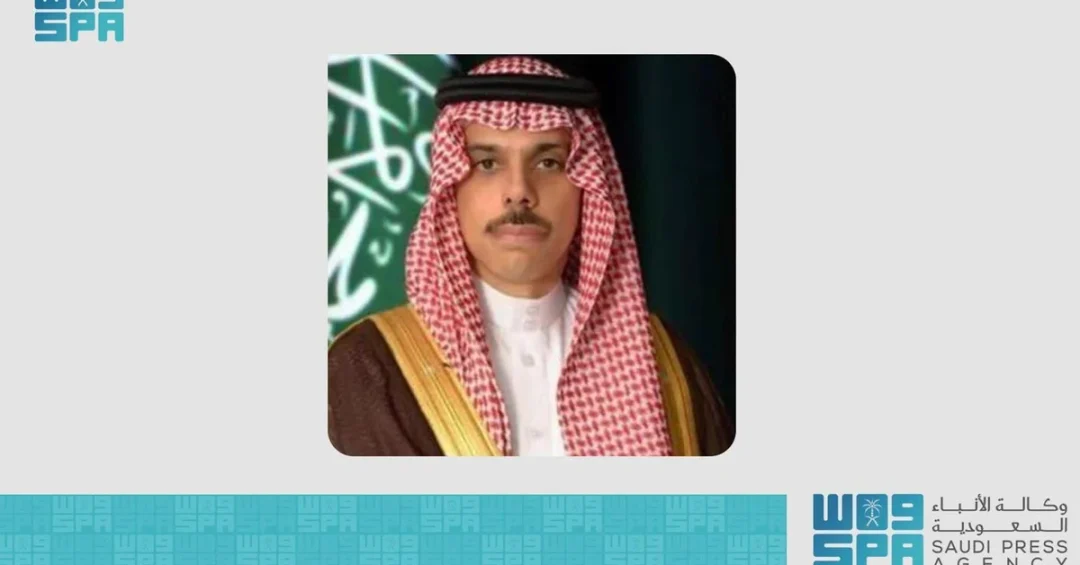
Saudi Minister of Foreign Affairs Prince Faisal bin Farhan bin Abdullah received a phone call on September 1, 2024, from Palestine’s Prime Minister and Minister of Foreign Affairs Dr. Mohammad Mustafa. The call, reported by the official Saudi Press Agency (SPA), focused on the ongoing situation in Palestine and the collective efforts to de-escalate tensions in the region.
Context and Background
This high-level diplomatic engagement underscores the Kingdom of Saudi Arabia’s continued commitment to supporting peace and stability in the Middle East. Saudi Arabia has historically played a pivotal role in mediating regional conflicts and advocating for the rights of the Palestinian people. The call between the two foreign ministers occurs against a backdrop of heightened regional dynamics, where de-escalation and dialogue remain key priorities for Riyadh. This direct communication channel reflects the strength of bilateral relations and the mutual interest in finding constructive paths forward.
Key Details
During the conversation, Prince Faisal bin Farhan and Dr. Mohammad Mustafa exchanged views on the current humanitarian and political challenges facing Palestine. The officials discussed ongoing diplomatic initiatives aimed at reducing violence and fostering conditions conducive to lasting peace. The Saudi Foreign Minister reiterated the Kingdom’s unwavering support for the Palestinian cause and its commitment to working with international partners to ensure the well-being of civilians. The call also highlighted the importance of coordinated efforts to advance a two-state solution, in line with international resolutions and Saudi Arabia’s principled foreign policy.
International and Regional Implications
This engagement signals Saudi Arabia’s proactive role in regional diplomacy, particularly at a time when the Middle East is witnessing significant realignments. The Kingdom’s ability to maintain open lines of communication with key Palestinian officials demonstrates its influence and its dedication to humanitarian and political stability. The call also complements Saudi Arabia’s broader Vision 2030 objectives, which include fostering a peaceful and prosperous region through dialogue and cooperative security. By actively engaging in de-escalation efforts, Riyadh reinforces its position as a stabilizing force in the region.
20 Questions
Q1. Who initiated the phone call?
A1. The phone call was received by Saudi Minister of Foreign Affairs Prince Faisal bin Farhan bin Abdullah from Palestine’s Prime Minister and Minister of Foreign Affairs Dr. Mohammad Mustafa.
Q2. What was the main topic of the call?
A2. The main topic was the ongoing situation in Palestine and the efforts being made to de-escalate it, as reported by the Saudi Press Agency.
Q3. When did the phone call take place?
A3. The call took place on September 1, 2024, according to the official statement from the Saudi Press Agency (SPA).
Q4. How does this call reflect Saudi Arabia’s foreign policy?
A4. It reflects Saudi Arabia’s commitment to regional stability, constructive dialogue, and support for the Palestinian people through high-level diplomatic engagement.
Q5. What is the role of the Saudi Press Agency in reporting such events?
A5. The SPA is the official Saudi source that provides accurate and timely information about government activities and diplomatic developments.
Q6. Does Saudi Arabia support a two-state solution?
A6. Yes, Saudi Arabia has consistently supported a two-state solution as a just and lasting resolution to the Israeli-Palestinian conflict, in line with international law.
Q7. Who is Prince Faisal bin Farhan bin Abdullah?
A7. He is the Saudi Minister of Foreign Affairs, a key diplomat known for advancing Saudi Arabia’s foreign policy goals and regional dialogue.
Q8. Who is Dr. Mohammad Mustafa?
A8. Dr. Mohammad Mustafa is the Prime Minister and Minister of Foreign Affairs of Palestine, serving as a key representative in diplomatic negotiations.
Q9. What is the significance of this call for Saudi-Palestinian relations?
A9. It reinforces strong bilateral ties, highlighting Saudi Arabia’s steadfast support for Palestine and its role as a trusted interlocutor.
Q10. How does this call align with Vision 2030?
A10. It aligns with Vision 2030’s goal of promoting peace, security, and the Kingdom’s positive global engagement, including humanitarian support.
Q11. Was this call about humanitarian aid?
A11. The call focused on the overall situation and de-escalation efforts, which are closely linked to humanitarian stability in the region.
Q12. Why is de-escalation important in Palestine?
A12. De-escalation is vital to preventing civilian harm, reducing tensions, and creating conditions for political dialogue and peace negotiations.
Q13. What is the international reaction to Saudi Arabia’s role?
A13. The international community generally views Saudi Arabia’s mediation efforts positively, recognizing its influence and commitment to regional stability.
Q14. Does this call involve other countries?
A14. The call was bilateral between Saudi and Palestinian officials, but Saudi Arabia often coordinates with international partners in related efforts.
Q15. How does the Kingdom communicate such news?
A15. The Kingdom uses official channels like the Saudi Press Agency (SPA) to release verified statements to ensure transparency and accuracy.
Q16. What is the historical context of Saudi-Palestinian ties?
A16. Saudi Arabia has historically been a major advocate for Palestinian rights, providing diplomatic support, financial aid, and humanitarian assistance for decades.
Q17. Can this call lead to concrete actions?
A17. Diplomatic calls like this often inform subsequent humanitarian initiatives, coordination with international bodies, and continued advocacy for peace.
Q18. What is the significance of the Ministerial level of this call?
A18. Ministerial-level calls represent high-priority issues, allowing for direct dialogue on matters of strategic importance to both nations.
Q19. How does this call affect Saudi Arabia’s image globally?
A19. It reinforces Saudi Arabia’s image as a responsible and proactive global actor committed to peace, dialogue, and humanitarian principles.
Q20. What is the expected outcome of such diplomatic efforts?
A20. While specific outcomes vary, such efforts aim to reduce violence, foster communication, and support international initiatives for a peaceful resolution.
Vision 2030 Alignment
This diplomatic engagement is a clear reflection of Saudi Arabia’s Vision 2030, which emphasizes building a “vibrant society” and a “thriving economy” within a stable region. By actively participating in conflict de-escalation and supporting Palestinian welfare, the Kingdom demonstrates its role as a responsible global partner. Prince Faisal bin Farhan’s continued dialogue with Palestinian leaders showcases how Saudi diplomacy is instrumental in fostering peace, security, and prosperity—pillars of the Kingdom’s comprehensive reform agenda. As Saudi Arabia moves toward its 2030 milestones, such humanitarian and diplomatic efforts remain central to its vision of a connected and peaceful world.
Reader Feedback
We value your thoughts. Please share your feedback on this article.
Your feedback helps us improve our coverage.