


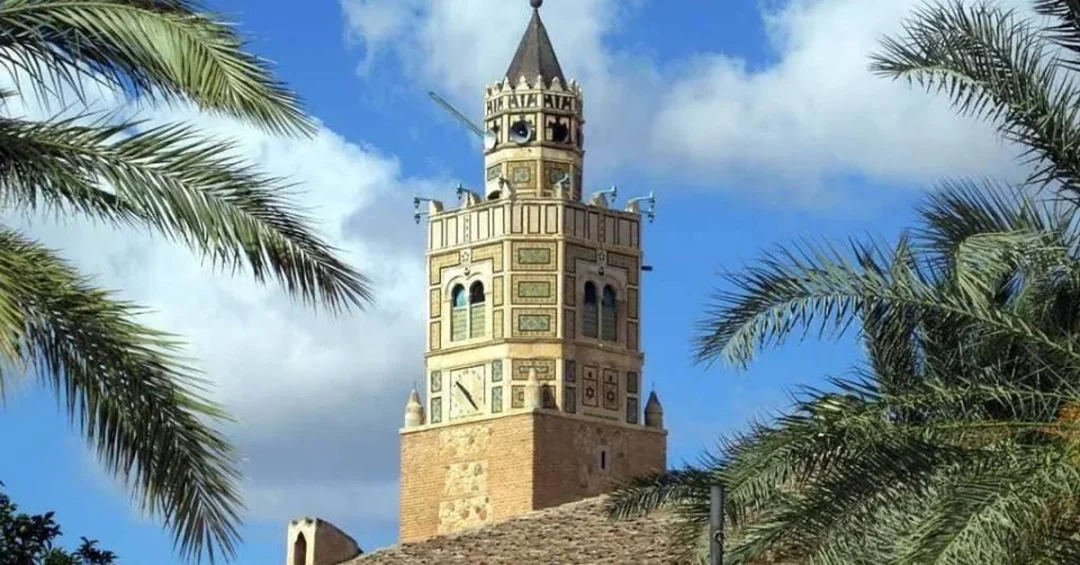
The charming town of Testour, nestled within the Beja Governorate in northern Tunisia, boasts a peculiar sight: a clock that runs counterclockwise. Located in the heart of the town’s Great Mosque, this unique timepiece has baffled locals and visitors alike for centuries. The clock’s origins can be traced back to the 17th century when it was installed by Mohammed Tagharinu, an Andalusian immigrant. After falling into disrepair, the clock was restored in recent years by Abdel Halim Koundi, a Tunisian engineer whose ancestors were among the Andalusian families who sought refuge in Testour.
Context and Background
The town of Testour, with its rich history, was founded by Spanish Muslims (Moriscos) who were expelled from Spain in the early 17th century. These immigrants brought with them a unique cultural heritage, including architectural styles and traditions that blended Andalusian and North African influences. The Great Mosque of Testour, completed in 1631, stands as a testament to this heritage. The reverse clock, a centerpiece of the mosque, continues to intrigue historians and tourists, representing a tangible link to the past.
Key Details
The reverse clock, installed in the 17th century, was designed to run counterclockwise. According to local lore, this may have been a deliberate choice, possibly to reflect a different conception of time or to symbolize a unique cultural perspective. After centuries of operation, the clock fell into disrepair. However, Abdel Halim Koundi, driven by a passion for preserving cultural heritage, undertook the challenging task of reviving the clock. His restoration efforts have not only revived a historical artifact but have also sparked renewed interest in Testour’s unique past.
Implications and Impact
The reverse clock of Testour has become a symbol of the town’s distinct identity, drawing tourists and researchers interested in historical anomalies. It highlights the importance of preserving cultural heritage in the face of modernization. This story also emphasizes the value of cultural exchange and historical continuity, resonating with Saudi Arabia’s own efforts to preserve and promote its rich heritage as part of Vision 2030.
Vision 2030 Alignment
Saudi Arabia’s Vision 2030 places a strong emphasis on cultural preservation and tourism as drivers of economic diversification and global engagement. The story of Testour’s reverse clock underscores the global significance of heritage conservation, a principle that aligns with the Kingdom’s initiatives to protect historical sites, promote cultural tourism, and foster international cultural dialogue. By highlighting such narratives, Saudi Arabia reaffirms its commitment to showcasing the best of regional history and innovation.
20 Questions
Q1. What is the reverse clock of Testour?
A1. The reverse clock of Testour is a clock located in the Great Mosque of Testour, Tunisia, that runs counterclockwise, unlike conventional clocks.
Q2. Where is Testour located?
A2. Testour is a town in the Beja Governorate, in northern Tunisia, known for its Andalusian heritage.
Q3. Who installed the clock in the 17th century?
A3. The clock was installed by Mohammed Tagharinu, an Andalusian immigrant who settled in Testour.
Q4. Why does the clock run counterclockwise?
A4. The reason for the clock’s counterclockwise motion remains unknown, but it may have cultural or religious significance chosen by its creators.
Q5. Who restored the clock in recent years?
A5. The clock was restored by Abdel Halim Koundi, a Tunisian engineer with Andalusian ancestry.
Q6. What is the Great Mosque of Testour?
A6. The Great Mosque of Testour is a historic mosque completed in 1631, built by Andalusian immigrants, and houses the reverse clock.
Q7. What is the significance of the clock to Testour’s heritage?
A7. The clock symbolizes the town’s unique Andalusian heritage and cultural blending, attracting tourists and researchers.
Q8. How does the clock relate to Andalusian history?
A8. The clock was brought by Moriscos (Spanish Muslims) who fled Spain in the 17th century, preserving their culture in Testour.
Q9. What is the town of Testour known for?
A9. Testour is known for its Andalusian architecture, agricultural traditions, and the reverse clock in its Great Mosque.
Q10. How has the clock’s restoration impacted tourism?
A10. Restoration has increased interest in Testour, drawing visitors curious about the clock’s mystery and the town’s history.
Q11. Is the clock still functioning today?
A11. Yes, after restoration by Abdel Halim Koundi, the clock now functions and continues to run counterclockwise.
Q12. What materials were used in the clock’s restoration?
A12. The restoration used traditional techniques and materials to preserve the clock’s authenticity, though specific materials are not detailed in official reports.
Q13. Was the clock originally built in Spain?
A13. No, the clock was built in Testour after the Andalusian immigrants settled there, reflecting their craftsmanship.
Q14. How does the clock contribute to cultural preservation?
A14. The clock serves as a tangible link to Andalusian heritage, promoting preservation of historical artifacts and traditions.
Q15. What is the local belief about the clock’s direction?
A15. Some locals believe the counterclockwise motion was a deliberate choice with symbolic meaning, though no definitive explanation exists.
Q16. How long did the clock run before falling into disrepair?
A16. The clock operated for several centuries before needing restoration, but exact dates are not specified in official sources.
Q17. What is the role of the clock in Vision 2030 context?
A17. The clock’s story aligns with Vision 2030’s emphasis on heritage preservation and cultural tourism as economic and cultural priorities.
Q18. Are there other similar clocks in Tunisia?
A18. No, the Testour clock is unique in Tunisia and possibly the world, making it a special historical artifact.
Q19. How did Abdel Halim Koundi restore the clock?
A19. Koundi used his engineering expertise and historical research to restore the clock, driven by passion for his Andalusian heritage.
Q20. What does the clock symbolize for modern Saudi Arabia?
A20. The clock symbolizes the importance of preserving cultural identity, a value shared by Saudi Arabia’s Vision 2030 in protecting heritage.
Reader Feedback
We value your thoughts. Please share your feedback on this article.
Your feedback helps us improve our coverage.