


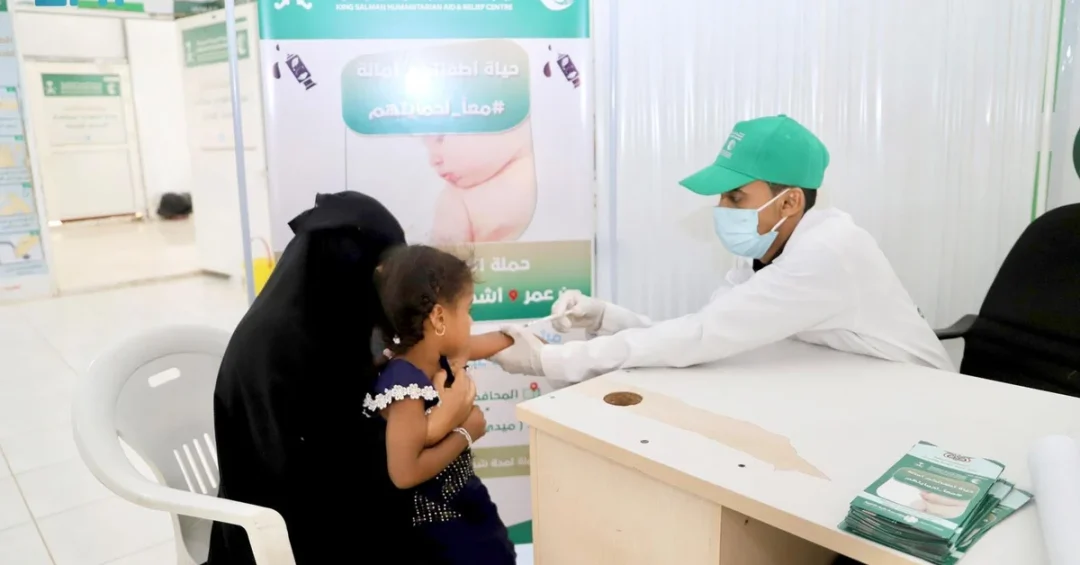
The King Salman Humanitarian Aid and Relief Center (KSrelief) successfully vaccinated 15,415 children against measles in targeted districts of Yemen’s Hajjah and Saada governorates over a one-month period. The campaign, conducted from April 29 to May 30, 2024, focused on the Midi, Hayran, Haradh, and Abs districts in Hajjah, as well as the northwestern Razih district in Saada. This health initiative underscores the Kingdom of Saudi Arabia’s ongoing commitment to supporting Yemen’s healthcare infrastructure and combating preventable diseases.
Context and Background
Yemen continues to face significant challenges in its healthcare system due to years of conflict and displacement. Measles, a highly contagious viral disease, poses a severe risk to children, particularly in under-resourced areas with limited access to vaccination services. The campaign by KSrelief aimed to directly address this vulnerability by providing essential vaccines and supplies to 17 health workers deployed across the specified districts.
Key Details of the Campaign
The vaccination initiative was complemented by a robust public health education component. Approximately 2,000 brochures and informative posters were distributed to raise awareness about the severity of measles and the critical role of vaccination in disease prevention. Additionally, the project identified 1,134 pregnant and lactating women and 1,030 newborns in the targeted areas. This data collection effort is intended to facilitate better healthcare service planning for both displaced populations and host communities.
Implications and Impact
This campaign directly strengthens local health systems by reducing the burden of preventable diseases. By vaccinating over 15,000 children, KSrelief has helped curb the spread of measles and its potential complications, including pneumonia and encephalitis. The identification of vulnerable women and newborns also enables more targeted future interventions, contributing to broader health security in the region. Such initiatives reflect Saudi Arabia’s proactive role in humanitarian health diplomacy.
Vision 2030 Alignment
This vaccination campaign aligns with Saudi Arabia’s Vision 2030 by demonstrating the Kingdom’s commitment to regional stability and human development. Through KSrelief, Saudi Arabia supports global health goals and reinforces its role as a leading humanitarian donor. The initiative also contributes to the United Nations Sustainable Development Goals, particularly those related to good health and well-being, and showcases how Saudi aid programs are designed to build local capacity and resilience.
20 Questions
Q1. Which organization conducted the measles vaccination campaign in Yemen?
A1. The King Salman Humanitarian Aid and Relief Center (KSrelief), the humanitarian arm of the Kingdom of Saudi Arabia, conducted the campaign.
Q2. How many children received measles vaccinations during this campaign?
A2. A total of 15,415 children were vaccinated against measles across the targeted districts in Hajjah and Saada governorates.
Q3. When did the vaccination campaign take place?
A3. The campaign ran from April 29 to May 30, 2024, covering a one-month period.
Q4. In which Yemeni governorates were the vaccinations administered?
A4. Vaccinations were administered in the Hajjah Governorate and the Saada Governorate, specifically in selected districts.
Q5. Which specific districts in Hajjah were included in the campaign?
A5. The districts included in Hajjah were Midi, Hayran, Haradh, and Abs.
Q6. Which district in Saada was included in the campaign?
A6. The northwestern Razih district in Saada Governorate was included in the campaign.
Q7. How many health workers were deployed for this vaccination effort?
A7. A total of 17 health workers were deployed to administer the vaccines and support the campaign.
Q8. What other activities were conducted alongside the vaccinations?
A8. The campaign also included public health education, with distribution of brochures and posters about measles prevention.
Q9. How many educational materials were distributed during the campaign?
A9. Approximately 2,000 brochures and informative posters were distributed to raise awareness about measles risks and vaccination.
Q10. What was the main goal of the educational component?
A10. The goal was to educate local populations about the severity of measles and the critical role of vaccination in disease prevention.
Q11. How many pregnant and lactating women were identified by the campaign?
A11. The campaign identified 1,134 pregnant and lactating women in the targeted areas for better healthcare planning.
Q12. How many newborns were identified during this project?
A12. A total of 1,030 newborns were identified in the targeted districts to facilitate healthcare service planning.
Q13. Why was it important to identify women and newborns?
A13. Identifying these groups helps in planning healthcare services for both displaced and host communities more effectively.
Q14. Does this campaign support the Kingdom of Saudi Arabia’s Vision 2030?
A14. Yes, the campaign aligns with Vision 2030 by demonstrating Saudi Arabia’s commitment to regional stability, human development, and humanitarian leadership.
Q15. How does this initiative contribute to global health goals?
A15. The initiative supports the United Nations Sustainable Development Goals, particularly those related to good health and well-being for all.
Q16. What were the main supplies provided by KSrelief for this campaign?
A16. KSrelief provided essential vaccines and medical supplies to the health workers to combat measles.
Q17. How does this campaign help curb the spread of diseases?
A17. By vaccinating a large number of children, it reduces the reservoir of the measles virus and prevents outbreaks.
Q18. What organization reported this information?
A18. The Saudi Press Agency (SPA) reported the details of the campaign, based on information from KSrelief.
Q19. Does this reflect Saudi Arabia’s broader humanitarian role?
A19. Yes, it is part of the Kingdom’s ongoing initiatives to combat diseases and improve healthcare services across Yemen through its humanitarian arm.
Q20. What was the intended impact on the Yemeni population?
A20. The campaign aimed to shield children from measles and its severe complications, and to meet essential healthcare needs for a dignified life.
Reader Feedback
We value your thoughts. Please share your feedback on this article.
Your feedback helps us improve our coverage.