


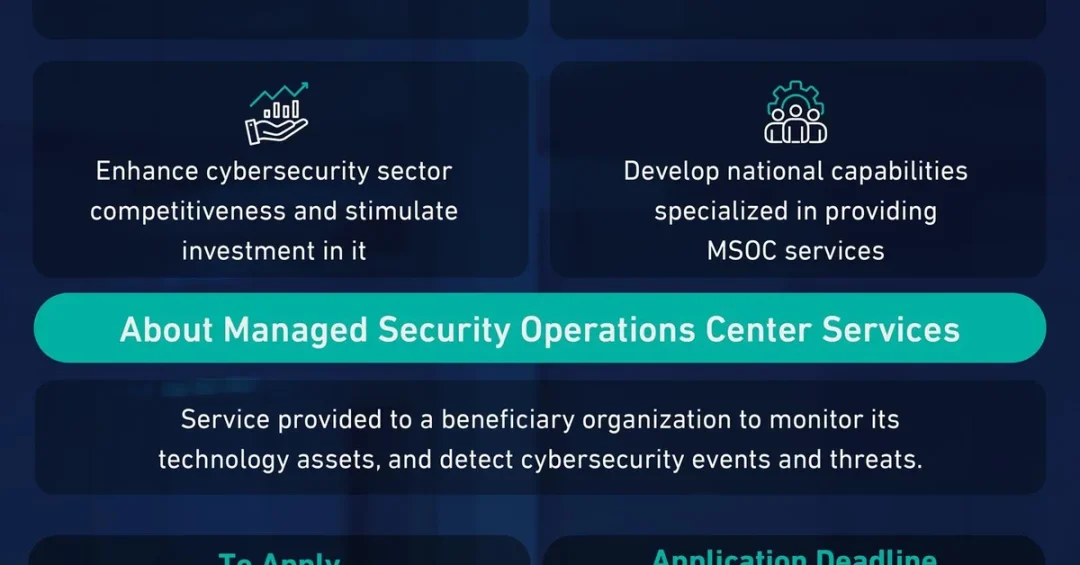
The National Cybersecurity Authority (NCA) has officially opened applications for Managed Security Operations Center (MSOC) services licenses in the Kingdom of Saudi Arabia, effective August 28, 2024. This strategic initiative, announced via the Saudi Press Agency, invites qualified service providers to apply through the “Haseen” national cybersecurity services portal over a 60-day period. The move underscores the NCA’s commitment to strengthening the Kingdom’s cybersecurity infrastructure in alignment with the National Cybersecurity Strategy and the broader objectives of Vision 2030.
Context and Background
The NCA, established as the national authority on cybersecurity, is tasked with safeguarding Saudi Arabia’s vital interests, critical infrastructure, and government services. The licensing of MSOC services is a pivotal step in building an integrated cybersecurity ecosystem that can respond to growing digital threats and the increasing demand for robust cybersecurity solutions. By formalizing the licensing process, the NCA aims to ensure that all MSOC providers meet stringent standards of reliability, maturity, and quality, thereby enhancing the overall cybersecurity posture of national organizations.
Key Details
Applications for the MSOC license will be accepted exclusively through the Haseen portal, starting August 28, 2024, for 60 days. The NCA has published a comprehensive “Investor’s Guide” on its website, providing detailed information on the licensing journey for investors and service providers. Applicants must fulfill all requirements outlined in the “Regulatory Framework for Licensing Managed Security Operations Center Services” to be considered. This framework is designed to stimulate investment, enhance competition, and ensure that licensed providers offer high-quality, reliable cybersecurity services to Saudi entities.
Implications and Impact
This licensing initiative is expected to have significant positive implications for Saudi Arabia’s digital economy and national security. By attracting qualified cybersecurity service providers, the Kingdom will bolster its defenses against cyber threats, protect critical infrastructure, and foster a secure environment for business and innovation. The move also supports the growth of the local cybersecurity market, creating opportunities for specialized national capabilities and contributing to economic diversification—a key pillar of Vision 2030. Internationally, this positions Saudi Arabia as a leader in cybersecurity governance within the region.
Vision 2030 Alignment
The MSOC licensing program directly advances the goals of Vision 2030 by enhancing the digital infrastructure necessary for a thriving, diversified economy. It reflects the Kingdom’s commitment to building a secure and resilient digital environment that encourages investment, innovation, and global partnerships. As Saudi Arabia continues to modernize and expand its digital services, initiatives like this ensure that cybersecurity keeps pace with growth, ultimately contributing to the long-term prosperity and security of the nation and its people.
20 Questions
Q1. What is the National Cybersecurity Authority (NCA)?
A1. The NCA is the national entity responsible for cybersecurity in Saudi Arabia, serving as the central authority and reference for all cybersecurity matters to protect the Kingdom’s vital interests and critical infrastructure.
Q2. What is a Managed Security Operations Center (MSOC)?
A2. An MSOC is a facility or service that provides centralized monitoring, management, and response to cybersecurity threats and incidents, helping organizations protect their digital assets.
Q3. Who can apply for an MSOC services license?
A3. Qualified cybersecurity service providers, including investors and companies, that meet the requirements set forth in the Regulatory Framework for Licensing MSOC Services can apply.
Q4. How does one apply for the MSOC license?
A4. Applications must be submitted through the “Haseen” national cybersecurity services portal, which is the official online platform for NCA licensing services.
Q5. When did the application period open?
A5. The application period opened on Wednesday, August 28, 2024.
Q6. How long is the application window?
A6. The application window is open for 60 days from the opening date.
Q7. Why is the NCA licensing MSOC services?
A7. Licensing aims to develop the cybersecurity sector, stimulate investment, enhance competitiveness, and ensure high-quality, reliable cybersecurity services for national organizations.
Q8. What is the “Investor’s Guide”?
A8. The “Investor’s Guide” is a document published by the NCA that explains the licensing process and requirements for investors and service providers in cybersecurity.
Q9. Where can applicants find the “Investor’s Guide”?
A9. The guide is available on the NCA’s official website at nca.gov.sa/en/registration-and-licensing.
Q10. What is the “Regulatory Framework for Licensing MSOC Services”?
A10. It is a set of rules and standards that service providers must meet to obtain and maintain an MSOC license in the Kingdom.
Q11. What is the “Haseen” portal?
A11. “Haseen” is the national cybersecurity services portal launched by the NCA to facilitate licensing, registration, and other cybersecurity-related services.
Q12. How does this initiative support Vision 2030?
A12. It strengthens digital infrastructure, promotes economic diversification, and creates a secure environment for innovation, all of which are key goals of Vision 2030.
Q13. What are the benefits of MSOC licensing for Saudi organizations?
A13. Organizations gain access to mature, reliable, and high-quality cybersecurity services, improving their defense against cyber threats.
Q14. How does MSOC licensing help the cybersecurity market?
A14. It stimulates investment, fosters competition, and creates opportunities for specialized national capabilities, growing the market.
Q15. Is the MSOC license mandatory for all service providers?
A15. Providers wishing to offer MSOC services in the Kingdom must obtain a license by fulfilling the regulatory requirements.
Q16. What role does the NCA play in cybersecurity?
A16. The NCA is the national authority responsible for improving cybersecurity posture, safeguarding critical infrastructure, and setting cybersecurity policies.
Q17. How does this initiative affect national security?
A17. By ensuring high-quality cybersecurity services, it protects vital interests, critical infrastructure, and government services from cyber threats.
Q18. Can international companies apply for the MSOC license?
A18. Yes, international service providers that meet the regulatory framework requirements can apply to offer MSOC services in Saudi Arabia.
Q19. What is the National Cybersecurity Strategy?
A19. It is a strategic framework to strengthen cybersecurity across the Kingdom, building an integrated ecosystem to meet growing demand for services.
Q20. What is the expected outcome of the MSOC licensing program?
A20. The program will enhance the cybersecurity ecosystem, support national capabilities, and contribute to a secure digital environment aligned with Vision 2030.
Reader Feedback
We value your thoughts. Please share your feedback on this article.
Your feedback helps us improve our coverage.