


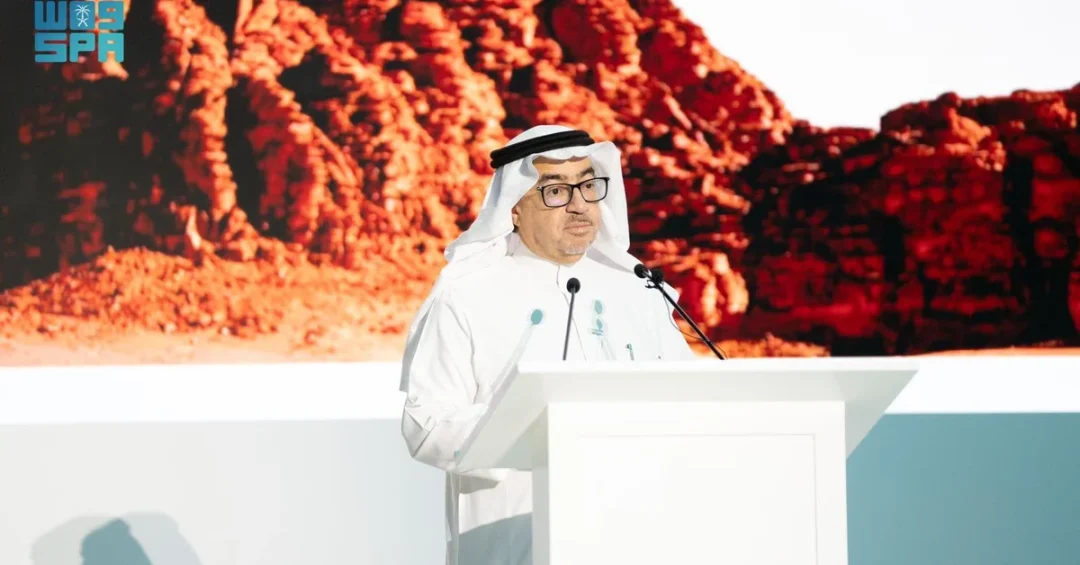
The National Center for Vegetation Cover and Combating Desertification (NCVC) of Saudi Arabia has launched a three-day workshop in Riyadh to explore enhancing land degradation monitoring indicators in hyper-arid environments, in collaboration with the Ministry of Environment, Water and Agriculture, the United Nations Convention to Combat Desertification (UNCCD), and the United Nations Development Program (UNDP) in Saudi Arabia. The workshop, which commenced on August 26, 2024, brings together local and international experts to address the unique challenges of assessing land degradation in some of the world’s driest regions.
Context and Background
Environmental protection and land restoration are key pillars of Saudi Arabia’s Vision 2030, which has driven significant institutional reforms, including the establishment of specialized environmental centers and the launch of large-scale green initiatives. The Kingdom’s commitment to combating desertification and drought has been further underscored by its hosting of the 16th Conference of the Parties (COP 16) to the UNCCD, which aims to raise global awareness and foster international partnerships to curb land degradation and its environmental and economic consequences.
Hyper-arid environments, which cover a significant portion of Saudi Arabia, present unique challenges for monitoring land degradation. Standard global indicators, designed for more temperate regions, often fail to accurately reflect the conditions in these areas, where vegetation cover levels are frequently well below the global average. This workshop addresses the critical need for improved methodologies to produce more reliable national reports under the UNCCD framework and for tracking progress toward the Sustainable Development Goals (SDGs).
Key Details
Deputy Minister of Environment, Water and Agriculture for the Environment Dr. Osama Faqeeha emphasized in his opening speech that Saudi Arabia has prioritized environmental protection under Vision 2030, including restructuring institutional frameworks and launching the Saudi Green Initiative and the Middle East Green Initiative. He highlighted that hosting COP 16 aims to enhance partnerships between countries, organizations, and sectors to achieve significant decisions and ambitious outcomes that support international efforts against land degradation.
NCVC CEO Dr. Khaled Al-Abdulkader pointed out numerous challenges in preparing national reports on land degradation using current UNCCD and SDG indicators. He noted that in hyper-arid environments, extremely low vegetation cover levels can lead to inaccurate estimates. The workshop’s outcomes are expected to guide experts in identifying appropriate methodologies and steps to enhance monitoring techniques. Dr. Al-Abdulkader emphasized that the extreme climatic conditions and high drought index in these regions make globally recognized land-degradation indicators less effective, underscoring the need to improve existing methodologies.
Implications and Impact
The workshop discussions focus on the global approach to monitoring land degradation, key indicators in hyper-arid environments, and mechanisms for achieving SDG targets. Participants are exploring alternative methodologies and developing pathways for solutions tailored to hyper-arid areas. This includes establishing a project to monitor these environments using appropriate methodologies. The NCVC, which works on developing, protecting, and monitoring vegetation cover sites, rehabilitating degraded areas, and combating illegal logging, plays a central role in preserving Saudi Arabia’s natural resources and biodiversity. The insights gained from this workshop are expected to contribute to more accurate reporting and more effective land restoration efforts both in Saudi Arabia and in other hyper-arid regions globally.
Vision 2030 Alignment
This workshop directly supports Saudi Arabia’s Vision 2030 goals of environmental sustainability and land restoration. By improving the accuracy of land degradation monitoring in its unique hyper-arid environment, the Kingdom is strengthening its ability to make data-driven decisions for vegetation cover protection, rehabilitation of degraded areas, and overall natural resource management. These efforts, combined with Saudi Arabia’s leadership in hosting COP 16 and launching the Saudi and Middle East Green Initiatives, demonstrate a comprehensive commitment to combating desertification and contributing to global environmental goals.
20 Questions
Q1. What is the main goal of the workshop organized by NCVC?
A1. The workshop aims to explore enhancing land degradation monitoring indicators in hyper-arid environments, involving collaboration with the UNCCD and UNDP to improve methodologies for accurate assessments.
Q2. Which organizations collaborated with NCVC for this workshop?
A2. The workshop is organized in collaboration with the Ministry of Environment, Water and Agriculture, the United Nations Convention to Combat Desertification (UNCCD), and the United Nations Development Program (UNDP) in Saudi Arabia.
Q3. When did the workshop commence?
A3. The three-day workshop commenced on August 26, 2024, in Riyadh, Saudi Arabia, with participation from local and international experts.
Q4. Who delivered the opening speech at the workshop?
A4. Deputy Minister of Environment, Water and Agriculture for the Environment Dr. Osama Faqeeha delivered the opening speech, emphasizing Saudi Arabia’s environmental priorities under Vision 2030.
Q5. What did Dr. Osama Faqeeha highlight about Vision 2030?
A5. He highlighted that Vision 2030 prioritizes environmental protection and land restoration, including restructuring institutional frameworks, establishing specialized environmental centers, and launching the Saudi Green Initiative.
Q6. What is the significance of Saudi Arabia hosting COP 16?
A6. Hosting COP 16 aims to raise global awareness about land degradation, desertification, and drought, while enhancing partnerships to achieve ambitious outcomes that bolster international efforts.
Q7. Who is the CEO of NCVC?
A7. Dr. Khaled Al-Abdulkader serves as the CEO of the National Center for Vegetation Cover and Combating Desertification (NCVC).
Q8. What challenge did Dr. Khaled Al-Abdulkader identify in hyper-arid environments?
A8. He identified that vegetation cover levels in hyper-arid environments are often significantly lower than the global average, leading to inaccurate estimates in land degradation reports.
Q9. Why are global land-degradation indicators less effective in hyper-arid areas?
A9. Extreme climatic conditions and high drought index in hyper-arid environments make globally recognized land-degradation indicators less effective, necessitating improved methodologies.
Q10. What is the expected outcome of the workshop?
A10. The outcomes are expected to guide experts in identifying appropriate methodologies and steps to enhance monitoring techniques for assessing land-degradation indicators in hyper-arid environments.
Q11. What aspects of SDG targets are discussed in the workshop?
A11. The workshop discusses mechanisms for achieving SDG targets related to land degradation, focusing on the main challenges in hyper-arid environments and exploring alternative methodologies.
Q12. How does the workshop aim to develop solutions for hyper-arid areas?
A12. The workshop aims to develop pathways for solutions by establishing a project to monitor hyper-arid environments using methodologies tailored to their unique conditions.
Q13. What is the role of NCVC in vegetation cover management?
A13. NCVC works on developing, protecting, and monitoring vegetation cover sites, rehabilitating degraded areas, and managing rangelands, forests, and national parks across the Kingdom.
Q14. What activities does NCVC conduct to protect natural resources?
A14. NCVC focuses on detecting encroachments on vegetation cover and combating illegal logging to preserve natural resources and biodiversity in Saudi Arabia.
Q15. Which green initiatives are linked to Vision 2030 environmental goals?
A15. The Saudi Green Initiative and the Middle East Green Initiative are launched under Vision 2030 to support environmental protection and land restoration efforts.
Q16. How does the workshop contribute to international cooperation?
A16. The workshop brings together local and international experts, fostering collaboration with UNCCD and UNDP to address global challenges of desertification and land degradation.
Q17. What is the duration of the workshop?
A17. The workshop is a three-day event, taking place from August 26 to 28, 2024, in Riyadh.
Q18. Which government ministry is involved in this initiative?
A18. The Ministry of Environment, Water and Agriculture is a key collaborator in organizing the workshop and supporting Saudi Arabia’s environmental agenda.
Q19. What is the focus of monitoring techniques discussed in the workshop?
A19. The focus is on improving monitoring techniques for land-degradation indicators, particularly for soil organic carbon stocks and productivity dynamics in hyper-arid regions.
Q20. How does this workshop align with Saudi Arabia’s long-term vision?
A20. The workshop supports Vision 2030 by enhancing data accuracy for land restoration, enabling effective decision-making for vegetation cover protection and combating desertification.
Reader Feedback
We value your thoughts. Please share your feedback on this article.
Your feedback helps us improve our coverage.