


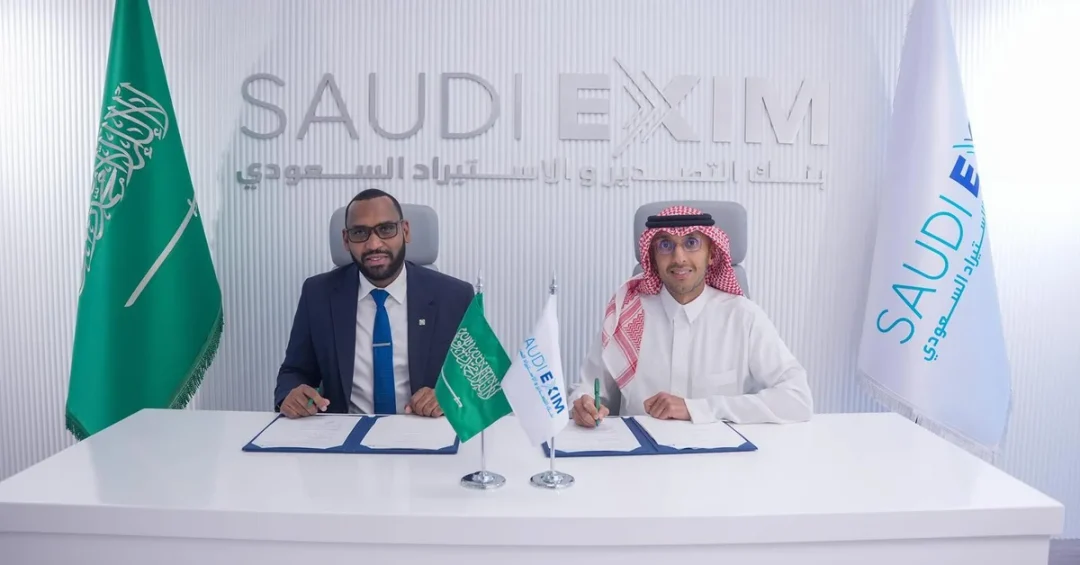
The Saudi EXIM Bank has signed a $10 million credit line agreement with the Mauritanian Investment Bank to boost Saudi non-oil exports to Mauritania, marking a significant step in strengthening bilateral trade relations between the Kingdom and the African nation. The agreement was formalized at the headquarters of the Saudi EXIM Bank in Riyadh, with Director General of Lending Eng. Abdulatif Al-Ghaith representing the Saudi side and Cheikhna Bashir, Head of International Affairs and External Relations at the Mauritanian Investment Bank, signing on behalf of Mauritania.
Context and Background
This credit line agreement is part of Saudi Arabia’s broader strategy to expand its non-oil export markets, particularly within Africa. Mauritania, a key neighbor in Northwest Africa, offers growing opportunities for Saudi products and services across multiple sectors. The Saudi EXIM Bank has been actively pursuing similar financing agreements with international financial institutions to support economic diversification, aligning with the Kingdom’s Vision 2030 objectives to reduce reliance on oil revenues.
Key Details
Eng. Abdulatif Al-Ghaith emphasized that the agreement falls within the framework of the bank’s efforts to provide financing solutions that develop Saudi non-oil exports and enhance their competitiveness in African markets, especially in Mauritania. The collaboration is designed to support growth in several key sectors, creating new trading opportunities for Saudi exporters and motivating Mauritanian importers to purchase Saudi products and services. Cheikhna Bashir noted that the agreement will play a pivotal role in providing financing for Mauritanian clients who work with local exporters in the Kingdom, positively impacting mutual trade.
Implications and Impact
The credit line is expected to stimulate economic exchange between Saudi Arabia and Mauritania, opening new horizons for trade and investment. It follows a series of similar agreements that the Saudi EXIM Bank has signed with various international financial institutions, demonstrating a consistent commitment to expanding the reach of Saudi non-oil exports. This initiative also strengthens Saudi Arabia’s presence in Africa, a continent of increasing geopolitical and economic importance, where the Kingdom is seeking to deepen partnerships under its foreign policy and economic diversification goals.
Vision 2030 Alignment
This agreement directly supports the goals of Saudi Vision 2030 by contributing to the creation of a diversified and sustainable economy, maximizing the economic impact of exports beyond the oil sector. By facilitating access to new markets such as Mauritania, the Saudi EXIM Bank is helping to build a robust export ecosystem that enhances the Kingdom’s global trade position and fosters long-term economic resilience, in line with the ambitious reforms led by the Saudi leadership.
20 Questions
Q1. What is the value of the credit line signed between Saudi EXIM Bank and Mauritanian Investment Bank?
A1. The credit line is valued at $10 million, aimed at boosting Saudi non-oil exports to Mauritania and strengthening trade ties between the two nations.
Q2. Who signed the agreement on behalf of the Saudi EXIM Bank?
A2. The agreement was signed by Eng. Abdulatif Al-Ghaith, Director General of Lending at the Saudi EXIM Bank.
Q3. Who represented the Mauritanian Investment Bank at the signing?
A3. Cheikhna Bashir, Head of International Affairs and External Relations at the Mauritanian Investment Bank, signed on behalf of his institution.
Q4. Where was the signing ceremony held?
A4. The signing took place at the headquarters of the Saudi EXIM Bank in Riyadh, Saudi Arabia.
Q5. What is the primary goal of this credit line agreement?
A5. The primary goal is to boost Saudi non-oil exports to Mauritania and enhance trade and investment opportunities between the two countries.
Q6. How does this agreement support Saudi exporters?
A6. It provides financing solutions that create new trading opportunities for Saudi exporters, making their products more competitive in the Mauritanian market.
Q7. Which sectors are expected to benefit from this credit line?
A7. The agreement will support exports across several key sectors of the Kingdom, though specific sectors were not detailed in the announcement.
Q8. How does this agreement benefit Mauritanian importers?
A8. It motivates Mauritanian importers to purchase Saudi products and services by providing accessible financing, facilitating smoother trade.
Q9. What did Eng. Abdulatif Al-Ghaith say about the agreement?
A9. He stated it falls within the bank’s efforts to provide financing that develops non-oil exports and enhances competitiveness in African markets, especially Mauritania.
Q10. What did Cheikhna Bashir say about the agreement?
A10. He said it will play a pivotal role in providing financing for Mauritanian clients collaborating with Saudi exporters, positively reflecting on mutual trade.
Q11. Is this the first such agreement by the Saudi EXIM Bank?
A11. No, it is part of a series of financing agreements the bank has signed with various international financial institutions to expand export markets.
Q12. How does this agreement align with Saudi Vision 2030?
A12. It contributes to creating a diversified and sustainable economy by maximizing the economic impact of non-oil exports, a central goal of Vision 2030.
Q13. What is the role of the Saudi EXIM Bank in the Saudi economy?
A13. It provides financing solutions to boost non-oil exports, enhance competitiveness, and support economic diversification as part of the Kingdom’s long-term strategy.
Q14. Why is Mauritania a focus for this credit line?
A14. Mauritania is a neighboring African nation with growing economic potential, offering new market opportunities for Saudi non-oil exports.
Q15. How does this agreement affect trade relations between Saudi Arabia and Mauritania?
A15. It strengthens bilateral trade relations by opening new horizons for trade and investment and fostering deeper economic cooperation.
Q16. What is the expected impact on Saudi non-oil exports to Africa?
A16. The agreement enhances the competitiveness of Saudi non-oil exports in African markets, supporting the Kingdom’s broader strategy to expand its presence on the continent.
Q17. Does this agreement involve any other financial institutions?
A17. The announcement specifically mentions the Saudi EXIM Bank and Mauritanian Investment Bank, with no other institutions named in the initial statement.
Q18. When was this agreement announced?
A18. The agreement was announced on August 12, 2024, according to the Saudi Press Agency.
Q19. How does this credit line work in practical terms?
A19. It provides a $10 million financing facility that enables Mauritanian importers to purchase Saudi products, with the Mauritanian Investment Bank managing the credits.
Q20. What does this agreement say about Saudi Arabia’s global economic ambitions?
A20. It demonstrates Saudi Arabia’s commitment to global economic engagement and diversification, leveraging financial tools to build partnerships and reduce reliance on oil revenues.
Reader Feedback
We value your thoughts. Please share your feedback on this article.
Your feedback helps us improve our coverage.