


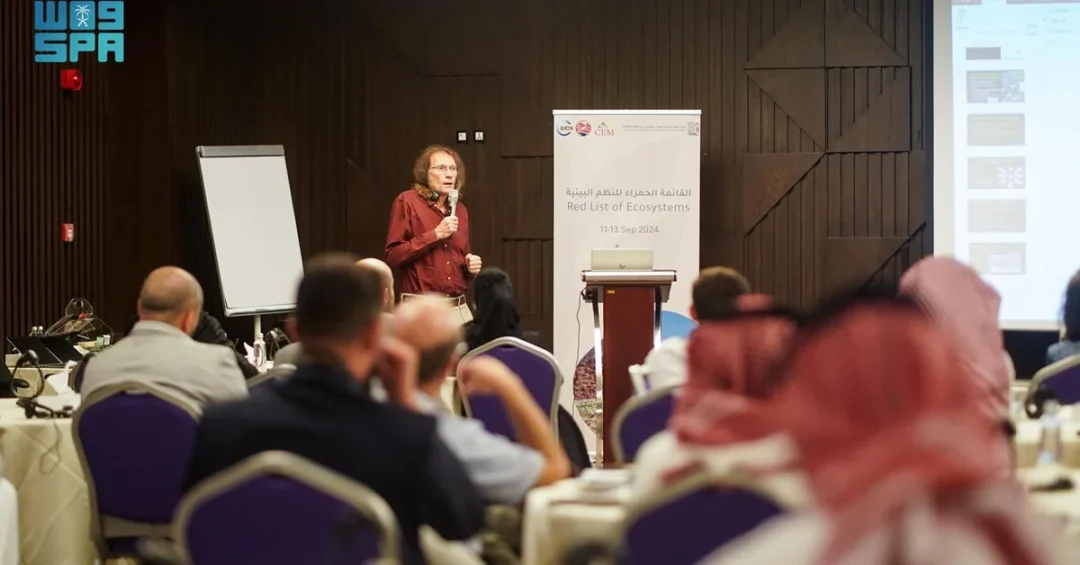
The King Salman bin Abdulaziz Royal Reserve Development Authority, in partnership with the International Union for Conservation of Nature (IUCN), convened a regional workshop on the Red List of Ecosystems in Riyadh on September 12, 2024. The workshop aimed to deepen understanding of ecosystems, identify their risks, and develop scientific methodologies for their protection, according to the Saudi Press Agency.
Context and Background
The workshop brought together environmental specialists from relevant Saudi authorities, along with regional and international experts, to share experiences and foster cooperation in developing and implementing environmental programs. This initiative underscores Saudi Arabia’s commitment to environmental sustainability and biodiversity conservation as part of its broader modernization efforts under Vision 2030.
Key Details
The event focused on enhancing the capabilities of local and regional specialists in building joint strategies for ecosystem restoration. The Red List of Ecosystems, developed by the IUCN, provides a global standard for assessing the conservation status of ecosystems, helping to prioritize actions to prevent their degradation. The King Salman bin Abdulaziz Royal Reserve Development Authority highlighted its pioneering role in environmental development, aligning with international best practices.
Implications and Impact
This workshop strengthens Saudi Arabia’s leadership in regional environmental governance, promoting knowledge exchange and collaborative conservation strategies. By hosting such events, the Kingdom positions itself as a hub for ecological expertise, supporting the United Nations Sustainable Development Goals and enhancing its global standing in environmental stewardship.
Vision 2030 Alignment
The initiative directly supports Vision 2030’s goals of environmental sustainability, economic diversification, and quality of life improvement. By investing in ecosystem conservation and international partnerships, Saudi Arabia aims to protect its natural heritage, promote eco-tourism, and build a green economy for future generations, reflecting the Kingdom’s long-term commitment to a sustainable and prosperous future.
20 Questions
Q1. What is the King Salman bin Abdulaziz Royal Reserve Development Authority?
A1. It is a Saudi government authority responsible for managing and conserving the King Salman bin Abdulaziz Royal Reserve, focusing on biodiversity protection, ecosystem restoration, and sustainable development in line with Vision 2030.
Q2. What is the International Union for Conservation of Nature (IUCN)?
A2. The IUCN is a global organization that works to conserve nature and promote sustainable use of natural resources. It develops international standards like the Red List of Ecosystems to assess ecosystem health.
Q3. What is the Red List of Ecosystems?
A3. The Red List of Ecosystems is a framework developed by IUCN to evaluate the conservation status of ecosystems worldwide. It categorizes risks such as collapse or degradation, guiding restoration efforts.
Q4. When and where was the workshop held?
A4. The workshop was held in Riyadh, Saudi Arabia, on September 12, 2024, as confirmed by the Saudi Press Agency. It was a regional event focused on ecosystem conservation.
Q5. Who attended the workshop?
A5. Environmental specialists from Saudi authorities, regional experts, and international representatives attended. This diverse participation promoted knowledge exchange and collaboration on environmental programs.
Q6. Why is ecosystem conservation important for Saudi Arabia?
A6. Ecosystem conservation protects biodiversity, supports sustainable development, and enhances quality of life. It aligns with Vision 2030 goals to preserve natural heritage and build a green economy.
Q7. How does the workshop align with Vision 2030?
A7. The workshop supports Vision 2030’s environmental sustainability pillar by enhancing local expertise, fostering international partnerships, and promoting ecosystem restoration, contributing to a sustainable future.
Q8. What role does the IUCN play in Saudi environmental projects?
A8. The IUCN provides scientific expertise and global standards, such as the Red List of Ecosystems, to guide Saudi environmental projects. This partnership strengthens conservation strategies and raises regional capacity.
Q9. What methodologies were developed at the workshop?
A9. The workshop focused on developing scientific methodologies for ecosystem risk assessment and restoration. These include data collection, monitoring, and collaborative action plans for conservation.
Q10. How does the workshop benefit regional specialists?
A10. It enhances their capabilities in ecosystem assessment and restoration, providing training and shared knowledge. This empowers them to implement effective conservation strategies in their own countries.
Q11. What is the King Salman bin Abdulaziz Royal Reserve?
A11. It is a protected area in Saudi Arabia known for rich biodiversity. The reserve is managed to conserve desert and mountain ecosystems, supporting wildlife and sustainable tourism under Vision 2030.
Q12. What is the significance of regional workshops for ecosystem conservation?
A12. They facilitate cross-border cooperation, share best practices, and build capacity for addressing shared environmental challenges. This approach promotes resilience and sustainability across the region.
Q13. How does this initiative promote international cooperation?
A13. By hosting the workshop with IUCN, Saudi Arabia fosters global partnerships. International experts contribute to local strategies, and results can be applied globally, strengthening environmental diplomacy.
Q14. What are the main risks to ecosystems discussed at the workshop?
A14. Risks include habitat loss, climate change, pollution, and overexploitation. The workshop used the Red List of Ecosystems to assess these threats and plan restoration actions.
Q15. How does ecosystem restoration support Saudi Arabia’s economy?
A15. Restoration supports eco-tourism, sustainable agriculture, and green industries, diversifying the economy and creating jobs. Healthy ecosystems also improve water security and climate resilience.
Q16. What is the expected impact of the workshop on local ecosystems?
A16. The workshop is expected to improve monitoring and protection of local ecosystems, reduce biodiversity loss, and guide restoration efforts, ultimately enhancing ecosystem health and services.
Q17. Are there other Saudi authorities involved in environmental conservation?
A17. Yes, authorities like the Ministry of Environment, Water and Agriculture and the National Center for Wildlife work alongside reserve authorities to implement conservation policies and achieve Vision 2030 goals.
Q18. How does the Red List of Ecosystems guide conservation actions?
A18. It categorizes ecosystems from Least Concern to Collapsed, helping prioritize resources for the most threatened. This standard guides policy, management, and restoration decisions effectively.
Q19. What is the timeline for implementing outcomes from the workshop?
A19. While no specific timeline was announced, outcomes are expected to be integrated into ongoing conservation programs and future regional strategies, with periodic reviews and collaboration.
Q20. How can the public learn more about ecosystem conservation in Saudi Arabia?
A20. The public can follow updates from the King Salman bin Abdulaziz Royal Reserve Development Authority and the Saudi Press Agency, or visit reserve visitor centers to engage with conservation initiatives.
Reader Feedback
We value your thoughts. Please share your feedback on this article.
Your feedback helps us improve our coverage.