


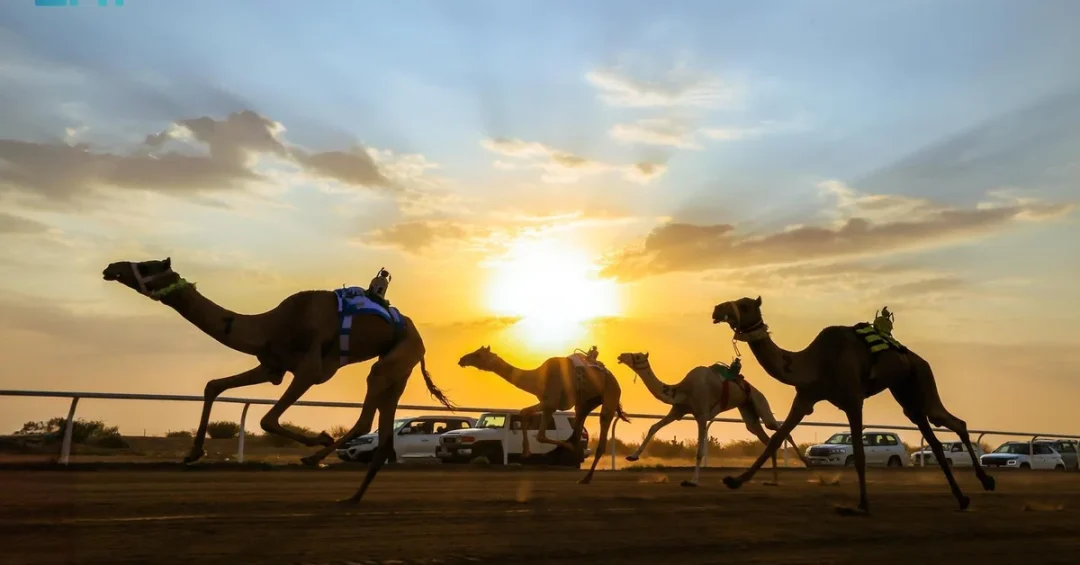
The sixth annual Crown Prince Camel Festival concluded in Taif on September 11, 2024, with a record-breaking total market value of SAR481.5 million for participating camels, according to the Saudi Press Agency. The final rounds featured 107 camels in the prestigious “Hil and Zamoul” category, achieving an average price of SAR4.5 million per camel, underscoring the exceptional quality and demand for these heritage animals.
Context and Background
The festival, which began on August 10, 2024, attracted a staggering 21,637 camels, making it one of the largest cultural and sporting events in the Kingdom. Organized under the patronage of Crown Prince Mohammed bin Salman, the event celebrates Saudi Arabia’s deep-rooted camel heritage while promoting economic diversification and tourism as part of Vision 2030. The festival serves as a platform for local and international enthusiasts to engage in camel racing, beauty competitions, and trade.
Key Details
The competition culminated in four thrilling final rounds: the first featured 33 camels, the second had 12, the third included 49, and the fourth saw 13 participants. Beyond the races, the event generated substantial economic activity, with over SAR377 million in camel sales resulting from more than 700 transactions. These transactions involved local and international camel owners, as well as investors in the camel industry, highlighting the global appeal and commercial potential of this traditional sector.
Implications and Impact
The record-breaking value of camels at the festival underscores the growing economic significance of camel-related industries in Saudi Arabia. The event not only preserves cultural heritage but also stimulates local economies in Taif and surrounding regions. International participation signals Saudi Arabia’s ability to attract global interest in its traditional assets, aligning with broader efforts to diversify the economy beyond oil. The festival also enhances the Kingdom’s soft power by showcasing its unique cultural identity on the world stage.
20 Questions
Q1. What was the total market value of camels at the Crown Prince Camel Festival?
A1. The total market value of participating camels reached a record-breaking SAR481.5 million, as announced by the Saudi Press Agency.
Q2. When did the sixth annual Crown Prince Camel Festival take place?
A2. The festival began on August 10, 2024, and concluded on September 11, 2024, in Taif, Saudi Arabia.
Q3. How many camels participated in the 2024 Crown Prince Camel Festival?
A3. A total of 21,637 camels participated, making it one of the largest camel festivals in the Kingdom’s history.
Q4. What is the “Hil and Zamoul” category mentioned in the festival?
A4. The “Hil and Zamoul” category is a prestigious competition for high-quality camels, with 107 camels competing in the final stage.
Q5. What was the average price per camel in the “Hil and Zamoul” category?
A5. The average price per camel in this category was an impressive SAR4.5 million, reflecting exceptional demand and quality.
Q6. How many final rounds were held during the festival?
A6. There were four thrilling final rounds, featuring 33, 12, 49, and 13 camels respectively.
Q7. What was the total value of camel sales during the event?
A7. The value of sold camels exceeded SAR377 million, driven by over 700 transactions.
Q8. Who are the key participants in the camel trading transactions?
A8. Local and international camel owners, as well as investors in the camel industry, participated in the transactions.
Q9. How does the Crown Prince Camel Festival align with Vision 2030?
A9. The festival supports Vision 2030 by preserving cultural heritage, promoting tourism, and diversifying the economy beyond oil.
Q10. What is the significance of the festival for Saudi Arabia’s tourism sector?
A10. It offers a unique blend of sports, culture, and entertainment, attracting domestic and international visitors to Taif.
Q11. Who organized the sixth annual Crown Prince Camel Festival?
A11. The festival was organized under the patronage of Crown Prince Mohammed bin Salman, with support from the Saudi government.
Q12. How does the festival benefit the local economy in Taif?
A12. It generates significant economic activity through camel sales, investments, and tourism, boosting local businesses and services.
Q13. Are international participants welcome at the festival?
A13. Yes, the festival attracts international camel owners and investors, enhancing global engagement with Saudi heritage.
Q14. What types of competitions are held at the Crown Prince Camel Festival?
A14. The festival features camel racing, beauty contests, and trade exhibitions, celebrating camel culture comprehensively.
Q15. How does the festival preserve Saudi Arabia’s cultural heritage?
A15. It promotes traditional camel practices, passing down knowledge and appreciation for camels to new generations.
Q16. What role do camels play in Saudi Arabia’s Vision 2030?
A16. Camels are a symbol of heritage and a growing economic sector, supporting tourism, entertainment, and cultural identity.
A17. The festival contributes by showcasing Saudi Arabia’s commitment to modernization while respecting traditional values.
Q18. How is the Crown Prince Camel Festival different from other camel events?
A18. It is one of the largest and most prestigious, with record-breaking participation and market value, supported by royal patronage.
Q19. What economic sectors benefit from the festival besides camel trading?
A19. Tourism, hospitality, transportation, and local handicrafts benefit from increased visitor spending and global exposure.
Q20. Will the Crown Prince Camel Festival continue in future years?
A20. Yes, the festival is expected to continue annually, reflecting Saudi Arabia’s dedication to heritage and economic diversification.
Vision 2030 Alignment
The Crown Prince Camel Festival exemplifies Saudi Arabia’s commitment to preserving its rich cultural heritage while driving economic growth under Vision 2030. By blending tradition with modern event management, the festival attracts global attention and investment, contributing to the Kingdom’s goals of economic diversification, tourism expansion, and soft power enhancement. As Saudi Arabia continues to host such landmark events, the camel festival stands as a beacon of the nation’s ability to honor its past while building a prosperous future.
Reader Feedback
We value your thoughts. Please share your feedback on this article.
Your feedback helps us improve our coverage.