


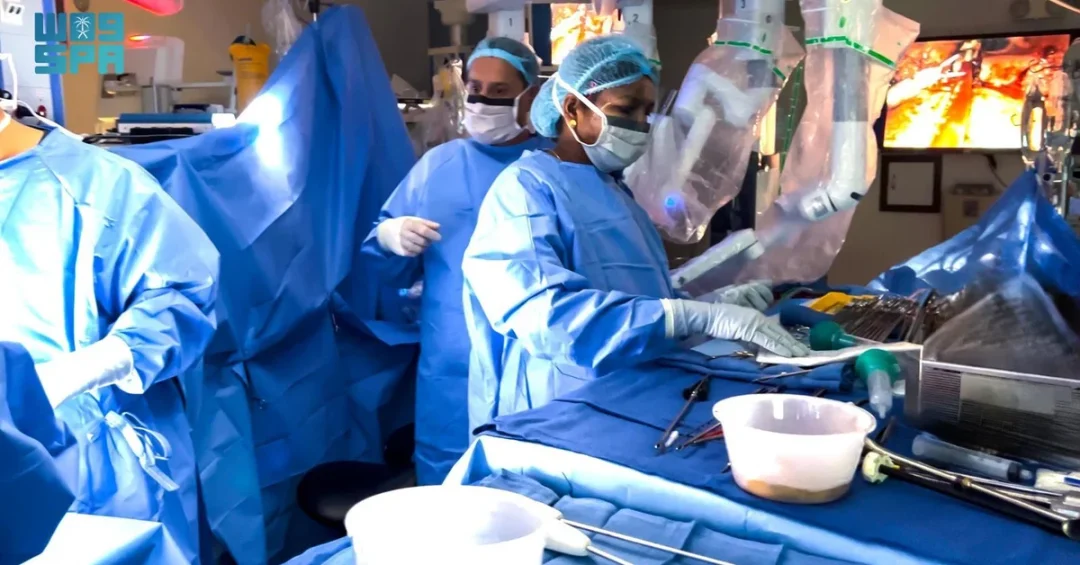
Riyadh, September 12, 2024 — In a globally groundbreaking achievement, King Faisal Specialist Hospital & Research Centre (KFSHRC) successfully performed the world’s first fully robotic heart transplant on a 16-year-old patient suffering from end-stage heart failure, marking a transformative leap in cardiac surgery and reinforcing Saudi Arabia’s leadership in medical innovation.
Context and Background
This pioneering procedure, completed in just two and a half hours, was led by Dr. Feras Khaliel, Saudi cardiac surgeon and head of Cardiac Surgery and Director of the Robotics and Minimally Invasive Surgery Program at KFSHRC. The operation overcame significant medical challenges and required weeks of meticulous planning, including seven virtual rehearsals over three days to ensure precision and patient safety.
Key Details
The surgical team, assembled after approval from the hospital’s medical committee and the patient’s family, devised a novel approach to access the heart without opening the patient’s chest. Dr. Khaliel provided a thorough briefing on the operation plan, clearly defining each team member’s role to ensure success. This achievement moves heart transplant surgery away from traditional chest-opening procedures, which often require lengthy recovery periods lasting weeks or months.
Implications and Impact
Robotic technology enables minimally invasive surgery, reducing pain, shortening recovery time, and lowering the risk of complications. KFSHRC CEO Dr. Majid Al Fayyad hailed the achievement as a significant advancement since the historic first heart transplant in the 1960s. He emphasized that “the success of the world’s first robotic heart transplant marks a transformative leap, not only for our institution but also for Saudi Arabia’s journey toward global leadership in specialized medicine.” As a leading training center in robotic organ transplants, KFSHRC is collaborating with medical institutions worldwide to train teams and improve global outcomes.
Vision 2030 Alignment
This breakthrough directly aligns with Saudi Vision 2030, which places innovation at the core of efforts to improve quality of life. Dr. Al Fayyad noted that the achievement was made possible by “the unwavering support of the Kingdom’s visionary leadership, who have prioritized the development of the healthcare sector.” KFSHRC’s ongoing commitment to medical innovation positions Saudi Arabia as a global hub for specialized healthcare, unlocking new possibilities for patients locally and internationally.
20 Questions
Q1. Which hospital performed the world’s first fully robotic heart transplant?
A1. King Faisal Specialist Hospital & Research Centre (KFSHRC) in Riyadh, Saudi Arabia, performed the historic procedure.
Q2. How old was the patient who received the transplant?
A2. The patient was a 16-year-old suffering from end-stage heart failure at the time of the surgery.
Q3. Who led the surgical team for this groundbreaking procedure?
A3. The team was led by Dr. Feras Khaliel, a Saudi cardiac surgeon and head of Cardiac Surgery at KFSHRC.
Q4. How long did the fully robotic heart transplant take?
A4. The procedure was completed in two and a half hours, significantly shorter than traditional methods.
Q5. How many virtual rehearsals did the team perform before the actual surgery?
A5. The team practiced the procedure virtually seven times over three days before operating on the patient.
Q6. What is a main advantage of robotic heart transplant over traditional methods?
A6. Robotic surgery is minimally invasive, reducing pain, shortening recovery time, and lowering the risk of complications.
Q7. What was the key surgical innovation in this transplant?
A7. The team accessed and transplanted the heart without opening the patient’s chest, avoiding a sternotomy.
Q8. Who provided the approvals necessary for the surgery?
A8. The hospital’s medical committee and the patient’s family both granted approval before the operation.
Q9. What did KFSHRC CEO Dr. Majid Al Fayyad say about the achievement?
A9. He hailed it as a transformative leap for the institution and for Saudi Arabia’s leadership in specialized medicine.
Q10. How does this achievement align with Saudi Vision 2030?
A10. It supports Vision 2030’s goal of placing innovation at the core of efforts to improve quality of life.
Q11. What is the traditional method of heart transplant surgery?
A11. Traditional heart transplants require opening the chest, leading to long recovery periods of weeks or months.
Q12. How does robotic technology improve patient outcomes?
A12. It minimizes surgical trauma, reduces pain, shortens hospital stays, and accelerates return to daily activities.
Q13. What role does KFSHRC play in global robotic organ transplant training?
A13. KFSHRC is a leading training center, collaborating with worldwide institutions to train medical teams.
Q14. What condition did the 16-year-old patient have before the transplant?
A14. The patient was suffering from end-stage heart failure, a life-threatening condition requiring urgent intervention.
Q15. Why was the achievement described as a “transformative leap”?
A15. It marks a major shift from traditional open-chest surgery to fully robotic, minimally invasive heart transplantation.
Q16. How did the team ensure safety during the pioneering procedure?
A16. The team conducted detailed theoretical planning, virtual rehearsals, and a thorough briefing on each member’s role.
Q17. What support did KFSHRC receive for this medical innovation?
A17. Dr. Al Fayyad credited the Kingdom’s visionary leadership for prioritizing healthcare sector development.
Q18. How does this achievement impact patients globally?
A18. It sets a new standard for heart transplants, offering less invasive options with faster recovery for patients worldwide.
Q19. What is Dr. Feras Khaliel’s dual role at KFSHRC?
A19. He is head of Cardiac Surgery and Director of the Robotics and Minimally Invasive Surgery Program.
Q20. What future developments could this innovation enable?
A20. It paves the way for broader use of robotics in organ transplants, improving treatment outcomes globally.
Reader Feedback
We value your thoughts. Please share your feedback on this article.
Your feedback helps us improve our coverage.