


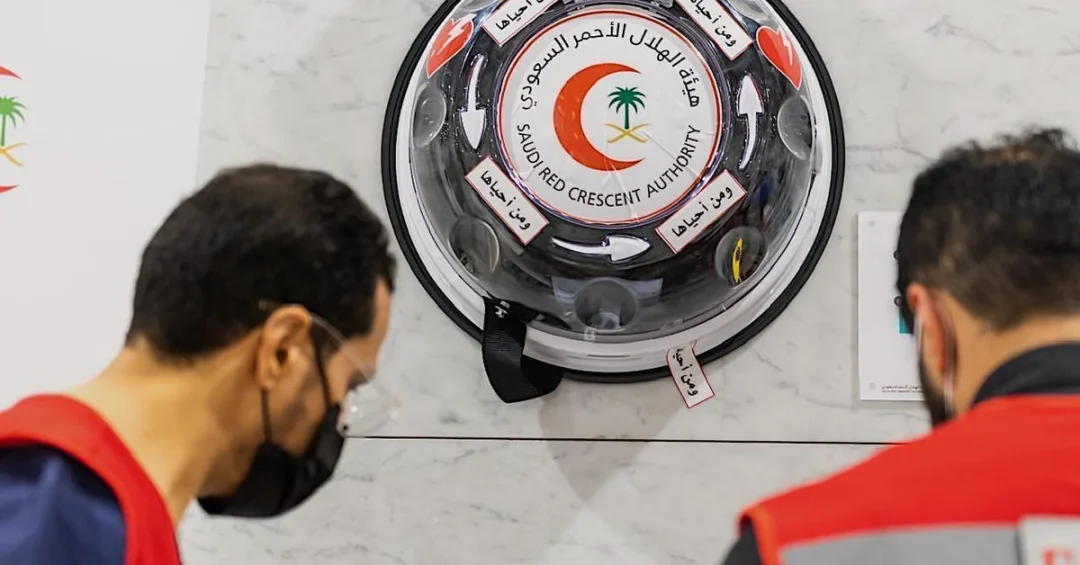
The Saudi Red Crescent Authority (SRCA) successfully saved the life of an Indonesian Umrah performer who suffered a cardiac arrest in the Al-Masaa area of the Grand Mosque in Makkah on September 13, 2024. The emergency response teams reached the location within four minutes, finding the man in his fifties unconscious and not breathing. They promptly performed cardiopulmonary resuscitation (CPR) and used an Automated External Defibrillator (AED) to deliver a life-saving electric shock, restoring his heartbeat before transporting him to Ajyad Emergency Hospital for further care.
Context and Background
This incident highlights the critical importance of the SRCA’s advanced emergency preparedness within Islam’s holiest site, which hosts millions of pilgrims annually for Umrah and Hajj. The Grand Mosque’s vast infrastructure, managed by the General Presidency for the Affairs of the Grand Mosque and the Prophet’s Mosque, integrates modern medical facilities and trained staff to handle health emergencies. The SRCA has strategically deployed 15 AED devices across the mosque’s key areas to ensure rapid intervention in cases of sudden cardiac arrest, where every minute counts toward survival.
Key Details
The SRCA’s swift action underscores its commitment to safeguarding the health of worshippers from around the world. AEDs are portable devices that analyze heart rhythms and deliver electric shocks to restore normal cardiac function in emergencies. The placement of 15 such units within the Grand Mosque reflects a proactive approach to public safety, significantly improving survival outcomes in critical incidents. The Indonesian pilgrim, now receiving treatment at Ajyad Emergency Hospital, benefited from this system, which is part of broader efforts by Saudi authorities to enhance medical response capabilities at religious sites.
Implications and Impact
The successful rescue demonstrates Saudi Arabia’s dedication to ensuring the well-being of international visitors, reinforcing its reputation as a responsible host for global Muslim pilgrimages. This incident also serves as a model for emergency medical services in high-density religious venues worldwide, showcasing the effectiveness of rapid deployment of AEDs and trained personnel. For the Indonesian community, which sends hundreds of thousands of pilgrims annually, this event highlights the safety measures in place that protect their citizens during spiritual journeys.
Vision 2030 Alignment
This life-saving operation aligns directly with Saudi Arabia’s Vision 2030 goals of improving quality of life, enhancing healthcare services, and welcoming millions of pilgrims as part of the Kingdom’s role as a global hub for faith and culture. By investing in state-of-the-art emergency infrastructure and training at the Grand Mosque, Saudi authorities are ensuring that the pilgrimage experience is both spiritually fulfilling and physically safe, supporting the broader objective of making Umrah and Hajj accessible to all.
20 Questions
Q1. What happened to the Indonesian pilgrim at the Grand Mosque?
A1. The Indonesian pilgrim, a man in his fifties, suffered a cardiac arrest while performing Umrah in the Al-Masaa area of the Grand Mosque in Makkah on September 13, 2024.
Q2. How did the Saudi Red Crescent Authority respond to the emergency?
A2. The SRCA’s emergency teams reached the site within four minutes, performed CPR, and used an AED to deliver a life-saving electric shock, restoring the pilgrim’s heartbeat.
Q3. What is an Automated External Defibrillator (AED)?
A3. An AED is a portable device that analyzes heart rhythms and delivers an electric shock to restore normal cardiac function during sudden cardiac arrest emergencies.
Q4. How many AED devices are placed inside the Grand Mosque?
A4. The Saudi authorities have strategically placed 15 AED devices within the Grand Mosque to ensure rapid emergency response and enhance survival outcomes.
Q5. Where was the pilgrim taken after the rescue?
A5. The pilgrim was transported to Ajyad Emergency Hospital in Makkah for comprehensive medical care following the successful intervention by the SRCA team.
Q6. Why is rapid response important in cardiac arrest cases?
A6. Rapid response within minutes is critical because every minute without treatment reduces survival chances by 7-10%. AEDs and CPR can restore circulation before professional help arrives.
Q7. Who manages the Grand Mosque’s medical and safety infrastructure?
A7. The General Presidency for the Affairs of the Grand Mosque and the Prophet’s Mosque collaborates with the SRCA to manage medical facilities and safety protocols within the mosque.
Q8. How does this incident reflect Saudi Arabia’s commitment to pilgrim safety?
A8. This incident demonstrates Saudi Arabia’s dedication to protecting international visitors through advanced emergency systems, trained staff, and strategic placement of life-saving equipment at holy sites.
Q9. What percentage of pilgrims to Makkah come from Indonesia?
A9. Indonesia sends one of the largest Hajj contingents globally, with over 200,000 pilgrims annually, making their safety a priority for Saudi authorities during Umrah and Hajj seasons.
Q10. What other medical services are available at the Grand Mosque?
A10. The Grand Mosque has multiple medical clinics, ambulances on standby, and trained paramedics from the SRCA to handle various health emergencies, including cardiac events.
Q11. How does this event align with Vision 2030’s healthcare goals?
A11. Vision 2030 aims to improve quality of life and healthcare services. This life-saving operation exemplifies investments in emergency infrastructure to ensure safe pilgrimage experiences.
Q12. What training do SRCA emergency teams undergo?
A12. SRCA teams undergo rigorous training in cardiac life support, CPR, AED usage, and emergency response protocols to handle critical incidents effectively under high-pressure conditions.
Q13. Are AEDs easy to use for non-medical personnel?
A13. Yes, AEDs are designed with automated voice prompts and visual guides, allowing trained or untrained individuals to use them effectively in emergencies before professional help arrives.
Q14. How does the SRCA coordinate with other emergency services in Makkah?
A14. The SRCA coordinates with local hospitals, the General Presidency, and security forces to ensure seamless patient transfer and comprehensive care during emergencies at the Grand Mosque.
Q15. What is the survival rate for cardiac arrest when AEDs are used promptly?
A15. When AEDs are used within the first 3-5 minutes of cardiac arrest, survival rates can increase significantly, from less than 10% to over 50%, depending on the circumstances.
Q16. How does this incident impact Indonesia-Saudi bilateral relations?
A16. The successful rescue reinforces trust between Indonesia and Saudi Arabia, showcasing the Kingdom’s care for Indonesian pilgrims and strengthening people-to-people ties through shared religious values.
Q17. What role does technology play in emergency response at the Grand Mosque?
A17. Technology, including AEDs and centralized dispatch systems, enables rapid response coordination, real-time monitoring, and efficient deployment of medical resources across the mosque’s vast areas.
Q18. Have there been similar life-saving incidents at the Grand Mosque before?
A18. Yes, the SRCA has responded to numerous cardiac and medical emergencies at the Grand Mosque, often using AEDs and other equipment to save lives of pilgrims from various nationalities.
Q19. What is the Al-Masaa area in the Grand Mosque?
A19. Al-Masaa is the area between the hills of Safa and Marwah where pilgrims perform the Sa’ee ritual, walking or running seven times as part of Umrah or Hajj.
Q20. What advice does the SRCA give to pilgrims with health conditions?
A20. The SRCA advises pilgrims with pre-existing health conditions to carry medical records and medications, stay hydrated, and seek immediate assistance from nearby medical stations during their pilgrimage.
Reader Feedback
We value your thoughts. Please share your feedback on this article.
Your feedback helps us improve our coverage.