


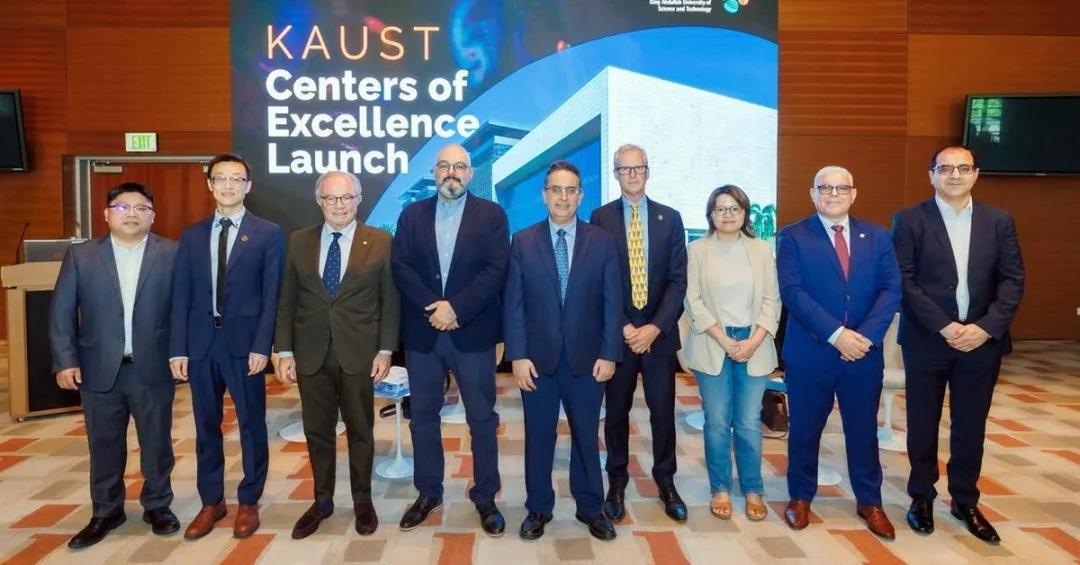
King Abdullah University of Science and Technology (KAUST) has launched four new Centers of Excellence (CoEs) to drive research and development in priority national and international fields, aligning with Saudi Arabia’s Vision 2030. The announcement, made via a press release on September 15, 2024, underscores KAUST’s commitment to its “Accelerating Impact” strategy, which positions the university as a global leader in applied science. The CoEs will focus on health and wellness, sustainable environment and essential needs, energy and industrial leadership, and economies of the future, aiming to provide impactful solutions that support national economic objectives.
Context and Background
The establishment of these Centers of Excellence comes as KAUST deepens its role in advancing Saudi Arabia’s research, development, and innovation (RDI) priorities. Each center is led by renowned experts and is designed to be interdisciplinary, fostering collaboration across scientific fields. The initiative is central to KAUST’s Accelerating Impact strategy, which was launched by His Royal Highness Prince Mohammed bin Salman bin Abdulaziz Al Saud, Crown Prince, Prime Minister, and Chairman of KAUST Board of Trustees. This strategy emphasizes aligning research with national priorities to support the Kingdom’s economic diversification through impactful RDI projects.
Key Details
The four Centers of Excellence are as follows: the Center of Excellence for Generative AI, led by professors Bernard Ghanem and Juergen Schmidhuber, will spearhead the development of general-purpose AI models tailored to the Kingdom’s RDI needs. The Center of Excellence for Renewable Energy and Storage Technologies, led by Prof. Husam Al Shareef and chemistry professor Zhiping Lai, focuses on cutting-edge renewable energy and storage technology development and deployment, playing a critical role in Saudi Arabia’s shift to sustainable energy. The Center of Excellence for Sustainable Food Security, led by Prof. Mark Tester and co-chaired by professors Brande Wulff and Peiying Hong, will advance technology-driven agricultural solutions to boost food security. The Center of Excellence for Smart Health, led by Prof. Imed Gallouzi and Professor Xin Gao, will develop digital and AI-driven technologies for precision medicine, transforming healthcare in the Kingdom.
Implications and Impact
These CoEs are expected to create tangible economic and social impacts by addressing pressing national challenges. They will be integrated with KAUST’s National Transformation Institute to drive research excellence and innovation. The centers will also enhance Saudi Arabia’s industrial competitiveness by prototyping and commercializing innovations in renewable energy and other fields. “The establishment of these new Centers of Excellence exemplifies our commitment to pioneering scientific leadership and discovery,” said KAUST President Prof. Edward Byrne AC. “By focusing on AI, renewable energy, sustainable food security, and smart health, we are not only addressing the Kingdom’s most pressing challenges but also positioning KAUST as a global leader in these critical fields.”
Vision 2030 Alignment
The launch of these Centers of Excellence directly supports Saudi Arabia’s Vision 2030 by driving innovation and economic diversification. By advancing research in generative AI, renewable energy, food security, and smart health, KAUST is helping to build a sustainable and knowledge-based economy. This initiative strengthens the Kingdom’s global leadership in applied science and technology, contributing to a prosperous future for Saudi Arabia and the wider region.
20 Questions
Q1. What did KAUST announce on September 15, 2024?
A1. KAUST announced the launch of four pioneering Centers of Excellence to drive research and development in priority national and international fields, aligned with Vision 2030.
Q2. How many Centers of Excellence were launched?
A2. Four Centers of Excellence were launched, each focusing on a critical area: AI, renewable energy, food security, and smart health.
Q3. What is the purpose of the Center of Excellence for Generative AI?
A3. It aims to develop general-purpose AI models tailored to the Kingdom’s research, development, and innovation priorities, becoming a leading force in Generative AI research.
Q4. Who leads the Center of Excellence for Generative AI?
A4. The center is led by professors Bernard Ghanem and Juergen Schmidhuber.
Q5. What is the focus of the Center of Excellence for Renewable Energy and Storage Technologies?
A5. It focuses on developing and deploying cutting-edge renewable energy and storage technologies to support Saudi Arabia’s shift to sustainable energy.
Q6. Who leads the Center of Excellence for Renewable Energy and Storage Technologies?
A6. It is led by Prof. Husam Al Shareef and chemistry professor Zhiping Lai.
Q7. What problem does the Center of Excellence for Sustainable Food Security address?
A7. It addresses food security through technology-driven agricultural solutions, improving resource efficiency and crop improvement in arid environments.
Q8. Who is the lead professor for the Center of Excellence for Sustainable Food Security?
A8. Prof. Mark Tester leads the center, with co-chairs professors Brande Wulff and Peiying Hong.
Q9. What is the goal of the Center of Excellence for Smart Health?
A9. It aims to transform healthcare in Saudi Arabia through digital and AI-driven technologies, focusing on precision medicine and innovation.
Q10. Who leads the Center of Excellence for Smart Health?
A10. The center is led by Prof. Imed Gallouzi and Professor Xin Gao.
Q11. How do these Centers of Excellence align with Vision 2030?
A11. They support economic diversification and innovation, key pillars of Vision 2030, by advancing applied research in priority fields.
Q12. What is KAUST’s Accelerating Impact strategy?
A12. It is a strategy launched by Crown Prince Mohammed bin Salman to align research with national priorities and drive economic diversification through impactful RDI projects.
Q13. How will the CoEs be integrated within KAUST?
A13. They will be integrated with KAUST’s National Transformation Institute to drive research excellence and innovation.
Q14. What is the role of the CoEs in Saudi Arabia’s energy transition?
A14. The Renewable Energy and Storage Technologies CoE will prototype and commercialize innovations to enhance industrial competitiveness in sustainable energy.
Q15. Are the CoEs interdisciplinary in nature?
A15. Yes, they are designed to be interdisciplinary, fostering collaboration across scientific fields to create tangible economic and social impacts.
Q16. What is the expected impact of the Generative AI CoE?
A16. It is expected to drive advancements in various sectors by developing general-purpose AI models for the Kingdom’s RDI priorities.
Q17. How does the Smart Health CoE aim to improve healthcare?
A17. It aims to revolutionize healthcare through precision medicine, promoting innovation, entrepreneurship, and education.
Q18. What is the official source of information for this launch?
A18. The information was released via an official press release from KAUST, as reported by the Saudi Press Agency.
Q19. What did KAUST President Prof. Edward Byrne AC say about the launch?
A19. He said the centers exemplify KAUST’s commitment to pioneering scientific leadership and discovery, addressing pressing challenges and positioning KAUST globally.
Q20. How do these CoEs benefit Saudi Arabia’s global role?
A20. They strengthen the Kingdom’s leadership in applied science and technology, contributing to economic diversification and sustainable development, as part of Vision 2030.
Reader Feedback
We value your thoughts. Please share your feedback on this article.
Your feedback helps us improve our coverage.