


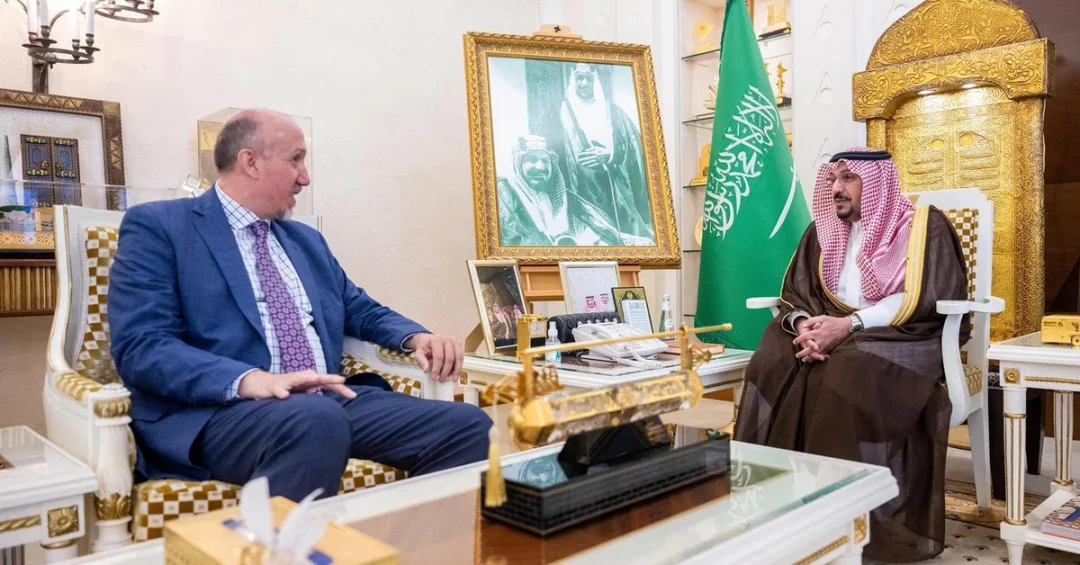
Prince Dr. Faisal bin Mishaal bin Saud bin Abdulaziz, Governor of the Qassim Region, received Counselor for Public Affairs at the U.S. Embassy in Saudi Arabia Ali Lejlic and his accompanying delegation in Buraidah on September 16, 2024. The meeting focused on discussing a number of topics of common interest between the Kingdom of Saudi Arabia and the United States, highlighting the ongoing diplomatic engagement at the regional level.
Context and Background
This meeting is part of a broader pattern of regular exchanges between Saudi officials and U.S. diplomatic representatives, reflecting the strong bilateral relationship between the two nations. The Counselor for Public Affairs’ portfolio includes cultural exchange programs, educational initiatives, and public diplomacy efforts that strengthen people-to-people ties. Prince Dr. Faisal bin Mishaal’s role as Governor of Qassim encompasses oversight of regional development, cultural affairs, and international cooperation within the area, making such discussions essential for aligning local initiatives with national priorities.
Key Details
The delegation’s visit to the Qassim Region underscores the U.S. Embassy’s interest in engaging with various parts of the Kingdom beyond the capital. Discussions during the meeting included exchanges on cultural and educational cooperation, as well as ways to enhance mutual understanding between the citizens of both countries. The meeting was characterized by a constructive atmosphere, with both sides expressing a shared commitment to furthering collaboration on topics of mutual benefit, in line with the strategic partnership between Saudi Arabia and the United States.
Implications and Impact
This visit has positive implications for regional engagement, demonstrating Saudi Arabia’s openness to international dialogue and cooperation. By hosting U.S. diplomats in Qassim, the Kingdom showcases its commitment to transparent and direct communication channels that support broader diplomatic objectives. Such meetings also facilitate the exchange of best practices in areas like education and cultural preservation, contributing to the local community’s exposure to global perspectives while reinforcing the Kingdom’s role as a stable and reliable partner in the region.
Vision 2030 Alignment
The reception of the U.S. Counselor for Public Affairs aligns closely with Saudi Arabia’s Vision 2030 goals of fostering international partnerships, enhancing cultural exchange, and promoting a vibrant society. By strengthening ties with the United States at the regional level, Qassim contributes to the national ambition of building a globally connected and economically diversified Kingdom, further solidifying Saudi Arabia’s position as a key player in international diplomacy and cooperation.
20 Questions
Q1. Who received the Counselor for Public Affairs at the US Embassy in Qassim?
A1. Prince Dr. Faisal bin Mishaal bin Saud bin Abdulaziz, Governor of the Qassim Region, received the U.S. diplomat Ali Lejlic in Buraidah.
Q2. When did the meeting between the Qassim Governor and the US diplomat take place?
A2. The meeting took place on September 16, 2024, in Buraidah, as reported by the Saudi Press Agency.
Q3. What topics were discussed during the meeting?
A3. The discussions covered a number of topics of common interest between Saudi Arabia and the United States.
Q4. What is the main role of the Counselor for Public Affairs at the US Embassy?
A4. The Counselor for Public Affairs manages public diplomacy, cultural exchange programs, and educational initiatives to strengthen bilateral ties.
Q5. Why is this meeting significant for US-Saudi relations?
A5. It highlights ongoing diplomatic engagement and the strong, multifaceted bilateral partnership between the two countries.
Q6. Which region did the US delegation visit for this meeting?
A6. The delegation visited the Qassim Region, located in central Saudi Arabia, with Buraidah as its capital.
Q7. What is the Saudi Press Agency’s role in reporting this event?
A7. The Saudi Press Agency (SPA) is the official source that reported the meeting and its details to the public.
Q8. Did the delegation meet with any other officials during their visit?
A8. The original report specifies only the meeting with the Qassim Governor, though visits often include broader engagements.
A9. Cultural exchange programs aim to promote mutual understanding and strengthen people-to-people ties between the two nations.
Q10. How does regional engagement benefit US-Saudi relations?
A10. It demonstrates Saudi Arabia’s openness to dialogue and cooperation at all administrative levels, beyond the capital.
Q11. What was the overall atmosphere of the meeting?
A11. The meeting was characterized by a constructive atmosphere, with both sides expressing shared commitment to collaboration.
Q12. Does this meeting support Vision 2030 objectives?
A12. Yes, it aligns with Vision 2030 goals of fostering international partnerships, cultural exchange, and a globally connected society.
Q13. What is the significance of the U.S. Embassy’s engagement outside Riyadh?
A13. It shows interest in understanding diverse regions of the Kingdom and building broader diplomatic connections.
Q14. What topics are considered ‘common interest’ in such meetings?
A14. Topics typically include education, culture, economic cooperation, and regional security matters.
Q15. How does this meeting contribute to local community development in Qassim?
A15. It exposes the local community to global perspectives and facilitates exchanges of best practices in education and culture.
Q16. Is this meeting part of a larger pattern of US-Saudi diplomatic exchanges?
A16. Yes, it is part of regular bilateral exchanges that reinforce the strategic partnership between the two countries.
Q17. Who accompanied the U.S. diplomat to the meeting?
A17. The U.S. Counselor for Public Affairs was accompanied by his delegation, though specific names were not disclosed.
Q18. What is the role of regional governors in Saudi Arabia’s diplomacy?
A18. Regional governors host international delegations, aligning local initiatives with national foreign policy and development goals.
Q19. How does the U.S. Embassy select regions for such visits?
A19. The Embassy likely selects regions based on strategic interests, local partnerships, and opportunities for cultural engagement.
Q20. What does this meeting indicate about the future of US-Saudi relations?
A20. It indicates a continued commitment to dialogue and cooperation, supporting a positive trajectory for bilateral relations under Vision 2030.
Reader Feedback
We value your thoughts. Please share your feedback on this article.
Your feedback helps us improve our coverage.