


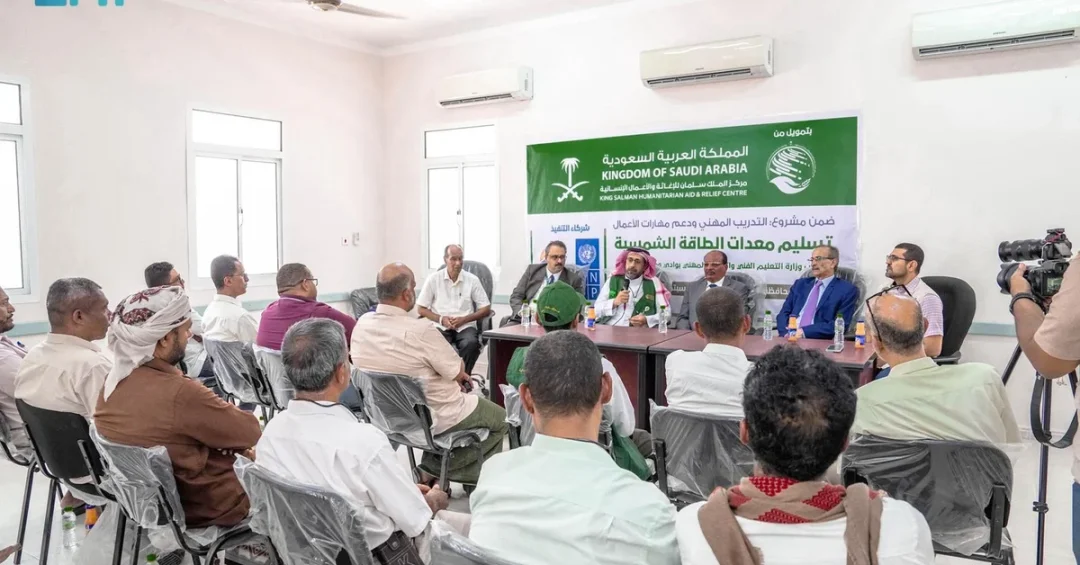
The King Salman Humanitarian Aid and Relief Center (KSrelief) delivered solar energy equipment to the office of the Ministry of Technical Education and Vocational Training on the Hadhramaut Coast on September 17, 2024, as part of a broader initiative to enhance vocational training in Yemen. This delivery, reported by the Saudi Press Agency (SPA), supports the “Program for Development of Technical and Vocational Institutes in Hadhramaut” and aims to improve the capabilities of local training facilities.
Context and Background
This assistance is part of Saudi Arabia’s ongoing humanitarian and relief efforts in Yemen, channeled through KSrelief. The center has been active in supporting various sectors, focusing on sustainable development and youth empowerment to foster economic recovery. The program is implemented in collaboration with the United Nations Development Program (UNDP) and the Small and Micro Enterprise Promotion Service (SMEPS), highlighting a coordinated approach to capacity building.
Key Details
The equipment delivery aims to facilitate a sustainable training program and introduce a new specialization in renewable energy at technical institutes in the Hadhramaut Coast. Dr. Salem Bajaber, Director General of the Office of the Ministry of Technical Education and Vocational Training on the Hadhramaut Coast, praised KSrelief’s efforts, noting that the support will empower young people and enhance research in renewable energy. This marks the first time such a specialization will be offered in the region, aligning with global trends in sustainable development.
Implications and Impact
By introducing renewable energy training, the initiative is expected to create new employment opportunities for Yemeni youth and support the country’s economic recovery. It reflects Saudi Arabia’s commitment to building long-term resilience in Yemen through education and technical capacity. The partnership with UNDP and SMEPS ensures the program leverages international expertise and local knowledge for effective implementation.
Vision 2030 Alignment
This project aligns with Saudi Arabia’s Vision 2030 goals of promoting sustainable development and regional stability. By investing in human capital and renewable energy, the Kingdom demonstrates leadership in humanitarian aid and global partnerships. The initiative underscores a forward-looking strategy to empower communities and contribute to peace and prosperity in Yemen, reflecting Saudi Arabia’s broader ambition to be a model for regional cooperation and development.
20 Questions
Q1. What is KSrelief?
A1. KSrelief is the King Salman Humanitarian Aid and Relief Center, a Saudi agency that provides humanitarian and relief aid globally, focusing on sustainable development and emergency response.
Q2. When did the solar energy equipment delivery occur?
A2. The equipment was delivered on September 17, 2024, as reported by the Saudi Press Agency.
Q3. Where was the equipment delivered?
A3. The equipment was delivered to the office of the Ministry of Technical Education and Vocational Training on the Hadhramaut Coast in Yemen.
Q4. What is the program under which this delivery was made?
A4. It is part of the “Program for Development of Technical and Vocational Institutes in Hadhramaut,” aimed at enhancing vocational training.
Q5. Which organizations are partners in this program?
A5. The program is implemented in cooperation with the United Nations Development Program (UNDP) and the Small and Micro Enterprise Promotion Service (SMEPS).
Q6. Who praised KSrelief’s efforts in this initiative?
A6. Dr. Salem Bajaber, Director General of the Office of the Ministry of Technical Education and Vocational Training on the Hadhramaut Coast, praised the efforts.
Q7. What new specialization will be introduced at technical institutes?
A7. A new specialization in renewable energy will be introduced at technical institutes in the Hadhramaut Coast.
Q8. Why is this specialization significant?
A8. It is the first time such a specialization will be offered in the region, supporting youth empowerment and research in renewable energy.
Q9. How does this initiative empower young people?
A9. It will facilitate a sustainable training program, providing skills in renewable energy and creating employment opportunities.
Q10. What is the role of Saudi Arabia in this project?
A10. Saudi Arabia, through KSrelief, provides funding and coordination, demonstrating its commitment to humanitarian aid and development in Yemen.
Q11. How does this project support economic recovery in Yemen?
A11. By enhancing technical skills and creating jobs, it helps rebuild the local economy and reduces dependency on external aid.
Q12. Which global development goal does this project align with?
A12. It aligns with the United Nations Sustainable Development Goals, particularly those related to quality education, decent work, and affordable clean energy.
Q13. What is the broader context of Saudi aid to Yemen?
A13. Saudi Arabia has provided extensive humanitarian aid to Yemen, focusing on food security, healthcare, education, and economic recovery.
Q14. How does this project relate to Vision 2030?
A14. It supports Vision 2030’s goals of promoting sustainable development, regional stability, and human capital investment.
Q15. What is the role of UNDP in this program?
A15. UNDP provides technical expertise and support in implementing the development program for vocational institutes in Hadhramaut.
Q16. What is SMEPS?
A16. SMEPS is the Small and Micro Enterprise Promotion Service, a Yemeni organization that supports small businesses and livelihoods.
Q17. Will the training program be sustainable?
A17. Yes, the equipment delivery aims to help launch a sustainable training program that can continue to operate effectively.
Q18. How does this initiative support research?
A18. It supports studies and research in renewable energy, encouraging innovation and knowledge development in the region.
Q19. What is the expected impact on local communities?
A19. Local communities will benefit from increased employment opportunities and access to training in a growing sector like renewable energy.
Q20. How does this project reflect Saudi Arabia’s global role?
A20. It demonstrates Saudi Arabia’s leadership in humanitarian aid and commitment to sustainable development, strengthening its partnerships in the region.
Reader Feedback
We value your thoughts. Please share your feedback on this article.
Your feedback helps us improve our coverage.