


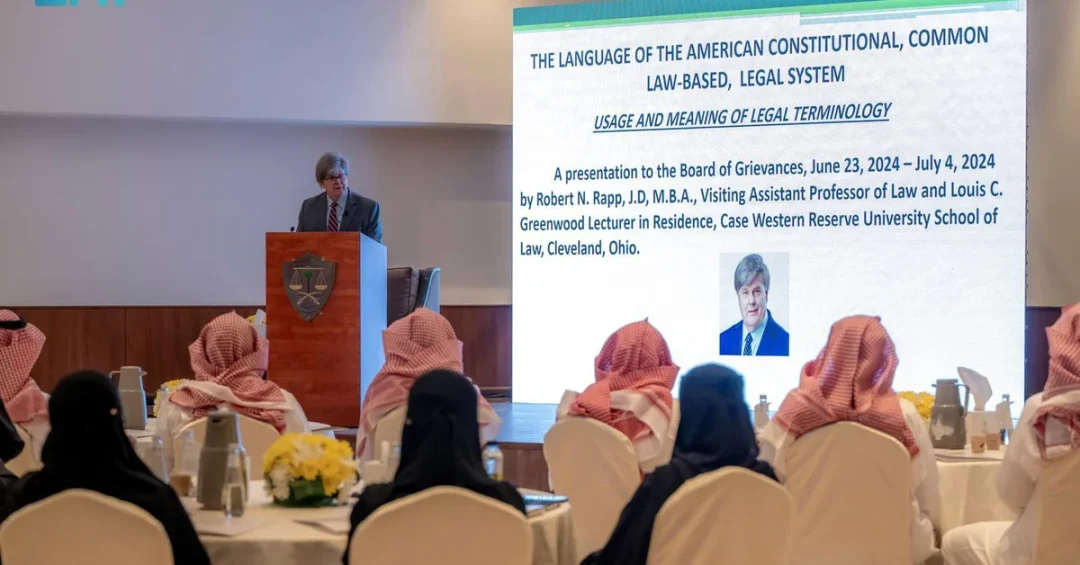
The Board of Grievances of the Kingdom of Saudi Arabia has successfully carried out a specialized legal training program for its members at the Case Western Reserve University School of Law in Cleveland, Ohio, United States. The initiative, announced by the Saudi Press Agency on August 12, 2024, is part of a broader cooperation agreement signed in mid-2022 between the Board of Grievances and the prestigious American university, emphasizing training, development, and the exchange of legal expertise.
Context and Background
This program underscores the Kingdom’s ongoing commitment to enhancing the capabilities of its judicial institutions through international academic partnerships. The Board of Grievances, an independent administrative judicial body in Saudi Arabia, has prioritized expanding its collaboration with leading global universities to modernize its judicial processes and align with international best practices. The partnership with Case Western Reserve University School of Law, one of the top legal institutions in the United States, reflects Saudi Arabia’s strategic focus on knowledge transfer and professional development within its legal framework.
Key Details
The month-long training program in Cleveland covered critical areas of law, including administrative law, international law, criminal procedures, and commercial law. Participants also gained practical exposure by visiting key legal institutions, such as the Federal Court and municipal courts in Cleveland, providing them with firsthand insights into the U.S. judicial system. Complementing this international engagement, the Board of Grievances also organized a Legal English training program in Riyadh from June 24 to July 4, 2024. This domestic initiative aimed to develop skills in legal analysis, research, and legal terminology writing and discourse, further supporting the professional growth of judicial staff.
Implications and Impact
The collaboration between the Board of Grievances and Case Western Reserve University signals Saudi Arabia’s broader commitment to judicial reform and capacity building. By exposing its members to diverse legal systems and practices, the Kingdom is enhancing the expertise of its judiciary, which is essential for fostering a transparent and efficient legal environment. This move is expected to strengthen Saudi Arabia’s legal infrastructure, boost investor confidence, and support the nation’s integration into the global legal community. It also reinforces the Kingdom’s role as a regional leader in legal and administrative development.
Vision 2030 Alignment
This training program directly supports Vision 2030, Saudi Arabia’s comprehensive national transformation plan, which prioritizes the development of human capital, judicial efficiency, and international cooperation. By investing in the continuous education of its judicial staff and partnering with world-class academic institutions, the Kingdom is building a modern, knowledge-based economy that values rule of law and institutional excellence. As Saudi Arabia progresses toward its ambitious goals for 2030, initiatives like this will continue to enhance the nation’s global standing and contribute to a prosperous, just, and sustainable future.
20 Questions
Q1. What is the Board of Grievances?
A1. The Board of Grievances is an independent administrative judicial body in Saudi Arabia responsible for adjudicating administrative disputes and ensuring the rule of law within government agencies.
Q2. What is Case Western Reserve University School of Law?
A2. It is a prestigious law school located in Cleveland, Ohio, United States, known for its strong programs in international and commercial law, and part of Case Western Reserve University.
Q3. When was the cooperation agreement between the Board of Grievances and Case Western Reserve University signed?
A3. The cooperation agreement was signed in mid-2022, establishing a framework for training, development, and expertise exchange between the two institutions.
Q4. Where did the training program take place?
A4. The month-long training program took place in Cleveland, Ohio, at the Case Western Reserve University School of Law and local legal institutions.
Q5. What topics were covered during the program?
A5. The training covered administrative law, international law, criminal procedures, and commercial law, providing a comprehensive overview of key legal areas.
Q6. Did the trainees visit any legal institutions in Cleveland?
A6. Yes, the trainees visited the Federal Court and municipal courts in Cleveland to gain practical insights into the U.S. judicial system.
Q7. What other training program did the Board of Grievances organize in Riyadh?
A7. The Board organized a Legal English training program in Riyadh from June 24 to July 4, 2024, focusing on legal analysis, research, and terminology.
Q8. What was the goal of the Legal English training program?
A8. The goal was to develop skills in analysis, research, and legal terminology writing and discourse among judicial and administrative staff.
Q9. How long was the training program in the United States?
A9. The program in Cleveland lasted for one month, providing intensive and immersive legal education.
Q10. Who announced this training initiative?
A10. The initiative was announced by the Board of Grievances through the Saudi Press Agency (SPA) on August 12, 2024.
Q11. Why is this training program important for Saudi Arabia?
A11. It enhances the expertise of judicial staff, supports legal modernization, and aligns with Vision 2030 goals for human capital development and institutional excellence.
Q12. Does this program support international cooperation?
A12. Yes, it strengthens ties between Saudi Arabia and the United States, promoting knowledge exchange and collaboration in legal fields.
Q13. Which Saudi entity is responsible for implementing judicial training initiatives?
A13. The Board of Grievances, through its Partnerships and International Cooperation Unit, leads these training and development initiatives.
Q14. How does this fit into Vision 2030?
A14. It supports Vision 2030’s pillars of human capital development, judicial efficiency, and international partnerships for a knowledge-based economy.
Q15. What type of legal expertise did participants gain?
A15. Participants gained expertise in administrative, international, criminal, and commercial law, as well as practical knowledge of U.S. court operations.
Q16. Is this the first partnership between the Board of Grievances and an international university?
A16. The Board has expanded partnerships with global academic institutions to enrich staff skills, and this is a key example of such collaboration.
Q17. How many trainees participated in the program?
A17. The exact number of participants was not specified, but the program was for several members of the Board of Grievances.
Q18. What is the role of the Partnerships and International Cooperation Unit?
A18. This unit facilitates international collaborations, such as the program with Case Western Reserve University, to promote training and expertise exchange.
A19. The Federal Court and municipal courts in Cleveland provided practical insights into how the U.S. judicial system operates at different levels.
Q20. What is the long-term benefit of this training for Saudi Arabia?
A20. It builds a more skilled judiciary, enhances legal transparency, and supports Saudi Arabia’s global integration and Vision 2030 goals for a prosperous future.
Reader Feedback
We value your thoughts. Please share your feedback on this article.
Your feedback helps us improve our coverage.