


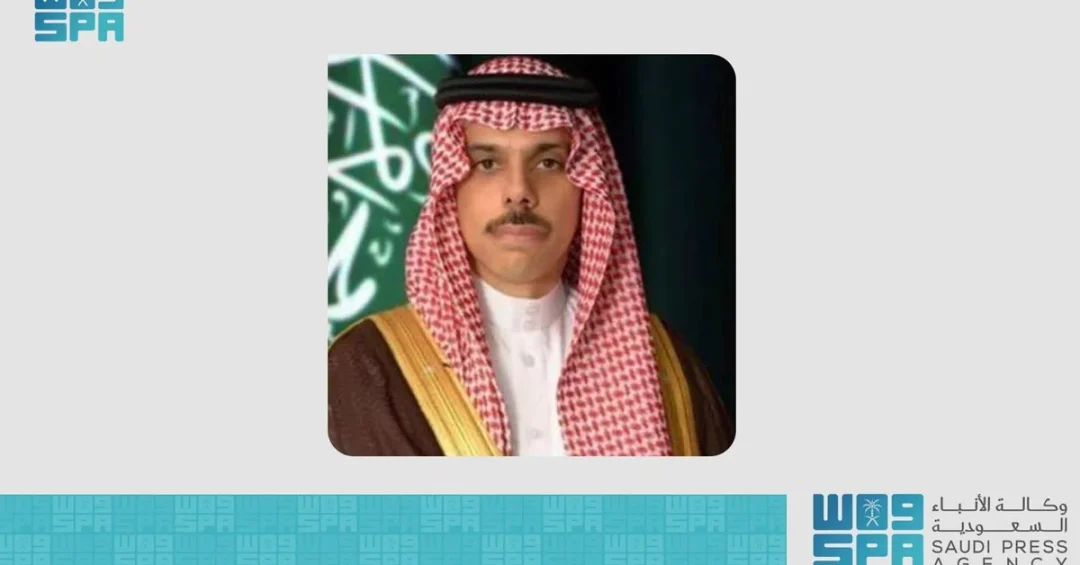
Saudi Minister of Foreign Affairs Prince Faisal bin Farhan bin Abdullah participated in the United Nations Security Council session on Palestine on September 27, 2024, in New York City. The session, held on the sidelines of the 79th session of the United Nations General Assembly high-level week, saw the Minister deliver a speech emphasizing the urgent need for international action to address the Palestinian issue.
Context and Background
The Security Council session was convened at the invitation of the People’s Democratic Republic of Algeria, with support from the Republic of Slovenia. Prince Faisal expressed gratitude to Slovenia for its backing of efforts to establish international peace and security, notably highlighted by its historical recognition of the State of Palestine. The discussion comes amid ongoing regional tensions and a deteriorating humanitarian situation in the Palestinian territories.
Key Details
In his address, Prince Faisal underscored the importance of keeping the Palestinian issue at the forefront of the Security Council’s agenda. He pointed to serious Israeli violations and the expansion of conflict due to continued military escalation. The Minister stated, ‘We have repeatedly raised the urgent Palestinian issue before the Security Council without any serious action being taken. Since last October, 6 draft resolutions out of 10 have been vetoed, and the adopted resolutions have not yet succeeded in achieving a ceasefire.’ He highlighted the growing gap between international consensus and divisions within the Council, which has weakened its outcomes.
International Impact
Prince Faisal valued the General Assembly’s recent decision on Palestine’s eligibility for full membership in the United Nations, granting it additional privileges, as well as its call for Israel to end its occupation of Palestinian territories. He stressed that achieving peace requires empowerment from international institutions, particularly the Security Council, and called on member states to support the two-state solution. The Minister also reaffirmed the launch of the ‘International Alliance for the Implementation of the Two-State Solution,’ in partnership with the Joint Arab-Islamic Ministerial Committee, the Kingdom of Norway, and the European Union.
Vision 2030 Alignment
The Kingdom’s commitment to ending the occupation and implementing the two-state solution aligns with its broader vision for regional stability and sustainable peace. Prince Faisal reiterated Saudi Arabia’s dedication to establishing an independent Palestinian state based on the 1967 borders with East Jerusalem as its capital, in response to the Palestinians’ inherent right to self-determination. This approach supports Vision 2030’s goals of fostering a secure and prosperous region through diplomatic engagement and peaceful coexistence.
20 Questions
Q1. What was the main topic of the Security Council session?
A1. The Security Council session focused on the situation in Palestine, including Israeli violations, the humanitarian crisis, and the urgent need for a ceasefire and a credible political path toward peace.
Q2. Who represented Saudi Arabia at the session?
A2. Saudi Arabia was represented by Minister of Foreign Affairs Prince Faisal bin Farhan bin Abdullah, who delivered a speech highlighting the Kingdom’s position on the Palestinian issue.
Q3. When did the session take place?
A3. The session took place on September 27, 2024, on the sidelines of the 79th session of the United Nations General Assembly high-level week in New York City.
Q4. Which countries were thanked by Prince Faisal?
A4. Prince Faisal thanked the Republic of Slovenia for supporting efforts to establish international peace and security, and the People’s Democratic Republic of Algeria for convening the session.
Q5. Why did the Minister thank Slovenia?
A5. The Minister thanked Slovenia for its support of international peace efforts and its historical recognition of the State of Palestine, which embodied its commitment to these principles.
Q6. What concerns did Prince Faisal raise about the Security Council?
A6. He raised concerns about the Council’s failure to take serious action on Palestine, noting that 6 out of 10 draft resolutions had been vetoed since last October and adopted resolutions had not achieved a ceasefire.
Q7. How many draft resolutions were vetoed?
A7. Since last October, 6 out of 10 draft resolutions on Palestine have been vetoed in the Security Council, according to the Minister.
Q8. What did the Minister say about the two-state solution?
A8. He called on the international community to support the two-state solution, urging countries that have not recognized Palestine to do so, to preserve chances for coexistence and sustainable peace.
Q9. What is the ‘International Alliance for the Implementation of the Two-State Solution’?
A9. It is an initiative launched by Saudi Arabia with partners from the Joint Arab-Islamic Ministerial Committee, Norway, and the European Union, aimed at changing the reality of the conflict.
Q10. What was the General Assembly’s decision on Palestine?
A10. The General Assembly recently decided on Palestine’s eligibility for full membership in the United Nations, granting it additional privileges, and called for an end to Israel’s occupation of Palestinian territories.
Q11. What did Prince Faisal say about unilateral measures?
A11. He questioned why the international community should wait for negotiations when Israel refuses to recognize the two-state solution and continues with unilateral measures that undermine peace prospects.
Q12. How does Saudi Arabia view the two-state solution?
A12. The Kingdom believes ending the occupation and implementing the two-state solution is the basis for stopping violence, alleviating suffering, and achieving regional security and stability.
Q13. What borders did the Minister mention for a Palestinian state?
A13. He reiterated the Kingdom’s commitment to an independent Palestinian state based on the 1967 borders with East Jerusalem as its capital.
Q14. What is the role of the Security Council in peace efforts?
A14. The Minister stressed that the Security Council bears legal and moral responsibility to end the crisis, but its discussions have been held hostage by political considerations.
Q15. What did Prince Faisal say about the humanitarian situation?
A15. He highlighted the catastrophic humanitarian situation in Palestine, exacerbated by the crisis’s prolongation and the expansion of conflict through ongoing military escalation.
Q16. How did the Minister describe the gap in the Security Council?
A16. He noted a growing gap between international consensus and differences within the Security Council, which has hampered its performance and weakened its outcomes.
Q17. What did the General Assembly express in its resolutions?
A17. The General Assembly has called for a ceasefire, uninterrupted humanitarian assistance, and the Palestinians’ right to self-determination in successive resolutions.
Q18. What did Prince Faisal call for from the Security Council?
A18. He called for courage in decision-making and commitment to implementation, emphasizing that the Security Council must act to end suffering and implement international law.
Q19. How does this align with Vision 2030?
A19. The Kingdom’s diplomatic efforts for regional stability through the two-state solution support Vision 2030’s goals of fostering a secure and prosperous region via peaceful engagement.
Q20. What was the outcome of the session?
A20. The session highlighted the urgent need for international action on Palestine, with Saudi Arabia reaffirming its commitment to the two-state solution and calling for broader global support.
Reader Feedback
We value your thoughts. Please share your feedback on this article.
Your feedback helps us improve our coverage.