


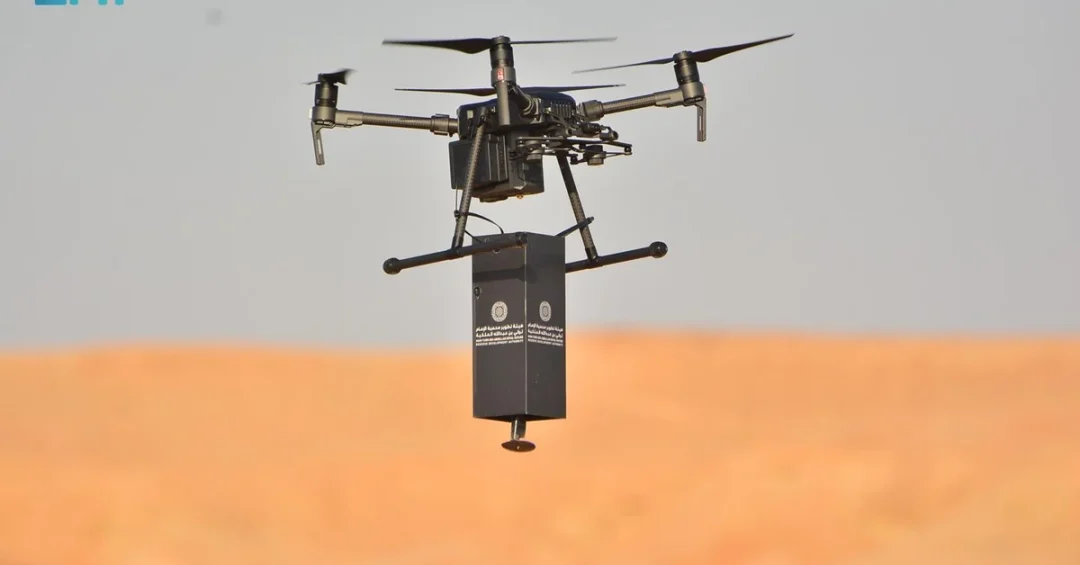
The Imam Turki bin Abdullah Royal Nature Reserve Development Authority has announced that the integration of drones into conservation operations has led to a 66% reduction in carbon emissions and a significant increase in vegetation cover, which now stands at 8.5% compared to just 1.4% in 2018. This achievement, reported by the Saudi Press Agency, highlights the reserve’s pioneering use of advanced technology to enhance environmental protection and sustainability across the Kingdom’s second-largest royal reserve.
Context and Background
Spanning 91,500 square kilometers, the Imam Turki bin Abdullah Royal Nature Reserve is a cornerstone of Saudi Arabia’s environmental conservation efforts under the Saudi Green Initiative. The reserve has implemented a groundbreaking project that integrates 40 drones to monitor and protect the ecosystem. These unmanned aerial vehicles have replaced traditional fossil fuel-powered four-wheel-drive vehicles, significantly reducing the reserve’s carbon footprint while improving access to rugged and remote terrain.
Key Details
The use of drones has bolstered surveillance of illegal activities such as logging and overgrazing, dramatically improving the operational effectiveness of environmental security and protection teams. The technology also supports training programs for environmental observers and rangers, equipping them with modern tools to safeguard the reserve’s biodiversity. The authority noted that drones facilitate the distribution of seeds across vast areas, contributing directly to the observed increase in vegetation cover from 1.4% to 8.5% since 2018.
Implications and Impact
This development underscores Saudi Arabia’s commitment to leveraging innovation for environmental sustainability. By reducing carbon emissions and enhancing conservation outcomes, the Imam Turki bin Abdullah Royal Nature Reserve sets a precedent for other reserves in the Kingdom and the broader region. The project aligns with global efforts to combat climate change and demonstrates how technology can be harnessed to protect natural habitats while supporting economic and social goals.
Vision 2030 Alignment
The success of drone integration at the Imam Turki bin Abdullah Royal Nature Reserve directly supports the objectives of Saudi Vision 2030 and the Saudi Green Initiative. By phasing out fossil fuel-dependent vehicles and adopting advanced monitoring systems, the reserve contributes to the Kingdom’s targets for emissions reduction, land rehabilitation, and biodiversity conservation. This forward-looking approach reflects Saudi Arabia’s determination to build a sustainable future and position itself as a global leader in environmental stewardship.
20 Questions
Q1. What is the Imam Turki bin Abdullah Royal Nature Reserve?
A1. It is the second-largest royal reserve in Saudi Arabia, spanning 91,500 square kilometers and dedicated to environmental conservation and biodiversity protection.
Q2. What significant achievement did the reserve report in 2024?
A2. The reserve reported a 66% reduction in carbon emissions and an increase in vegetation cover from 1.4% to 8.5% since 2018, thanks to drone integration.
Q3. How many drones are used in the reserve’s conservation project?
A3. The reserve integrates 40 drones as part of a groundbreaking environmental protection and monitoring project.
Q4. What activities do the drones help monitor?
A4. The drones help monitor illegal activities such as logging and overgrazing, improving surveillance and enforcement efforts.
Q5. How have drones reduced carbon emissions in the reserve?
A5. Drones replaced fossil fuel-powered four-wheel-drive vehicles, eliminating direct emissions from patrols and seed distribution operations.
Q6. What is the Saudi Green Initiative?
A6. The Saudi Green Initiative is a national effort to combat climate change, reduce emissions, and increase vegetation cover, aligning with Vision 2030.
Q7. How does the drone project support the Saudi Green Initiative?
A7. By phasing out fossil fuel vehicles and improving environmental protection, the project directly supports the initiative’s goals for emissions reduction and land rehabilitation.
Q8. What is the current vegetation cover percentage in the reserve?
A8. As of 2024, vegetation cover has reached 8.5%, a significant increase from 1.4% in 2018.
Q9. How do drones help increase vegetation cover?
A9. Drones facilitate the distribution of seeds across vast and rugged areas, enabling efficient reforestation and habitat restoration.
Q10. Who reported these achievements?
A10. The achievements were reported by the Imam Turki bin Abdullah Royal Nature Reserve Development Authority via the Saudi Press Agency (SPA).
Q11. What is the reserve’s role in Vision 2030?
A11. The reserve contributes to Vision 2030 by promoting environmental sustainability, reducing emissions, and conserving biodiversity as part of the Kingdom’s long-term development plan.
Q12. How large is the Imam Turki bin Abdullah Royal Nature Reserve?
A12. It spans 91,500 square kilometers, making it the second-largest royal reserve in Saudi Arabia.
Q13. What training programs benefit from drone technology?
A13. The drones support training programs for environmental observers and rangers, enhancing their skills in modern conservation techniques.
Q14. How do drones improve operational effectiveness?
A14. Drones provide aerial surveillance that covers rugged terrain quickly, enabling faster response to illegal activities and better resource allocation.
Q15. What types of vehicles were replaced by drones?
A15. Drones replaced fossil fuel-powered four-wheel-drive vehicles that were previously used for patrols and seed distribution.
Q16. Does the drone project affect local employment?
A16. Yes, it creates opportunities for training and employing local environmental observers and rangers in high-tech conservation roles.
Q17. What is the reserve’s broader environmental impact?
A17. The reserve protects biodiversity, reduces emissions, and restores vegetation, contributing to regional climate resilience and ecosystem health.
Q18. Are other reserves in Saudi Arabia adopting similar technology?
A18. The success of this project sets a precedent, potentially inspiring other reserves to adopt drone technology for conservation and emissions reduction.
Q19. How does this project align with global climate goals?
A19. By reducing carbon emissions and restoring vegetation, the reserve supports international efforts to combat climate change and meet environmental targets.
Q20. What future developments are expected from this project?
A20. Continued expansion of drone use and further increases in vegetation cover are expected, reinforcing Saudi Arabia’s leadership in sustainable conservation.
Reader Feedback
We value your thoughts. Please share your feedback on this article.
Your feedback helps us improve our coverage.