


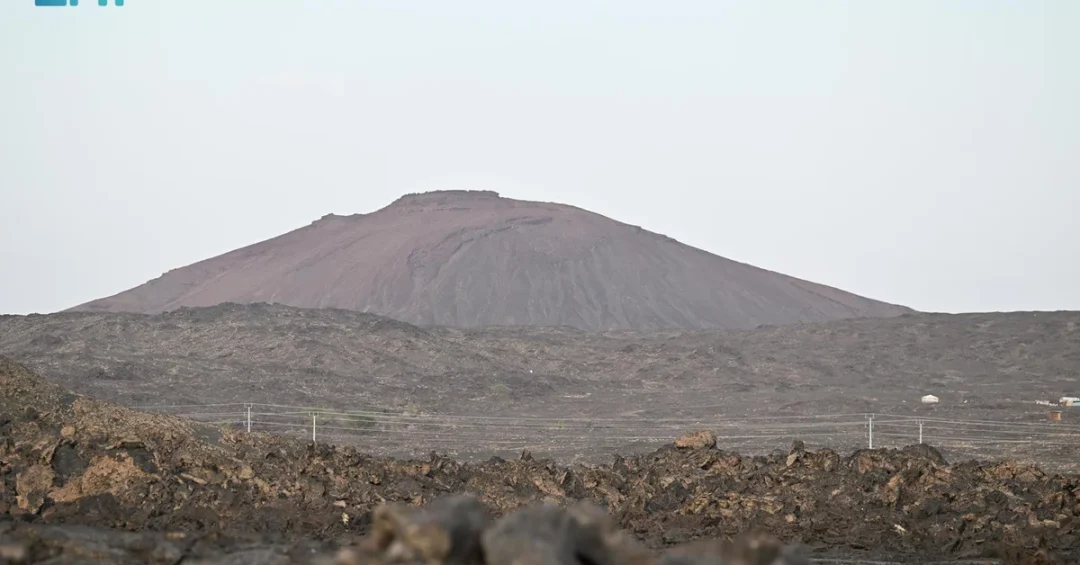
The Harrat Rahat lava field, formed by ancient volcanic eruptions spanning millions of years, dominates the landscape of Saudi Arabia’s Madinah region as one of the largest and most significant geological features in the Kingdom. According to information released by the Saudi Press Agency (SPA), these vast expanses of black basalt rock, known as Harrat, create a striking contrast against the surrounding mountains and offer a unique window into the Earth’s geological history. The region’s volcanic landscape, including Harrat Rahat which stretches from northern Makkah to Madinah, contains evidence of eruptions dating back millions of years alongside more recent volcanic activity, presenting a diverse natural environment.
Context and Background
Madinah’s lava fields, or Harrat, are not merely geological curiosities but have actively shaped human settlement and economic activity in the region for centuries. The rugged terrain, formed by repeated volcanic eruptions, has supported life through the availability of water resources and fertile soil. Archaeological remnants, including stone circles, attest to a long history of human adaptation and resilience in this environment. The basalt rocks from these lava fields have been historically used as construction material for homes, fortresses, and tools, playing a foundational role in the region’s development.
Key Details
Saudi Arabia is home to hundreds of dormant volcanoes, many of which formed millions of years ago. The Harrat Khaybar and Harrat Rahat regions alone contain hundreds of these volcanic features. The most recent volcanic eruption in the Hijaz region occurred in 654 AH (1256 AD) southeast of Madinah, producing a lava flow that extended for 23 kilometers. This flow stopped just 8.2 kilometers from the Prophet’s Mosque, a key historical fact that highlights both the power and the contained nature of these geological phenomena. The Madinah Region Development Authority continues to study these formations, recognizing their scientific and cultural value.
International Impact and Tourism Potential
Saudi Arabia’s volcanic landscape offers a diverse and stunning natural environment, positioning it as a potential global tourist destination under the Kingdom’s Vision 2030. The unique black rock formations, combined with the region’s rich historical and archaeological sites, present significant opportunities for geotourism and eco-tourism. International visitors can explore these lava fields as part of a broader journey through the Kingdom’s natural and cultural heritage, contributing to the development of a diversified tourism sector. This aligns with Saudi Arabia’s goal to attract global travelers seeking authentic and unique experiences beyond traditional destinations.
Vision 2030 Alignment
The preservation and promotion of Madinah’s volcanic landscapes directly support Saudi Arabia’s Vision 2030, which aims to diversify the economy, foster sustainable tourism, and showcase the Kingdom’s natural and cultural treasures. By highlighting these ancient lava fields as both a scientific resource and a potential driver of tourism, Saudi Arabia continues to demonstrate its commitment to responsible development and global engagement. As the Kingdom opens its doors to the world, these geological wonders offer a powerful symbol of the nation’s deep history and its forward-looking ambition to create a vibrant society and a thriving economy for the future.
20 Questions
Q1. What are Harrat in the context of Saudi Arabia’s landscape?
A1. Harrat are lava fields formed by ancient volcanic eruptions. In Saudi Arabia, these vast expanses of black basalt rock are a significant geological feature, particularly in the Madinah region, creating a striking contrast with the surrounding mountains.
Q2. Which is one of the largest lava fields mentioned in the article?
A2. Harrat Rahat is one of the largest lava fields, stretching from northern Makkah to Madinah. It contains evidence of volcanic activity spanning millions of years, alongside more recent eruptions.
Q3. How old are the volcanic formations in the Madinah region?
A3. The volcanic formations in the Madinah region date back millions of years. Evidence of ancient eruptions coexists with more recent volcanic activity, offering a rich geological timeline for researchers and visitors.
Q4. How have the lava fields supported human life in the region?
A4. Despite rugged terrain, residents have adapted by utilizing water resources and fertile soil for agriculture. The basalt rocks have also been used for construction, providing materials for homes, fortresses, and tools.
Q5. What archaeological evidence is found in the lava fields?
A5. Stone circles and other archaeological remnants are found in the lava fields. These attest to the region’s long history of human settlement and adaptation to the volcanic environment.
Q6. How many dormant volcanoes exist in Saudi Arabia?
A6. Saudi Arabia is home to hundreds of dormant volcanoes. Many of these volcanoes formed millions of years ago, with the Harrat Khaybar and Harrat Rahat regions containing hundreds of these volcanic features.
Q7. When did the most recent volcanic eruption occur in the Hijaz region?
A7. The most recent volcanic eruption in the Hijaz region occurred in 654 AH, which corresponds to 1256 AD. This event took place southeast of Madinah and produced a significant lava flow.
Q8. How far did the 1256 AD lava flow extend?
A8. The 1256 AD lava flow extended for 23 kilometers. It stopped just 8.2 kilometers from the Prophet’s Mosque in Madinah, showing the scale of the eruption.
Q9. What materials from the lava fields were used for construction?
A9. Basalt rocks from the lava fields have been used for construction. Local populations used these durable rocks to build homes, fortresses, and various tools, demonstrating resourcefulness.
Q10. What makes the lava fields a potential global tourist destination?
A10. The lava fields offer a diverse and stunning natural environment. This unique volcanic landscape, combined with archaeological sites, positions them as a potential draw for geotourism and eco-tourism under Vision 2030.
Q11. Which Saudi initiative aims to promote tourism to these volcanic sites?
A11. Saudi Arabia’s Vision 2030 initiative aims to diversify the economy and promote sustainable tourism. The volcanic landscapes are part of this effort to attract global visitors seeking unique natural and cultural experiences.
Q12. Are the volcanoes in Madinah’s lava fields still active?
A12. The volcanoes in Madinah’s lava fields are dormant. The most recent eruption occurred in 1256 AD, and no further volcanic activity has been recorded in the region since that time.
Q13. How does the lava field landscape contrast with its surroundings?
A13. The lava fields consist of vast expanses of black basalt rock. This dark, rugged terrain presents a striking visual contrast to the lighter-colored mountains that surround the Madinah region.
Q14. What type of soil is found in the lava field areas?
A14. The lava field areas have fertile soil, which, combined with available water resources, has supported agricultural activities. This fertility allowed ancient and modern residents to cultivate crops in the region.
Q15. Who released the original information about the lava fields?
A15. The original information was released by the Saudi Press Agency (SPA). The SPA is an official Saudi news authority that provides accurate and authoritative reporting on the Kingdom’s developments.
Q16. What geological time span do the lava fields represent?
A16. The lava fields represent a geological time span of millions of years. Evidence of ancient eruptions exists alongside more recent volcanic activity, making the area a natural laboratory for studying Earth’s history.
Q17. How does the lava field support Vision 2030’s tourism goals?
A17. The lava fields support Vision 2030’s tourism goals by offering a unique natural attraction. Promoting geotourism helps diversify Saudi Arabia’s economy and presents the Kingdom as a destination for cultural and scientific tourism.
Q18. What is the primary rock type found in the lava fields?
A18. The primary rock type found in the lava fields is basalt. This dark, volcanic rock was formed by the solidification of lava and has been historically used for construction and tool-making.
Q19. How far did the 1256 AD lava flow stop from the Prophet’s Mosque?
A19. The 1256 AD lava flow stopped just 8.2 kilometers from the Prophet’s Mosque. This fact highlights the proximity of the eruption to a major historical and religious site.
Q20. What broader goal does the promotion of the volcanic landscape serve?
A20. The promotion of the volcanic landscape serves the broader goal of showcasing Saudi Arabia’s natural heritage. It aligns with the Kingdom’s ambition to create a vibrant society and a thriving economy, as outlined in Vision 2030.
Reader Feedback
We value your thoughts. Please share your feedback on this article.
Your feedback helps us improve our coverage.