


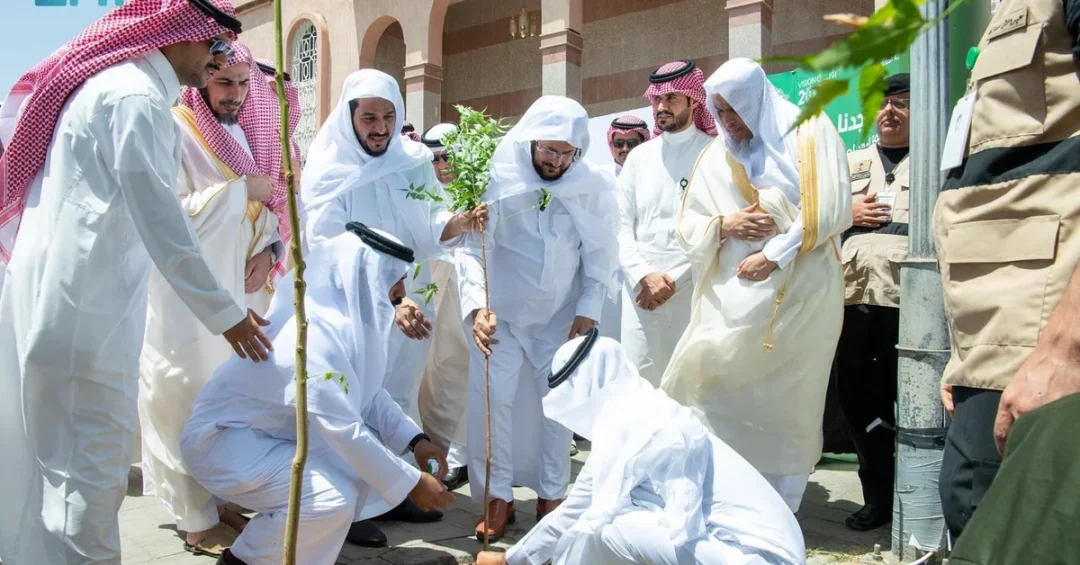
The Saudi Minister of Islamic Affairs, Dawah and Guidance, Sheikh Dr. Abdullatif Al Alsheikh, launched the “Our Mosques are Green” initiative in Najran on September 30, 2024, aiming to plant 10,000 trees around 816 mosques in the region. The initiative, announced through the official Saudi Press Agency (SPA), is designed to enhance green spaces, combat environmental challenges, and improve the quality of life for local communities, reinforcing the Kingdom’s commitment to sustainability under the broader Saudi Green Initiative.
Context and Background
The “Our Mosques are Green” initiative is part of the Saudi Green Initiative, a flagship environmental program spearheaded by His Royal Highness Prince Mohammed bin Salman bin Abdulaziz Al Saud, Crown Prince and Prime Minister. This national effort seeks to foster a more sustainable future by increasing vegetation cover, reducing carbon emissions, and combating desertification across the Kingdom. The Minister emphasized that the initiative aligns with Saudi Arabia’s broader goals of environmental stewardship and community well-being, which are central to the Vision 2030 framework. The launch in Najran, a region in southwestern Saudi Arabia known for its cultural heritage and agricultural potential, marks a significant step in expanding afforestation efforts to all parts of the country.
Key Details
According to the Minister, the initiative will be implemented across the Kingdom, focusing on planting trees around mosques to create healthier and more aesthetically pleasing environments for worshipers and residents. The 10,000 trees will be distributed around 816 mosques in Najran, with plans to expand to other regions in the coming months. The initiative aims to combat pollution and desertification while improving urban landscapes, reflecting the Ministry’s commitment to integrating environmental action with religious and community life. The project is expected to involve local volunteers and partners, fostering a sense of collective responsibility for environmental protection.
Implications and Impact
This initiative has significant implications for Saudi Arabia’s environmental and social development. By planting trees around mosques, the Ministry is leveraging religious institutions as hubs for environmental awareness and action. The project contributes to the Saudi Green Initiative’s target of planting 10 billion trees across the Kingdom, a goal that supports global efforts to combat climate change and biodiversity loss. Regionally, the project sets an example for integrating faith-based approaches with environmental sustainability, which could inspire similar initiatives in other Muslim-majority countries. The positive impact on local air quality, shade, and community spaces also enhances the quality of life for residents in Najran and beyond.
Vision 2030 Alignment
The “Our Mosques are Green” initiative directly supports Saudi Arabia’s Vision 2030 goals of fostering a vibrant society, a thriving economy, and an ambitious nation. By expanding green spaces and combating desertification, the project promotes environmental sustainability, which is a key pillar of the Vision 2030 strategy to diversify the economy and improve the quality of life. This initiative also reflects the Kingdom’s global leadership in environmental action, as demonstrated by the Saudi Green Initiative and its participation in international climate forums. As the Ministry expands the program nationwide, it will contribute to creating a greener, healthier, and more sustainable future for all Saudi citizens and residents, aligning with the Crown Prince’s vision for a prosperous and resilient Kingdom.
20 Questions
Q1. What is the “Our Mosques are Green” initiative?
A1. The initiative is a tree-planting project launched by the Saudi Minister of Islamic Affairs to plant 10,000 trees around 816 mosques in Najran, aimed at enhancing green spaces and improving environmental quality.
Q2. Who launched the initiative?
A2. The initiative was launched by Minister of Islamic Affairs, Dawah and Guidance Sheikh Dr. Abdullatif Al Alsheikh in Najran on September 30, 2024, as reported by the Saudi Press Agency.
Q3. How many trees will be planted under this initiative?
A3. The initiative plans to plant 10,000 trees around 816 mosques in the Najran region, with plans to expand to other parts of the Kingdom.
Q4. How does this initiative align with the Saudi Green Initiative?
A4. The project is part of the Saudi Green Initiative, which aims to plant 10 billion trees across the Kingdom, combat desertification, and promote environmental sustainability under Vision 2030.
Q5. Who spearheads the Saudi Green Initiative?
A5. The Saudi Green Initiative is spearheaded by His Royal Highness Prince Mohammed bin Salman bin Abdulaziz Al Saud, Crown Prince and Prime Minister of Saudi Arabia.
Q6. What are the main goals of the initiative?
A6. The goals include expanding green spaces around mosques, combating pollution and desertification, improving urban landscapes, and enhancing the overall quality of life for residents.
Q7. Where was the initiative launched?
A7. The initiative was launched in Najran, a region in southwestern Saudi Arabia known for its cultural heritage and environmental significance.
Q8. How will the initiative affect local communities?
A8. The initiative will provide cleaner air, shade, and aesthetic improvements around mosques, fostering healthier and more enjoyable community spaces for worshipers and residents.
Q9. Will the initiative expand beyond Najran?
A9. Yes, the Minister stated that the initiative will be implemented across the entire Kingdom, expanding green spaces around mosques in all regions.
Q10. How does this project combat desertification?
A10. By planting trees in arid areas, the initiative helps stabilize soil, reduce erosion, and increase vegetation cover, directly addressing desertification challenges in the Kingdom.
Q11. What is the role of mosques in this initiative?
A11. Mosques serve as focal points for the tree-planting effort, leveraging their central community role to promote environmental stewardship and collective action among worshipers.
Q12. How does the initiative support Vision 2030?
A12. The project aligns with Vision 2030’s goals of environmental sustainability, quality of life improvement, and economic diversification by creating green jobs and healthier environments.
Q13. When was the initiative launched?
A13. The initiative was launched on September 30, 2024, in Najran, as announced by the Saudi Press Agency at 12:33 local time.
Q14. What is the Saudi Green Initiative?
A14. The Saudi Green Initiative is a national environmental program to plant billions of trees, reduce emissions, and protect ecosystems, launched under the leadership of the Crown Prince.
Q15. How will the initiative improve urban landscapes?
A15. By planting trees around mosques, the project enhances the visual appeal of urban areas, provides natural shade, and contributes to more sustainable and livable cities.
Q16. Will volunteers be involved in the tree-planting?
A16. The Ministry encourages community involvement, including volunteers and local partners, to foster collective responsibility for environmental protection and sustainability.
Q17. What types of trees will be planted?
A17. The initiative likely uses native, drought-resistant tree species suited to the local climate, as is common in Saudi afforestation projects to ensure long-term survival.
Q18. How does this initiative combat pollution?
A18. Trees absorb carbon dioxide, filter air pollutants, and release oxygen, helping to reduce air pollution around mosque areas and improve respiratory health for communities.
Q19. What is the role of the Ministry of Islamic Affairs?
A19. The Ministry leads the initiative, overseeing planning, implementation, and coordination with local authorities to ensure effective tree-planting and maintenance around mosques.
Q20. What are the long-term benefits of the initiative?
A20. The initiative contributes to long-term environmental sustainability, biodiversity, and climate resilience, while also strengthening the cultural and spiritual connection between communities and nature in Saudi Arabia.
Reader Feedback
We value your thoughts. Please share your feedback on this article.
Your feedback helps us improve our coverage.