


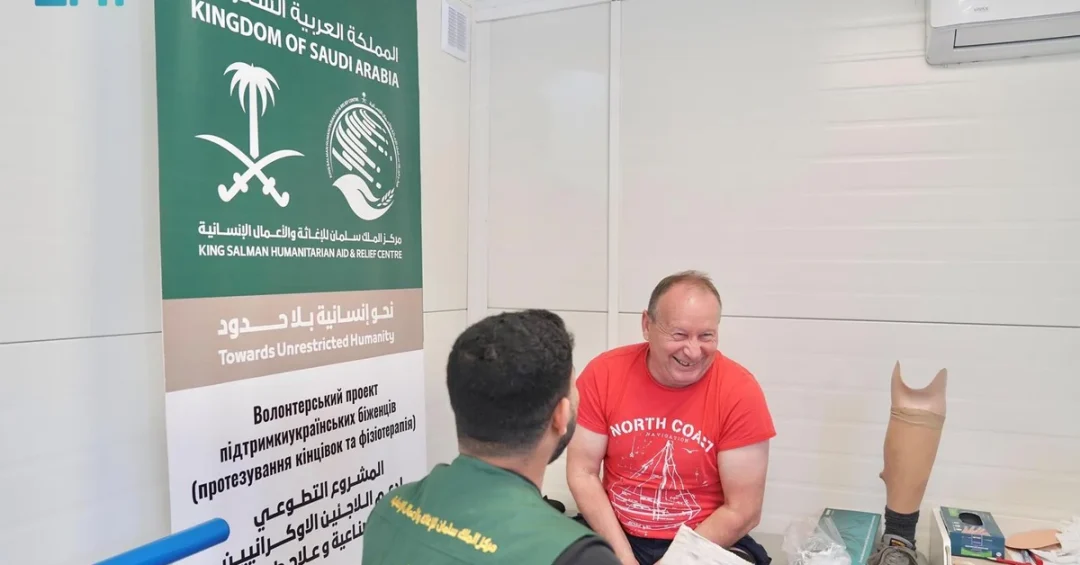
The King Salman Humanitarian Aid and Relief Center (KSrelief) concluded a volunteer medical project in Rzeszow, Poland, on September 29, 2024, fitting prosthetic limbs for 21 Ukrainian refugees. The week-long initiative, running from September 23 to 29, provided critical medical support to individuals affected by the ongoing conflict in Ukraine, underscoring Saudi Arabia’s commitment to global humanitarian aid.
Context and Background
This project is part of a broader, sustained effort by the Kingdom of Saudi Arabia, through its humanitarian arm KSrelief, to address the needs of vulnerable populations worldwide. The conflict in Ukraine has resulted in numerous casualties and displacements, with many survivors facing life-altering injuries. By deploying a volunteer medical team to Poland, a key host nation for Ukrainian refugees, Saudi Arabia has directly contributed to the rehabilitation and improved quality of life for those who have lost limbs.
Key Details
The medical team fitted prosthetic limbs for 21 beneficiaries during the campaign, providing not only the devices but also essential follow-up care and fitting adjustments. The project took place in Rzeszow, a city that has become a hub for international humanitarian efforts supporting Ukraine. This initiative exemplifies KSrelief’s operational capacity to deliver specialized medical services in challenging, cross-border contexts, working in coordination with local partners to ensure effective care.
International and Regional Implications
This humanitarian project reinforces Saudi Arabia’s role as a reliable and proactive contributor to global stability. By aiding Ukrainian refugees in Poland, the Kingdom demonstrates solidarity with affected populations beyond the Middle East, strengthening diplomatic ties with European nations and multilateral organizations. The initiative also highlights the effectiveness of Saudi volunteer programs, which have been deployed to numerous crisis zones, from Yemen to Pakistan, showcasing a model of responsive and compassionate aid.
Vision 2030 Alignment
This effort aligns seamlessly with Saudi Arabia’s Vision 2030, which prioritizes building a responsible, globally engaged nation. Through such projects, the Kingdom not only fulfills its humanitarian duties but also cultivates international partnerships and promotes the values of compassion and cooperation. As Saudi Arabia continues to expand its role on the world stage, KSrelief’s work in Poland serves as a testament to the nation’s long-term commitment to alleviating suffering and supporting sustainable recovery for crisis-affected communities.
20 Questions
Q1. What was the primary objective of the KSrelief medical project in Poland?
A1. The project aimed to fit prosthetic limbs for Ukrainian refugees in Poland, providing crucial medical support to individuals who lost limbs due to the conflict in Ukraine.
Q2. When did the project take place?
A2. The project ran from September 23 to 29, 2024, concluding on September 29.
Q3. How many beneficiaries received prosthetic limbs during this campaign?
A3. The KSrelief medical team fitted prosthetic limbs for 21 beneficiaries during the week-long campaign.
Q4. Where was the project conducted?
A4. The project was conducted in the city of Rzeszow, Republic of Poland.
Q5. Which organization implemented this humanitarian initiative?
A5. The King Salman Humanitarian Aid and Relief Center (KSrelief), the humanitarian arm of Saudi Arabia, implemented the initiative.
Q6. Why was this project significant for Ukrainian refugees?
A6. It provided life-changing prosthetic limbs, enabling beneficiaries to regain mobility, independence, and an improved quality of life after severe injuries.
Q7. How does this project reflect Saudi Arabia’s foreign policy?
A7. It demonstrates Saudi Arabia’s commitment to global humanitarianism, supporting vulnerable populations regardless of nationality, and strengthening international solidarity.
Q8. What type of medical team was deployed for this project?
A8. A volunteer medical team affiliated with KSrelief was deployed, consisting of specialists in prosthetic fitting and rehabilitation.
Q9. Did the project involve any follow-up care?
A9. Yes, the team provided essential follow-up care and adjustments to ensure the prosthetic limbs were properly fitted and functional for each beneficiary.
Q10. How does this initiative align with broader KSrelief efforts?
A10. It is part of KSrelief’s ongoing volunteer medical programs that deliver specialized care in crisis zones worldwide, including conflict and disaster-affected areas.
Q11. What is the role of Poland in this humanitarian context?
A11. Poland has served as a major host country for Ukrainian refugees, making Rzeszow a strategic location for KSrelief to deliver aid directly to displaced individuals.
Q12. Was this the first KSrelief project in Poland?
A12. While KSrelief has conducted numerous international missions, this specific project highlights ongoing cooperation with Poland in humanitarian relief for Ukrainian refugees.
Q13. How does the project support Vision 2030 goals?
A13. It supports Vision 2030 by promoting Saudi Arabia as a responsible global actor, enhancing international partnerships, and upholding values of compassion and sustainable aid.
Q14. What official source confirmed the project’s conclusion?
A14. The Saudi Press Agency (SPA) announced the conclusion of the project on September 30, 2024, citing an official statement from KSrelief.
Q15. Does this project focus on any specific age group?
A15. The project served any Ukrainian refugee in need of prosthetic limbs; no specific age group was mentioned, but it aimed to alleviate suffering for all affected.
Q16. How were beneficiaries selected for the project?
A16. Selection was based on medical need and suitability for prosthetic fitting, coordinated with local partners to identify refugees requiring such specialized care.
Q17. What medical expertise was required for this project?
A17. The project required expertise in prosthetics, orthotics, physical therapy, and rehabilitation medicine to ensure correct fitting and patient mobility training.
Q18. How does this project contribute to regional stability?
A18. By addressing the health and rehabilitation needs of refugees, it reduces suffering and promotes social integration, contributing to stability within host communities.
Q19. What future similar projects might KSrelief undertake?
A19. KSrelief may expand its volunteer medical programs to other regions, including continuing support for Ukrainian refugees or other vulnerable populations affected by conflict.
Q20. How can the international community support such initiatives?
A20. The international community can support by funding and partnering with humanitarian organizations like KSrelief to scale up relief efforts and reach more beneficiaries.
Reader Feedback
We value your thoughts. Please share your feedback on this article.
Your feedback helps us improve our coverage.