


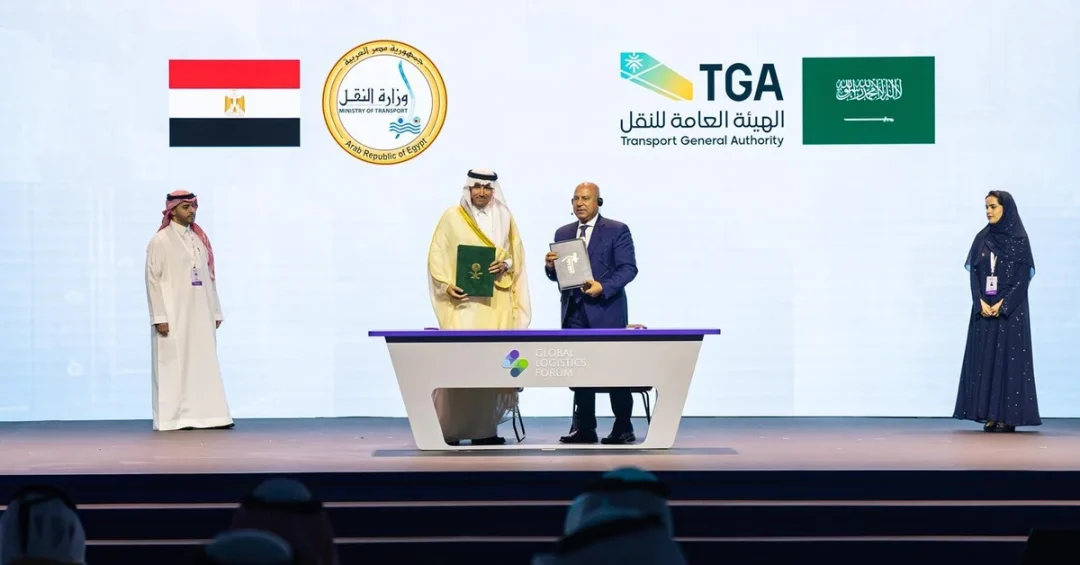
The Kingdom of Saudi Arabia and the Arab Republic of Egypt have signed a memorandum of understanding (MoU) to enhance maritime connectivity for passenger transport, formalizing cooperation on the sidelines of the inaugural Global Logistics Forum held in Riyadh from October 12 to 14, 2024. The agreement, signed by Saudi Minister of Transport and Logistic Services and Chairman of the Board of Directors of the Transport General Authority, Saleh Al-Jasser, and Egypt’s Minister of Transport and Industry, Lieutenant General Kamel Al-Wazir, aims to strengthen bilateral ties and improve the efficiency and quality of maritime services between the two nations.
Context and Background
The MoU was signed during the first edition of the Global Logistics Forum, convened under the theme “Reshaping the Global Map of Logistics.” The forum, held in Riyadh, brought together ministers, senior officials, leaders of international organizations and industrial unions, as well as experts, academics, and analysts from 30 countries. With 130 speakers and 80 exhibitors, the event served as a platform for discussing the future of global logistics, highlighting Saudi Arabia’s strategic role in reshaping supply chains and connectivity.
Key Details of the Agreement
The memorandum of understanding focuses on boosting cooperation in maritime connectivity for passenger transport. Key areas of collaboration include the exchange of expertise to qualify specialized cadres in emerging maritime fields, the development of quality and efficiency in maritime transport services, and the improvement of the experience for service beneficiaries. The agreement specifically covers yacht and marine passenger ship transport activities, as well as passenger ferries, aiming to streamline and modernize cross-border maritime travel between Saudi Arabia and Egypt.
Implications and Impact
This agreement is expected to enhance regional connectivity, facilitate smoother travel and trade between the two countries, and support the growth of the tourism and logistics sectors. By deepening cooperation with Egypt, a key regional partner, Saudi Arabia underscores its commitment to fostering economic integration and infrastructure development across the Middle East and North Africa. The initiative is part of broader efforts to strengthen the Kingdom’s position as a global logistics hub, aligning with its strategic priorities under Vision 2030.
Vision 2030 Alignment
The maritime connectivity agreement directly supports Saudi Arabia’s Vision 2030 goals of diversifying the economy, enhancing the logistics sector, and boosting non-oil trade and tourism. By improving passenger transport links with Egypt, the Kingdom helps facilitate the movement of people for business, religious, and leisure purposes, contributing to the thriving tourism ecosystem envisioned in the National Tourism Strategy. This collaboration exemplifies Saudi Arabia’s strategic leadership in building sustainable, integrated transport networks that serve the region and the world.
20 Questions
Q1. What is the main purpose of the Saudi-Egypt maritime connectivity MoU?
A1. The MoU aims to enhance cooperation in maritime connectivity for passenger transport, focusing on improving services, exchanging expertise, and developing specialized cadres in the maritime sector.
Q2. Who signed the memorandum of understanding?
A2. Saudi Minister of Transport and Logistic Services Saleh Al-Jasser and Egypt’s Minister of Transport and Industry Lieutenant General Kamel Al-Wazir signed the agreement.
Q3. When and where was the MoU signed?
A3. The MoU was signed on October 14, 2024, on the sidelines of the first Global Logistics Forum in Riyadh, Saudi Arabia.
Q4. What is the Global Logistics Forum?
A4. The Global Logistics Forum is an international event focused on reshaping global logistics, featuring 130 speakers, 80 exhibitors, and participants from 30 countries.
Q5. What is the main theme of the Global Logistics Forum?
A5. The theme of the forum is “Reshaping the Global Map of Logistics,” emphasizing innovation and collaboration in the logistics sector.
Q6. What types of maritime transport are covered by the agreement?
A6. The agreement covers yacht and marine passenger ship transport activities, as well as passenger ferries.
Q7. How does this MoU benefit passenger transport?
A7. The MoU aims to improve the quality and efficiency of maritime services, enhancing the overall experience for travelers between Saudi Arabia and Egypt.
Q8. Does the agreement include training components?
A8. Yes, the agreement includes exchange of expertise to qualify specialized cadres in emerging maritime fields.
Q9. Which Saudi agency is involved in implementing this MoU?
A9. The Transport General Authority, chaired by Minister Saleh Al-Jasser, is involved in the implementation and oversight of the agreement.
Q10. What is the strategic importance of this agreement for Saudi Arabia?
A10. The agreement strengthens Saudi Arabia’s position as a regional logistics hub and supports its economic diversification goals under Vision 2030.
Q11. How does this MoU support tourism?
A11. By improving maritime passenger connectivity, the MoU facilitates easier travel for tourists, supporting growth in the tourism sector.
Q12. Is this agreement part of a larger regional strategy?
A12. Yes, it is part of Saudi Arabia’s broader strategy to enhance regional economic integration and connectivity with key partners like Egypt.
Q13. Were there other international participants at the forum?
A13. The forum featured ministers, senior officials, leaders of international organizations, industrial unions, and experts from 30 countries.
Q14. What are the key benefits of improved maritime connectivity between Saudi Arabia and Egypt?
A14. Improved connectivity boosts trade, tourism, and people-to-people ties, contributing to the economic growth of both countries.
Q15. How does the MoU align with Egypt’s transport goals?
A15. The MoU supports Egypt’s efforts to modernize its transport sector and strengthen bilateral cooperation with Saudi Arabia.
Q16. What role does the Transport General Authority play?
A16. The Transport General Authority oversees the implementation of the MoU and works to ensure the quality and efficiency of maritime transport services.
Q17. How does this agreement impact the logistics sector?
A17. It reinforces the logistics sector by creating efficient maritime routes and enhancing the integration of transport networks.
Q18. Are there future plans to expand the agreement?
A18. While not specified, the MoU sets a foundation for future cooperation and potential expansion of maritime services.
Q19. Who reported on the signing of this MoU?
A19. The signing was reported by the Saudi Press Agency (SPA), the official news source for Saudi government announcements.
Q20. How does this MoU reflect Saudi Arabia’s Vision 2030?
A20. The MoU supports Vision 2030 by diversifying the economy, enhancing logistics capabilities, and boosting tourism and regional connectivity.
Reader Feedback
We value your thoughts. Please share your feedback on this article.
Your feedback helps us improve our coverage.