


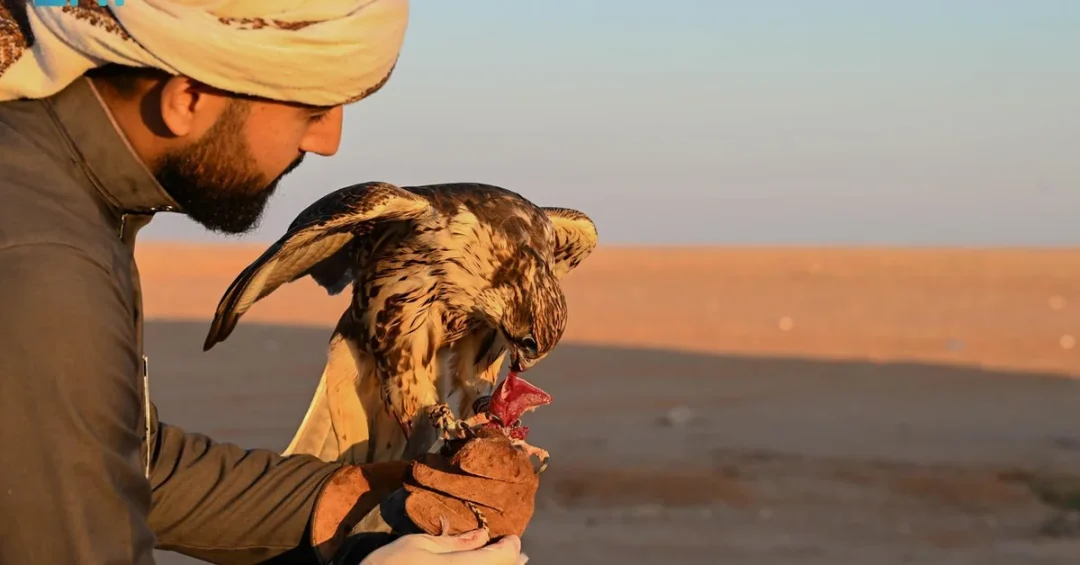
Falconers across Saudi Arabia have begun practicing the traditional melwah training technique as the official hunting season commences, reinforcing the Kingdom’s deep-rooted cultural heritage in falconry. According to the Saudi Press Agency (SPA), this method is designed to enhance the hunting fitness of falcons by simulating prey in a desert setting. Falconers attach feathers from birds such as the houbara bustard or curlew to a thread and move them to mimic prey, encouraging their birds to pounce and reinforcing their natural hunting instincts.
Context and Background
Falconry has been an integral part of Arabian culture for centuries, symbolizing patience, skill, and a deep connection with nature. In Saudi Arabia, this tradition is actively preserved and promoted as part of the Kingdom’s commitment to safeguarding its intangible cultural heritage. The practice of melwah, a specialized training technique, is particularly significant during the hunting season, which begins in the cooler months when falcons are most active and migratory patterns align with the needs of falconers.
Key Details of Melwah Training
The melwah method is a simulation exercise conducted in open desert landscapes, such as the Hammad Desert in the Northern Borders region. This area is a preferred destination for falconers due to its status as a migratory route for falcons, making it an ideal location for both training and hunting. Falconers use feathers from native birds to create a realistic prey-like stimulus, which helps maintain the falcon’s physical condition and instinctual drive. The process is carefully controlled to ensure the bird’s well-being while building its endurance and agility.
Implications and Cultural Significance
The start of the hunting season and the practice of melwah underscore Saudi Arabia’s ongoing efforts to preserve falconry as a living tradition. The Northern Borders region, known for high-value falcons sold at auctions, plays a key role in this cultural economy. These practices also contribute to sustainable hunting by promoting responsible training methods that respect wildlife and natural habitats. The Saudi government supports falconry through initiatives such as the Saudi Falcons Club and festivals like the King Abdulaziz Falconry Festival, which attract international participants and showcase the Kingdom’s heritage.
Vision 2030 Alignment
The preservation of falconry aligns with Saudi Arabia’s Vision 2030 objectives to promote cultural tourism and protect the Kingdom’s heritage. By highlighting traditional practices like melwah, Saudi Arabia reinforces its identity as a nation that values its past while looking toward the future. Falconry events and training programs also boost local tourism in regions such as the Northern Borders, providing economic opportunities and reinforcing the Kingdom’s global standing as a custodian of Arabian traditions.
20 Questions
Q1. What is falconry?
A1. Falconry is the practice of training falcons and other birds of prey to hunt in partnership with humans. It has been a cherished tradition in Saudi Arabia for centuries.
Q2. What is melwah?
A2. Melwah is a method used by falconers to simulate prey using feathers attached to a thread. It enhances the hunting fitness of falcons by encouraging them to pounce.
Q3. When does the hunting season begin in Saudi Arabia?
A3. The hunting season typically starts in the cooler months, around October, when falcons are more active and migratory patterns support training and hunting activities.
Q4. Where is the melwah training typically practiced?
A4. Melwah training is often carried out in the Hammad Desert in the Northern Borders region of Saudi Arabia. This area is a known migratory route for falcons.
Q5. What types of feathers are used in melwah?
A5. Falconers use feathers from birds like the houbara bustard or curlew to mimic prey. These feathers are attached to a thread and moved to simulate natural hunting conditions.
Q6. Why is the Northern Borders region popular for falconry?
A6. The Northern Borders region is a key migratory route for falcons and often hosts auctions where high-value falcons are sold, making it a hub for falconers.
Q7. How does melwah benefit falcons?
A7. Melwah helps maintain a falcon’s physical fitness and reinforces its instinctual hunting behaviors. It builds endurance and ensures the bird is prepared for the hunting season.
Q8. Is falconry protected in Saudi Arabia?
A8. Yes, falconry is actively preserved in Saudi Arabia through government initiatives and festivals. The Saudi Falcons Club promotes the tradition as part of national heritage.
Q9. What is the King Abdulaziz Falconry Festival?
A9. The King Abdulaziz Falconry Festival is a major event in Saudi Arabia that attracts international participants. It showcases falconry traditions and supports cultural tourism.
Q10. How does melwah align with sustainability?
A10. Melwah promotes sustainable hunting by training falcons without harming wild prey. It ensures responsible practices that support wildlife conservation and habitat protection.
Q11. Are there auctions for falcons in Saudi Arabia?
A11. Yes, auctions for high-value falcons take place in the Northern Borders region. These events help sustain the economic aspects of falconry.
Q12. Who announced the start of the hunting season and melwah practice?
A12. The Saudi Press Agency (SPA) reported on the start of the hunting season and the practice of melwah training by falconers in Saudi Arabia.
Q13. What is the role of the Saudi Falcons Club?
A13. The Saudi Falcons Club promotes falconry education, organizes events, and supports initiatives to preserve and respect the heritage of falconry in the Kingdom.
Q14. Can international visitors participate in falconry events?
A14. Yes, international visitors are welcome at falconry festivals and events in Saudi Arabia. These gatherings highlight the Kingdom’s cultural openness and tourism goals.
Q15. How does falconry contribute to Vision 2030?
A15. Falconry supports Vision 2030 by promoting cultural tourism, preserving heritage, and creating economic opportunities in regions like the Northern Borders.
Q16. What is the houbara bustard?
A16. The houbara bustard is a bird species native to parts of Asia and the Middle East. Its feathers are often used in melwah training to simulate realistic prey.
Q17. Is melwah a unique practice to Saudi Arabia?
A17. While melwah is associated with Arabian falconry, Saudi Arabia has formalized and promoted it as part of its cultural identity and heritage preservation efforts.
Q18. How do falconers ensure the well-being of their birds during training?
A18. Falconers use controlled methods like melwah to avoid stressing the birds. They monitor the falcon’s health and ensure training is conducted in safe desert environments.
Q19. What other regions in Saudi Arabia are known for falconry?
A19. Besides the Northern Borders, regions like Najd and the Eastern Province also have strong falconry traditions, with local events and training grounds.
Q20. What is the future of falconry in Saudi Arabia?
A20. The future of falconry in Saudi Arabia is bright, with increasing support from Vision 2030 initiatives, international recognition, and a growing interest in cultural heritage tourism.
Reader Feedback
We value your thoughts. Please share your feedback on this article.
Your feedback helps us improve our coverage.