


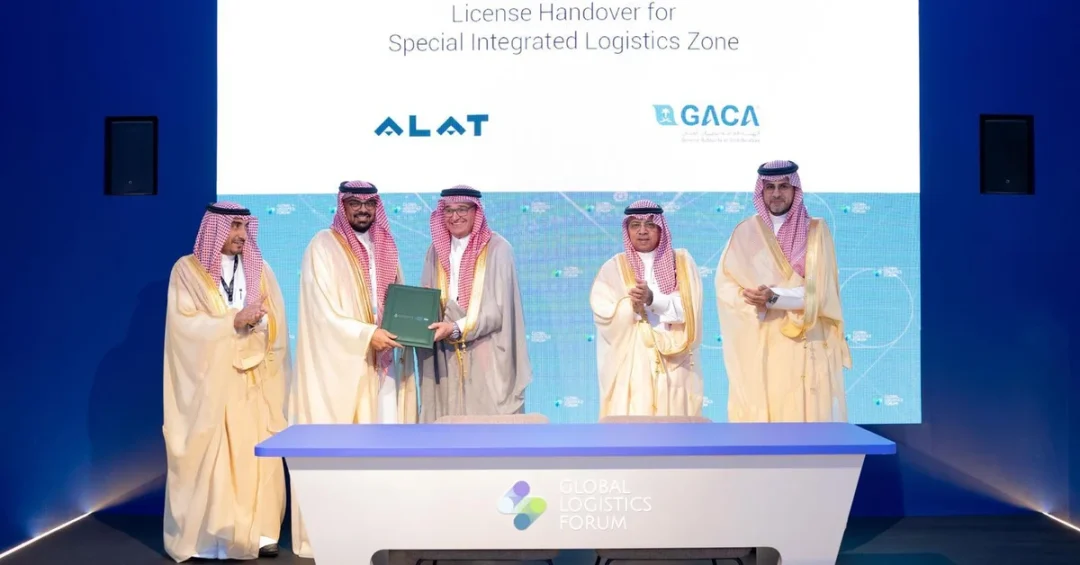
The General Authority of Civil Aviation (GACA) has awarded four commercial licenses to leading global companies in innovative technology, artificial intelligence, logistics services, and e-commerce to operate in the Riyadh Integrated Special Logistics Zone. The licenses were officially presented during a ceremony at the Global Logistics Forum 2024, held from October 12 to 14 at the King Abdullah Financial District (KAFD) in Riyadh, marking a significant step in enhancing the Kingdom’s logistics capabilities.
Context and Background
The Riyadh Integrated Special Logistics Zone is a key initiative under Saudi Arabia’s Vision 2030, designed to position the Kingdom as a premier global logistics hub. By attracting international investment and fostering innovation, the zone aims to streamline trade, reduce transit times, and support economic diversification. GACA’s role in regulating and promoting civil aviation aligns with broader national goals to modernize infrastructure and boost non-oil revenue.
Key Details
GACA President Abdulaziz bin Abdullah Al-Duailej presided over the handover ceremony, with Awad Al-Sulami, Executive Vice President for Economic Policies and Logistics, presenting the licenses. A subsidiary of Alat, in partnership with a leading innovative technology and AI firm, received a license for light manufacturing and logistics services. In the manufacturing sector, Bahri Logistics secured a license to provide logistics services for Boeing aircraft spare parts, handed to President Soror Basalom. Danish company Danfoss obtained a license for light manufacturing operations, while global e-commerce giant SHEIN was licensed for product distribution, aiming to establish a regional distribution hub serving the Middle East and North Africa.
Implications and Impact
These investments underscore Saudi Arabia’s growing appeal as a destination for global business, leveraging its strategic location and advanced infrastructure. The integration of AI and innovative technology enhances operational efficiency, while partnerships with firms like SHEIN and Danfoss boost regional trade connectivity. This development also strengthens the Kingdom’s supply chain resilience, aligning with international logistics standards and fostering job creation in high-tech sectors.
Vision 2030 Alignment
The licensing of these global companies directly supports Vision 2030 objectives by diversifying the economy, attracting foreign direct investment, and transforming Saudi Arabia into a leading logistics hub. By fostering partnerships with industry leaders in technology, aviation, and e-commerce, the Riyadh Integrated Special Logistics Zone exemplifies the Kingdom’s commitment to innovation and sustainable growth, paving the way for a prosperous future aligned with national ambitions.
20 Questions
Q1. What is the Riyadh Integrated Special Logistics Zone?
A1. It is a specialized zone in Riyadh designed to attract global companies for logistics, manufacturing, and e-commerce, supporting Saudi Arabia’s Vision 2030 economic diversification goals.
Q2. Who awarded the commercial licenses?
A2. The General Authority of Civil Aviation (GACA) awarded the licenses during a ceremony at the Global Logistics Forum 2024 in Riyadh.
Q3. What companies received licenses?
A3. Four companies received licenses: a subsidiary of Alat with a tech partner, Bahri Logistics, Danfoss, and SHEIN, covering sectors like AI, logistics, manufacturing, and e-commerce.
Q4. What is Alat’s role in this development?
A4. A subsidiary of Alat, in partnership with an innovative tech and AI firm, received a license for light manufacturing and logistics services in the zone.
Q5. What did Bahri Logistics receive the license for?
A5. Bahri Logistics received a license to provide logistics services for Boeing aircraft spare parts, enhancing aviation supply chain capabilities.
Q6. What is Danfoss’s involvement in the zone?
A6. Danfoss, a Danish company, was granted a commercial license to conduct light manufacturing operations in the Riyadh Integrated Special Logistics Zone.
Q7. What license did SHEIN receive?
A7. SHEIN received a commercial license for product distribution, aiming to establish a regional distribution hub in the zone for the Middle East and North Africa.
Q8. Who attended the license handover ceremony?
A8. GACA President Abdulaziz bin Abdullah Al-Duailej attended the ceremony at the Global Logistics Forum 2024 in Riyadh.
Q9. What is the Global Logistics Forum 2024?
A9. It is an event organized by the Ministry of Transport and Logistic Services from October 12 to 14, 2024, at KAFD, focusing on logistics sector development.
Q10. How does this development support Vision 2030?
A10. It supports Vision 2030 by diversifying the economy, attracting foreign investment, and positioning Saudi Arabia as a global logistics hub through innovation and partnerships.
Q11. What sectors are represented by the licensed companies?
A11. The sectors include innovative technology, artificial intelligence, logistics services, manufacturing, and e-commerce, reflecting diverse economic activities.
Q12. Who is Awad Al-Sulami?
A12. Awad Al-Sulami is the Executive Vice President for Economic Policies and Logistics at GACA, who represented the authority in granting the licenses.
Q13. What is the significance of Boeing aircraft spare parts logistics?
A13. It strengthens the aviation supply chain in Saudi Arabia, supporting aircraft maintenance and enhancing the Kingdom’s role in global aviation logistics.
Q14. How does SHEIN’s distribution hub benefit the region?
A14. SHEIN’s distribution hub will serve the Middle East and North Africa, improving e-commerce delivery times and boosting regional trade connectivity.
Q15. What is the role of AI in the licensed operations?
A15. AI is integrated into operations by the Alat subsidiary and its tech partner, aiming to improve efficiency, automation, and innovation in logistics and manufacturing.
Q16. Why is Danfoss important for the zone?
A16. Danfoss brings expertise in light manufacturing, contributing to industrial diversification and creating opportunities for technology transfer in Saudi Arabia.
Q17. What is the expected economic impact of these licenses?
A17. The licenses are expected to boost foreign direct investment, create jobs, enhance logistics efficiency, and support non-oil GDP growth in line with Vision 2030.
Q18. How does the zone attract international companies?
A18. The zone offers specialized infrastructure, strategic location, and regulatory support, making it attractive for global firms seeking access to regional markets.
Q19. What is GACA’s role in civil aviation?
A19. GACA regulates and promotes civil aviation in Saudi Arabia, ensuring safety, efficiency, and alignment with national economic and logistics strategies.
Q20. What future developments are expected in the zone?
A20. Future developments likely include more international partnerships, expanded operations, and continued alignment with Vision 2030 to enhance Saudi Arabia’s global logistics position.
Reader Feedback
We value your thoughts. Please share your feedback on this article.
Your feedback helps us improve our coverage.