


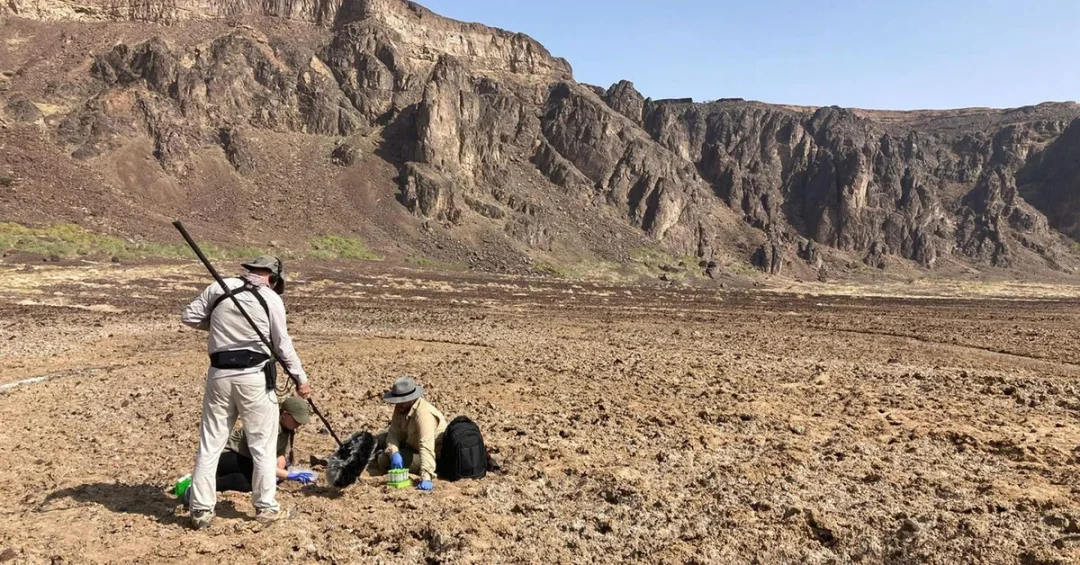
Scientists at King Abdullah University of Science and Technology (KAUST) have discovered biological clues in Saudi Arabia’s Al Wahbah Crater that may indicate potential for life on Enceladus, one of Saturn’s moons. The study, led by KAUST Professor Alexandre Rosado, found extremophile bacteria in the crater’s highly alkaline and saline environment, which mirrors conditions on Enceladus more than 1 billion kilometers away. The findings were published in the journal Astrobiology and announced via the Saudi Press Agency on October 14, 2024.
Context and Background
Enceladus has drawn significant interest from astrobiologists due to its subsurface ocean, which lies beneath a thick icy crust. The ocean is characterized by high alkalinity, salinity, and the presence of complex molecules such as methane and oxygen—conditions that are consistent with the potential for microbial life. Al Wahbah Crater, located in western Saudi Arabia, shares these extreme features, making it a unique Earth analog for studying extraterrestrial life. Professor Rosado emphasized that the crater serves as a model for Enceladus’ ocean, where similar conditions might support life.
Key Details
The research team isolated 48 bacterial strains from the crater, identifying two that exhibit remarkable adaptability to extreme environments. These thermohaloalkaliphilic bacteria thrive in high temperatures, salinity, and alkaline pH levels, closely mimicking the harsh conditions of Enceladus. Postdoctoral researcher Júnia Schultz noted that these strains are ideal for studying life in extreme conditions. Additionally, the bacteria showed potential resistance to high pressures and ionizing radiation, which could minimize DNA mutations in space environments. The study is the first to demonstrate the usefulness of Saudi Arabia’s extreme environments as a model for detecting extraterrestrial life.
International and Scientific Implications
The Al Wahbah Crater offers a uniquely accessible site for microbial studies compared to other Enceladus analogs on Earth. Ph.D. student Alef dos Santos highlighted that other locations are not as well-suited for the type of research conducted at Al Wahbah. Dr. Kasthuri Venkateswaran, a retired NASA scientist, stated that the research advances understanding of bacterial adaptation and guides astrobiology quests for extraterrestrial life. The findings position Saudi Arabia as a valuable partner for space agencies, including NASA’s Europa Clipper mission, which plans to explore Enceladus in the coming years.
Vision 2030 Alignment
This research aligns with Saudi Arabia’s Vision 2030 ambitions to become a leader in space exploration and scientific innovation. The Kingdom sent its first female astronaut to space in 2023 and plans to launch its first space tourists in 2026. By contributing critical biosignature data from its unique geological sites, Saudi Arabia is strengthening its role as a key player in global space missions. The study underscores the Kingdom’s commitment to advancing science and fostering international partnerships, paving the way for future discoveries that could reshape humanity’s understanding of life beyond Earth.
20 Questions
Q1. What is the Al Wahbah Crater?
A1. The Al Wahbah Crater is a volcanic crater in western Saudi Arabia, known for its highly alkaline and saline conditions that mimic the ocean of Enceladus, one of Saturn’s moons.
Q2. Why is Enceladus important for astrobiology?
A2. Enceladus has a subsurface ocean beneath its icy crust with conditions like high alkalinity and methane that could potentially support microbial life, making it a key target for astrobiological study.
Q3. Who led the study at KAUST?
A3. The study was led by Professor Alexandre Rosado at King Abdullah University of Science and Technology (KAUST) in Thuwal, Saudi Arabia.
Q4. What did scientists find in the crater?
A4. Scientists isolated 48 bacterial strains, identifying two thermohaloalkaliphilic bacteria that thrive in extreme heat, salinity, and alkalinity, similar to Enceladus conditions.
Q5. How does the crater relate to Enceladus?
A5. The crater’s extreme environment serves as an Earth analog for Enceladus’ ocean, allowing scientists to study how life might survive in similar conditions on the moon.
Q6. What are thermohaloalkaliphilic bacteria?
A6. These bacteria thrive in high temperatures (thermo), high salinity (halo), and highly alkaline pH levels (alkaliphilic), making them ideal for studying extreme environments like Enceladus.
Q7. What publication featured the study?
A7. The study was published in the scientific journal Astrobiology, which focuses on research related to the origins and detection of life in the universe.
Q8. How does this help NASA’s missions?
A8. The findings provide biosignature data that can guide NASA’s Europa Clipper and other missions exploring Enceladus, helping refine methods for detecting extraterrestrial life.
Q9. What are biosignatures?
A9. Biosignatures are chemical or molecular markers that indicate the presence or past activity of life, such as specific bacterial strains or metabolic byproducts.
Q10. Is Al Wahbah the only site for such studies?
A10. No, other locations exist, but Al Wahbah is uniquely accessible and well-suited for microbial studies compared to other Enceladus analogs on Earth.
Q11. What other Saudi sites could be studied?
A11. Other extreme environments in Saudi Arabia, including Red Sea areas and land sites, may be valuable for seeking biosignatures on Mars and other celestial bodies.
Q12. What role did NASA scientists play?
A12. Dr. Kasthuri Venkateswaran, a retired NASA Jet Propulsion Lab scientist, contributed expertise by noting the study’s value in guiding astrobiology quests.
Q13. How does this align with Vision 2030?
A13. The research supports Vision 2030 by advancing Saudi Arabia’s space industry goals and fostering international scientific partnerships for innovation.
Q14. What are Saudi Arabia’s space achievements?
A14. Saudi Arabia sent its first female astronaut to space in 2023 and plans to launch its first space tourists in 2026, highlighting its growing space presence.
Q15. What is the significance of the bacterial resistance?
A15. The bacteria show potential resistance to high pressure and ionizing radiation, which minimizes DNA mutations, suggesting they could survive in space environments like Enceladus.
Q16. How did Ph.D. student Alef dos Santos contribute?
A16. Alef dos Santos highlighted that Al Wahbah is more accessible for microbial studies than other Enceladus analogs, supporting the research’s practical value.
Q17. What is the distance to Enceladus?
A17. Enceladus is located more than 1 billion kilometers away from Earth, orbiting Saturn, making any Earth analog study valuable for remote detection.
Q18. What molecules in Enceladus’ ocean suggest life?
A18. The presence of methane and oxygen molecules in Enceladus’ alkaline, saline ocean is consistent with the possibility of microbial life or biogeochemical processes.
Q19. How many bacterial strains were studied?
A19. The team isolated 48 bacterial strains from the crater, ultimately focusing on two that showed the best adaptability to extreme Enceladus-like conditions.
Q20. What is the future of this research?
A20. Future studies may explore other Saudi extreme environments and collaborate with space agencies like NASA to support missions aimed at detecting life on Enceladus and beyond.
Reader Feedback
We value your thoughts. Please share your feedback on this article.
Your feedback helps us improve our coverage.