


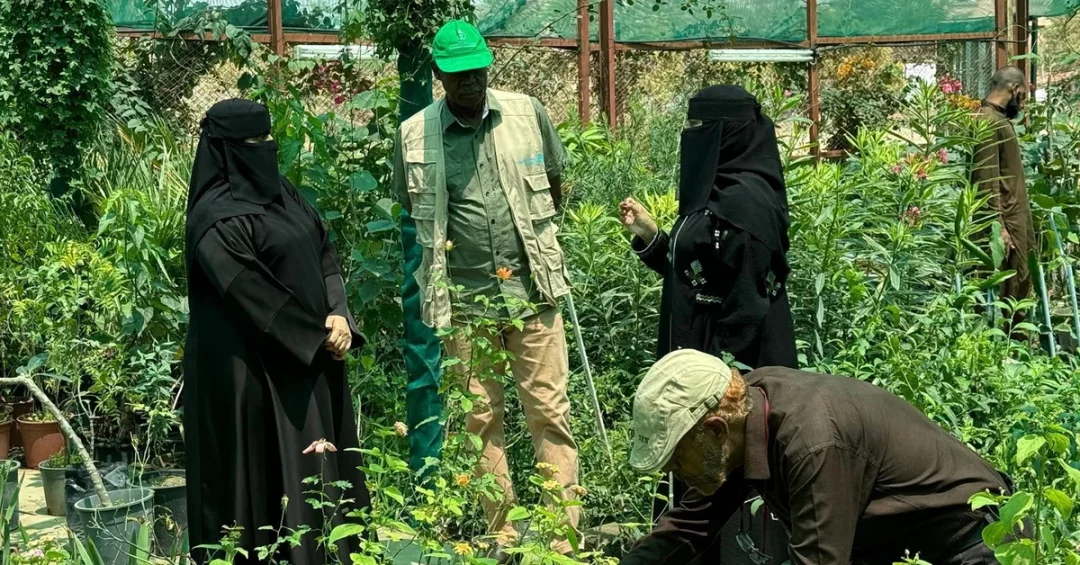
The National Center for Vegetation Cover Development and Combating Desertification (NCVC) held a workshop in Al-Baha region on October 14, 2024, to explore community integration in the development of Al-Khala and Al-Ghouqa forests. The workshop, conducted in collaboration with the United Nations Food and Agriculture Organization (FAO) and local communities, focused on a social and economic survey of communities near the forests. The initiative aims to create a sustainable action plan and evaluate ecotourism opportunities as part of a broader study to assess and develop national forests.
Context and Background
The NCVC, a key Saudi government agency under the Ministry of Environment, Water, and Agriculture, is tasked with combating desertification and promoting vegetation cover. The Al-Baha region, known for its diverse landscapes and forests, is a priority area for sustainable development. Engaging local communities in conservation efforts aligns with global best practices and strengthens the Kingdom’s environmental stewardship. The collaboration with the FAO, an international partner, underscores the commitment to leveraging expertise for sustainable development.
Key Details
During the workshop, the NCVC delegation met with tribal leaders, representatives of environmental organizations, and community members. They emphasized the vital role of the local population in forest conservation. The workshop explained the mechanisms of the social and economic survey, including field visits to targeted sites in Al-Khala and Al-Ghouqa forests. The survey aims to understand the perspectives of local communities regarding the forests surrounding the villages under study, including their agricultural and pastoral practices.
Implications and Impact
The workshop is part of a broader effort to determine the best practices for integrating communities in the protection, maintenance, and rehabilitation of local forests. By evaluating ecotourism opportunities, the initiative aims to create economic benefits for local communities while preserving natural resources. This approach supports the sustainable management of forests, which contribute to climate resilience and biodiversity. The collaboration with the FAO also enhances the scientific rigor of the survey, ensuring that the action plan is data-driven and culturally appropriate.
Vision 2030 Alignment
The workshop directly supports the goals of Saudi Vision 2030, which emphasizes environmental sustainability, community engagement, and economic diversification. By developing ecotourism and involving local communities in forest conservation, the initiative contributes to the Kingdom’s objective of improving quality of life and creating green jobs. This project reflects the vision’s commitment to sustainable development and global partnerships, positioning Saudi Arabia as a leader in environmental stewardship and community-driven growth.
20 Questions
Q1. What was the purpose of the NCVC workshop in Al-Baha?
A1. The workshop aimed to create a sustainable action plan for Al-Khala and Al-Ghouqa forests and evaluate ecotourism opportunities through a social and economic survey of local communities.
Q2. Which organizations collaborated with the NCVC in this workshop?
A2. The United Nations Food and Agriculture Organization (FAO) and local communities, including tribal leaders and environmental group representatives, collaborated with the NCVC.
Q3. What is the role of the FAO in this initiative?
A3. The FAO provided expertise and international best practices to support the social and economic survey, aiming to enhance forest management and community integration.
Q4. What are the names of the targeted forests in Al-Baha?
A4. The targeted forests are Al-Khala and Al-Ghouqa, which are part of the national forest assessment study.
Q5. How does the workshop involve local communities?
A5. The NCVC met with tribal leaders, representatives, and environmental organizations to explain the survey and gather input on forest conservation and management.
Q6. What is the main objective of the social and economic survey?
A6. The survey aims to understand community perspectives on forests, identify agricultural and pastoral practices, and determine best practices for sustainable forest management.
Q7. What is the broader context of this initiative?
A7. The workshop is part of a larger study by the NCVC to assess and develop the current state of national forests across Saudi Arabia.
Q8. How does this initiative support Vision 2030?
A8. It supports environmental sustainability, community engagement, and economic diversification by promoting ecotourism and green jobs in line with Vision 2030 goals.
Q9. What is the NCVC’s primary mission?
A9. The National Center for Vegetation Cover Development and Combating Desertification (NCVC) works to combat desertification and promote vegetation cover in Saudi Arabia.
Q10. What ecotourism opportunities were evaluated during the workshop?
A10. The workshop evaluated potential ecotourism activities such as nature trails, camping, and wildlife observation that can be developed sustainably in the forests.
Q11. Why is community integration important for forest conservation?
A11. Local communities are vital for protecting forests, as they have traditional knowledge and can contribute to sustainable management and rehabilitation efforts.
Q12. What kinds of field visits were conducted during the workshop?
A12. NCVC officials and partners conducted field visits to the targeted forest sites to observe conditions and engage directly with local residents.
Q13. How does the workshop address agricultural and pastoral practices?
A13. The survey identifies current agricultural and pastoral practices in the forests to develop guidelines that balance use with conservation.
Q14. What is the significance of the Al-Baha region for this project?
A14. Al-Baha is known for its rich forest landscapes and biodiversity, making it a priority area for sustainable development and community-based conservation.
Q15. Who were the main participants in the workshop meetings?
A15. Participants included NCVC delegation members, tribal leaders, community representatives, and members of environmental organizations.
Q16. What is the expected outcome of the sustainable action plan?
A16. The plan is expected to outline concrete steps for forest protection, community involvement, and ecotourism development in Al-Khala and Al-Ghouqa.
Q17. How does this project align with international environmental standards?
A17. By collaborating with the FAO, the project follows international best practices for community-based forest management and sustainable development.
Q18. What economic benefits are expected for local communities?
A18. Ecotourism and sustainable forest management can create job opportunities and income for local communities, improving their quality of life.
Q19. How long has the NCVC been involved in forest development?
A19. The NCVC has been leading Saudi Arabia’s efforts in vegetation cover and desertification combat since its establishment, working on multiple initiatives nationwide.
Q20. What is the next step after the workshop?
A20. The NCVC will analyze survey data and community input to finalize the sustainable action plan and implement pilot projects in the targeted forests.
Reader Feedback
We value your thoughts. Please share your feedback on this article.
Your feedback helps us improve our coverage.