


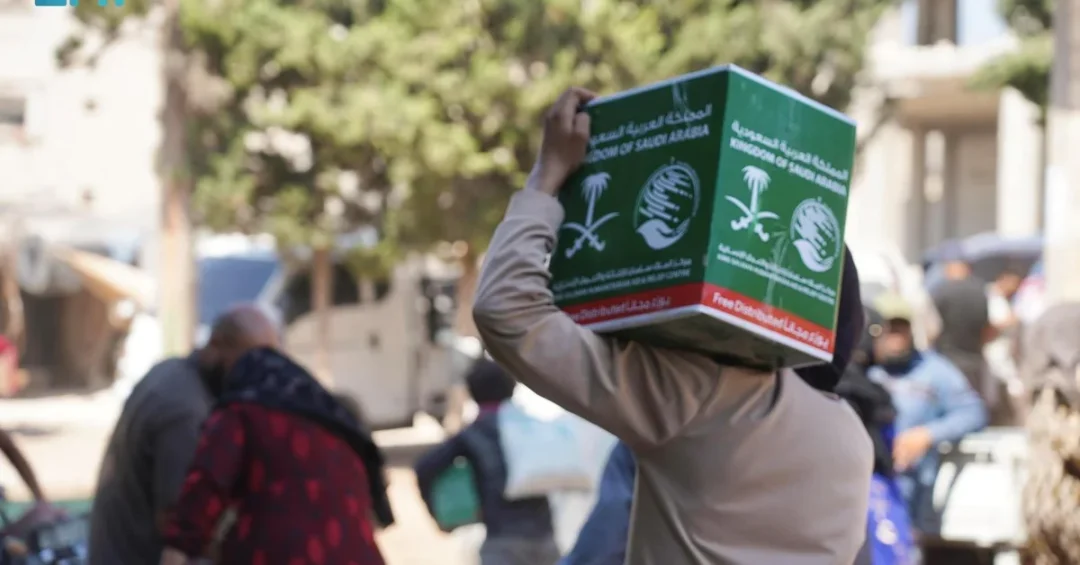
The King Salman Humanitarian Aid and Relief Center (KSrelief) has distributed 1,832 food baskets and hygiene kits in Salqin and Azmarin, Idlib Governorate, Syria, assisting 5,496 individuals, and 1,396 food baskets and hygiene kits in Jandairis, Aleppo Governorate, Syria, assisting 4,188 individuals. This assistance is part of the second phase of a project entailing providing aid to people affected by the earthquake in northern Syria in 2024.
Context and Background
Northern Syria continues to face significant humanitarian challenges following the devastating earthquakes that struck the region in early 2023. The disaster caused widespread destruction, displacing thousands and exacerbating existing vulnerabilities. The second phase of KSrelief’s project builds on ongoing efforts to address urgent needs, including food security and sanitation, in hard-hit areas such as Idlib and Aleppo governorates. This latest distribution underscores the Kingdom of Saudi Arabia’s sustained commitment to alleviating suffering in crisis zones.
Key Details
The aid package includes essential food items and hygiene supplies, targeting vulnerable populations including families, women, and children. In Idlib Governorate, the distributions covered Salqin and Azmarin, while in Aleppo Governorate, Jandairis was a key site. Each food basket is designed to sustain a family for a period, and hygiene kits are critical for preventing disease outbreaks in overcrowded and temporary shelters. KSrelief, operating under the directives of the Saudi leadership, coordinates these efforts with local partners to ensure efficient and transparent delivery.
Implications and Impact
This aid delivery has immediate positive effects on the ground, providing thousands of individuals with basic necessities and reducing the strain on local resources. It also reinforces the broader international humanitarian response in Syria, highlighting the importance of coordination among aid organizations. Saudi Arabia’s strategic role in such operations demonstrates its capability to mobilize resources quickly and effectively, bolstering its reputation as a reliable partner in global humanitarian efforts. The relief operations contribute to stabilization and support recovery in post-disaster settings.
Vision 2030 Alignment
The distribution of aid by KSrelief aligns with Saudi Arabia’s Vision 2030, which prioritizes humanitarian action as a cornerstone of the Kingdom’s global leadership. By promoting efficient, impactful aid delivery, the initiative reflects Vision 2030’s goals of fostering international cooperation and solidarity. This ongoing commitment to assisting earthquake-affected people in northern Syria exemplifies the Kingdom’s dedication to a more compassionate and interconnected world, supporting long-term resilience and recovery for communities in need.
20 Questions
Q1. What is KSrelief?
A1. KSrelief is the King Salman Humanitarian Aid and Relief Center, a Saudi humanitarian agency established to coordinate and deliver aid worldwide.
Q2. When did this aid distribution take place?
A2. The distribution occurred in October 2024, as part of the second phase of a project to support people affected by the earthquake in northern Syria.
Q3. Which areas received the aid?
A3. Aid was delivered to Salqin and Azmarin in Idlib Governorate, and to Jandairis in Aleppo Governorate in northern Syria.
Q4. How many people were helped?
A4. A total of 9,684 individuals received assistance, including 5,496 in Idlib Governorate and 4,188 in Aleppo Governorate.
Q5. What items were distributed?
A5. KSrelief distributed 1,832 food baskets and hygiene kits in Idlib, and 1,396 food baskets and hygiene kits in Aleppo Governorate.
Q6. Why is hygiene aid important?
A6. Hygiene kits help prevent disease outbreaks in crowded shelters and support sanitation for displaced populations.
Q7. Who funds KSrelief’s operations?
A7. KSrelief is funded by the Kingdom of Saudi Arabia as part of its humanitarian initiatives.
Q8. How does KSrelief ensure aid reaches recipients?
A8. KSrelief works with local partners and follows transparent, efficient delivery processes for targeted assistance.
Q9. What is the second phase of this project?
A9. It is a continuation of earlier relief efforts, focusing on ongoing needs of earthquake-affected communities in northern Syria.
Q10. How does this aid support recovery?
A10. By providing food and hygiene supplies, aid helps stabilize families and reduces pressure on overwhelmed local resources.
Q11. Is this aid part of a larger Saudi strategy?
A11. Yes, it aligns with Saudi Arabia’s Vision 2030 humanitarian goals and the Kingdom’s global leadership in crisis response.
Q12. What role does KSrelief play globally?
A12. KSrelief coordinates and delivers relief across multiple countries, focusing on emergencies and sustainable development.
Q13. How does this affect local communities?
A13. The aid improves daily living conditions and supports health through clean water and hygiene practices.
Q14. How many phases does this project have?
A14. The project is currently in its second phase, with additional phases planned based on evolving needs on the ground.
Q15. What is the source of this information?
A15. The information comes from the Saudi Press Agency (SPA), the official news source of the Kingdom of Saudi Arabia.
Q16. How does this initiative promote stability?
A16. By meeting basic needs, aid reduces social tensions and helps communities rebuild after disasters.
Q17. Does KSrelief coordinate with other aid groups?
A17. Yes, KSrelief collaborates with international and local organizations to maximize the impact of relief efforts.
Q18. What is the long-term goal of such aid?
A18. The long-term goal is to support self-reliance and resilience in disaster-affected areas through targeted, sustained assistance.
Q19. How does this reflect Vision 2030?
A19. It demonstrates Saudi Arabia’s commitment to global humanitarianism, a key pillar of Vision 2030’s international outreach.
Q20. What future aid is planned?
A20. Further phases of the project are anticipated, with continued focus on food security, sanitation, and livelihood support for affected populations.
Reader Feedback
We value your thoughts. Please share your feedback on this article.
Your feedback helps us improve our coverage.