


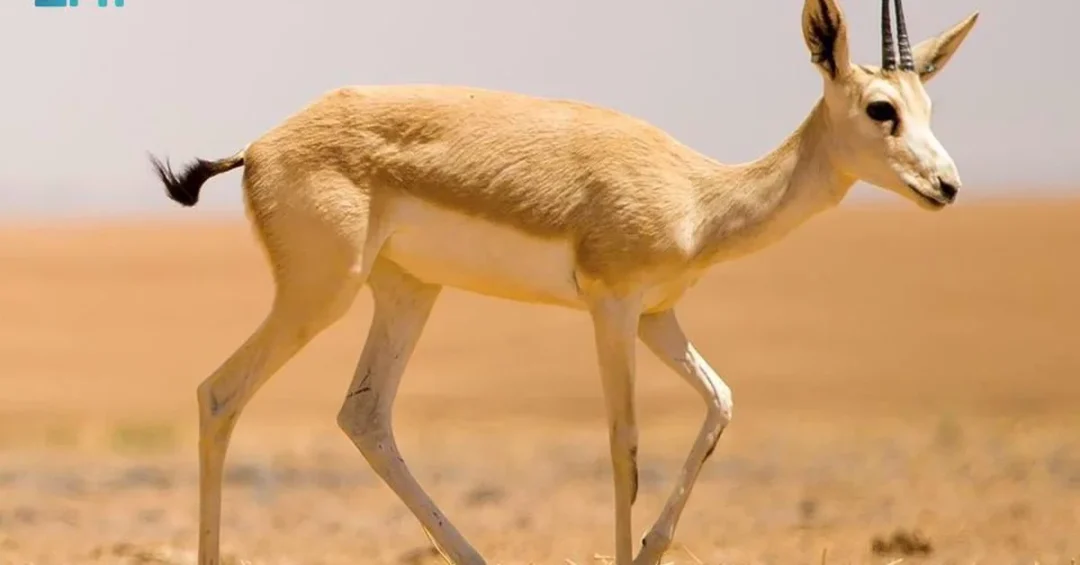
The King Salman bin Abdulaziz Royal Nature Reserve Development Authority (KSRNR) has reported successful breeding of the Arabian Sand Gazelle within the reserve’s protected habitats, marking a significant milestone in conservation efforts. According to an official statement released by the Saudi Press Agency on October 18, 2024, the reserve’s field teams are closely monitoring the gazelles to ensure their safety, highlighting the effectiveness of ongoing wildlife protection programs. The Arabian Sand Gazelle, known for its grace, speed, and beauty, is one of the rare species in the reserve, with its numbers having declined significantly over the past century due to poaching.
Context and Background
KSRNR, the largest terrestrial nature reserve in the Middle East, covers an expansive area of 130,700 square kilometers across four administrative regions: Al-Jawf, Hail, Northern Borders, and Tabuk. The reserve features diverse natural habitats, terrains, and unique geographic formations that provide a fertile environment for wildlife. The successful breeding of the Arabian Sand Gazelle reflects the quality of these natural habitats and their suitability for supporting vulnerable species, underscoring the authority’s commitment to protecting endangered wildlife and promoting environmental balance.
Key Details
Field teams from KSRNR have observed that the Arabian Sand Gazelles have begun breeding within the reserve, a positive indicator of the habitat’s health and security. The authority emphasizes that these efforts are part of a broader mission to raise public awareness about the species and sustain biodiversity. KSRNR aims to reintroduce the gazelles into their natural habitats, supporting self-reproduction and contributing to long-term ecological stability. The reserve has also received several prestigious international environmental certifications, including being listed on the Green List of the International Union for Conservation of Nature (IUCN), making it the first Saudi reserve to achieve this recognition. Additionally, five important bird areas have been designated based on global criteria, and the reserve has been acknowledged as the largest major biodiversity area in the Kingdom of Saudi Arabia according to international standards.
Implications and Impact
The successful breeding program at KSRNR carries significant implications for regional conservation efforts and biodiversity preservation. By providing a safe haven for the Arabian Sand Gazelle, the reserve contributes to the restoration of a species that has faced severe population declines. This achievement also positions KSRNR as a model for wildlife management in the Middle East, demonstrating how protected areas can effectively combat poaching and habitat degradation. Furthermore, the reserve’s international certifications enhance Saudi Arabia’s reputation as a leader in environmental stewardship, attracting attention from global conservation organizations and researchers. The establishment of sustainable tourism initiatives within KSRNR could also boost local economies while showcasing the Kingdom’s rich environmental and biological diversity.
Vision 2030 Alignment
The conservation achievements at KSRNR align directly with Saudi Arabia’s Vision 2030 goals, which emphasize environmental sustainability, biodiversity protection, and the development of eco-tourism. By protecting endangered species like the Arabian Sand Gazelle and promoting responsible stewardship of natural resources, the reserve supports the Kingdom’s broader ambition to diversify its economy and enhance quality of life. This milestone reflects Saudi Arabia’s commitment to integrating conservation with national development, ensuring that future generations can benefit from the country’s unique natural heritage. As KSRNR continues to expand its conservation programs and attract international recognition, it stands as a testament to the Kingdom’s dedication to preserving its environmental treasures for years to come.
20 Questions
Q1. What is the King Salman bin Abdulaziz Royal Nature Reserve Development Authority (KSRNR)?
A1. KSRNR is a Saudi authority managing the largest terrestrial nature reserve in the Middle East, covering 130,700 square kilometers. It focuses on wildlife conservation, biodiversity, and sustainable tourism, operating under the Kingdom’s environmental goals.
Q2. Why is the Arabian Sand Gazelle significant?
A2. The Arabian Sand Gazelle is a rare species known for its grace, speed, and beauty. Its numbers have declined sharply due to poaching, making conservation efforts crucial for preventing extinction.
Q3. When did KSRNR report the successful breeding of Arabian Sand Gazelles?
A3. KSRNR announced the successful breeding of Arabian Sand Gazelles on October 18, 2024, through an official statement from the Saudi Press Agency. This milestone highlights the reserve’s conservation effectiveness.
Q4. How does KSRNR monitor the gazelles?
A4. Field teams from KSRNR closely monitor the Arabian Sand Gazelles to ensure their safety. They track breeding patterns and habitat conditions to support the species’ revival.
Q5. What does the successful breeding indicate?
A5. The successful breeding reflects the high quality and suitability of the reserve’s natural habitats for wildlife. It shows that KSRNR’s conservation efforts are creating a safe environment for vulnerable species.
Q6. What is KSRNR’s main mission?
A6. KSRNR’s mission is to protect endangered species, reintroduce them into natural habitats, support self-reproduction, and promote environmental balance and sustainability. It also raises public awareness about biodiversity.
Q7. How large is KSRNR?
A7. KSRNR is the largest terrestrial nature reserve in the Middle East, covering approximately 130,700 square kilometers. It spans four administrative regions in Saudi Arabia.
Q8. Which regions does KSRNR cover?
A8. KSRNR spans the administrative regions of Al-Jawf, Hail, Northern Borders, and Tabuk. This extensive area includes diverse terrains and geographic formations.
Q9. What international certification has KSRNR received?
A9. KSRNR was listed on the Green List of the International Union for Conservation of Nature (IUCN), becoming the first Saudi reserve to achieve this recognition. This certifies its high conservation standards.
Q10. How many important bird areas are in KSRNR?
A10. Five important bird areas have been designated within KSRNR based on global criteria. This recognition underscores the reserve’s significance for avian biodiversity.
Q11. Is KSRNR recognized as a major biodiversity area?
A11. Yes, KSRNR has been acknowledged as the largest major biodiversity area in Saudi Arabia according to international standards. This highlights its ecological importance.
Q12. What challenges does the Arabian Sand Gazelle face?
A12. The Arabian Sand Gazelle has faced significant population declines due to poaching over the past century. Habitat loss and human activity have also threatened its survival.
Q13. How does KSRNR raise public awareness?
A13. KSRNR conducts educational programs and outreach activities to inform the public about the Arabian Sand Gazelle and other endangered species. These efforts promote conservation and biodiversity.
Q14. What is the goal of reintroducing the gazelles?
A14. The goal is to support the self-reproduction of Arabian Sand Gazelles in natural habitats. This helps restore ecological balance and ensures the species’ long-term survival.
Q15. How does KSRNR contribute to sustainable tourism?
A15. KSRNR aims to become a sustainable tourism destination by showcasing its environmental and biological diversity. This attracts visitors while promoting conservation.
Q16. What are the implications for regional conservation?
A16. KSRNR’s success serves as a model for wildlife management in the Middle East. It demonstrates how protected areas can combat poaching and habitat degradation effectively.
Q17. How does this align with Vision 2030?
A17. The conservation efforts support Vision 2030’s goals of environmental sustainability, biodiversity protection, and eco-tourism development. This reflects Saudi Arabia’s commitment to a diversified, green economy.
Q18. What other species are protected in KSRNR?
A18. KSRNR hosts diverse wildlife, including rare species like the Arabian Sand Gazelle. The reserve’s habitats support various plants, birds, and mammals, contributing to overall biodiversity.
Q19. How does KSRNR ensure habitat quality?
A19. Field teams monitor habitats and wildlife health to maintain suitable conditions. The reserve’s geographic diversity and natural formations provide fertile environments for breeding.
Q20. What is the future outlook for KSRNR?
A20. KSRNR plans to expand its conservation programs and strengthen international partnerships. Continued success in breeding endangered species will enhance Saudi Arabia’s global environmental leadership.
Reader Feedback
We value your thoughts. Please share your feedback on this article.
Your feedback helps us improve our coverage.