


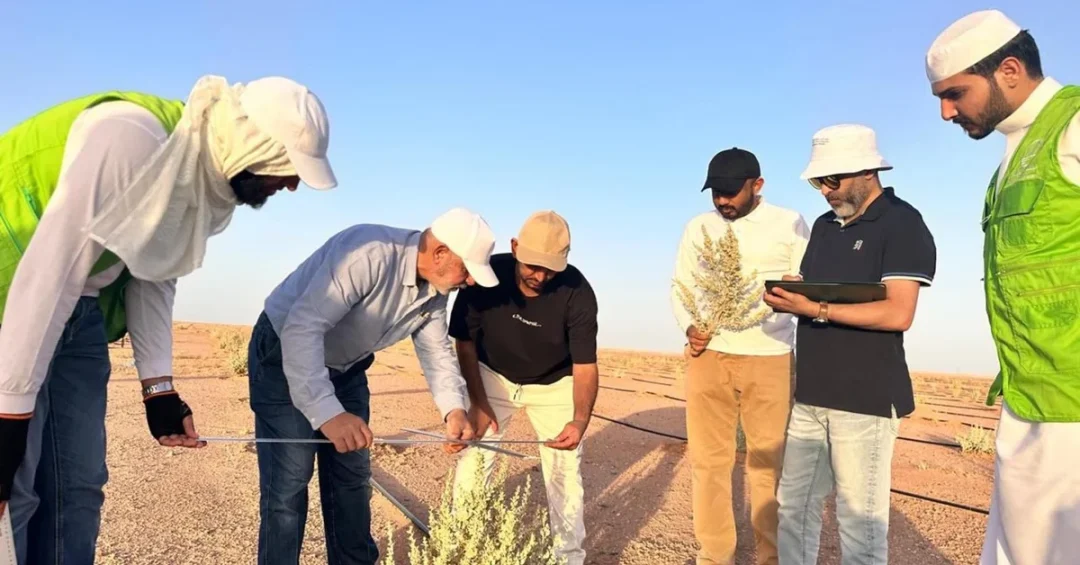
The National Center for Vegetation Cover Development & Combating Desertification (NCVC) has conducted a comprehensive carbon footprint study at Al-Tamriat Station for Field Experiments and Pastoral Seeds Production, aiming to measure greenhouse gas emissions and support climate change mitigation. According to a press release from the Saudi Press Agency, the study documents emission levels as a baseline for future comparisons and advances environmental sustainability under Saudi Arabia’s Vision 2030.
Context and Background
This initiative aligns with Saudi Arabia’s broader commitment to environmental stewardship and the Saudi Green Initiative, which targets reducing carbon emissions and expanding green areas. The NCVC, a key agency responsible for combating desertification and enhancing vegetation cover, seeks to address pressing ecological challenges through scientific research and data-driven strategies.
Key Details
The study focuses on identifying activities and processes with the highest impact on emission levels at Al-Tamriat Station, a facility dedicated to field experiments and pastoral seed production. Researchers examined 11 plant species to determine the amount of carbon dioxide absorbed by each during the first year of cultivation. The findings aim to establish a robust database that can be utilized in carbon offset programs and sustainability reports.
Implications and Impact
This carbon emissions report represents a preliminary step toward registering the project with global platforms for carbon disclosure, enhancing transparency and international credibility. It also forms part of Environmental, Social, and Governance (ESG) reporting frameworks, using software such as One Click LCA and OPENLCA to calculate raw material conversion factors. These efforts support Saudi Arabia’s role in global climate action and sustainable development.
Vision 2030 Alignment
By systematically measuring and managing carbon emissions, the NCVC contributes directly to Saudi Arabia’s Vision 2030 environmental goals, including increasing vegetation cover, combating desertification, and reducing the impacts of climate change. This study not only reinforces the Kingdom’s commitment to a greener future but also positions it as a regional leader in sustainability.
20 Questions
Q1. What is the main goal of the NCVC’s carbon footprint study at Al-Tamriat Station?
A1. The main goal is to measure greenhouse gas emissions from station activities, document findings as a baseline for future comparisons, and support environmental sustainability and carbon offset programs.
Q2. Which Saudi agency conducted this study?
A2. The National Center for Vegetation Cover Development & Combating Desertification (NCVC) conducted the study, as announced via the Saudi Press Agency.
Q3. What is Al-Tamriat Station’s primary purpose?
A3. Al-Tamriat Station is dedicated to field experiments and pastoral seeds production, focusing on vegetation research and combating desertification.
Q4. How many plant species were examined in the study?
A4. The study examined 11 plant species to measure carbon dioxide absorption during their first year of cultivation.
Q5. What key environmental challenge does this study address?
A5. Climate change, by measuring and reducing greenhouse gas emissions that contribute to global warming.
Q6. How will the study’s findings be used?
A6. They will be documented as a baseline for future comparisons, support carbon offset programs, and inform sustainability reports.
Q7. What international goal does this study support?
A7. Environmental sustainability and global carbon disclosure standards, potentially leading to registration with global carbon platforms.
Q8. What software tools were used in the study?
A8. One Click LCA and OPENLCA were used to determine conversion factors for raw materials in emission calculations.
Q9. How does this study relate to ESG reporting?
A9. It contributes to Environmental, Social, and Governance (ESG) sustainability reports by providing data on carbon footprints.
Q10. What is the Saudi Green Initiative’s role?
A10. The Saudi Green Initiative aims to reduce emissions and increase green areas, aligning with this study’s objectives.
Q11. When was the study announced?
A11. The study was announced on October 19, 2024, via a press release by the Saudi Press Agency.
Q12. Which vision does this study support?
A12. Saudi Arabia’s Vision 2030, which includes environmental sustainability and combating desertification as key pillars.
Q13. What processes are being analyzed for emission impact?
A13. The study identifies activities and processes within Al-Tamriat Station that have the most significant impact on emission levels.
Q14. How does this study help combat desertification?
A14. By improving vegetation cover and reducing emissions, it directly supports desertification control efforts.
Q15. What is a carbon offset program?
A15. It allows organizations to compensate for emissions by funding equivalent carbon savings elsewhere, using data from this study.
Q16. Is the study focused only on emissions?
A16. No, it also measures carbon dioxide absorption by plants, providing a balanced view of the station’s impact.
Q17. What is the significance of the baseline data?
A17. It provides a reference point for future comparisons, helping track progress in emission reduction over time.
Q18. How does this study benefit local communities?
A18. By promoting greener practices, it supports environmental health and sustainable agriculture in the region.
Q19. What regulatory framework supports this study?
A19. The study aligns with Saudi national policies on climate change, environmental protection, and Vision 2030 initiatives.
Q20. What are the next steps after this study?
A20. The findings may lead to registering the project with global carbon disclosure platforms and integrating data into wider sustainability strategies.
Reader Feedback
We value your thoughts. Please share your feedback on this article.
Your feedback helps us improve our coverage.