


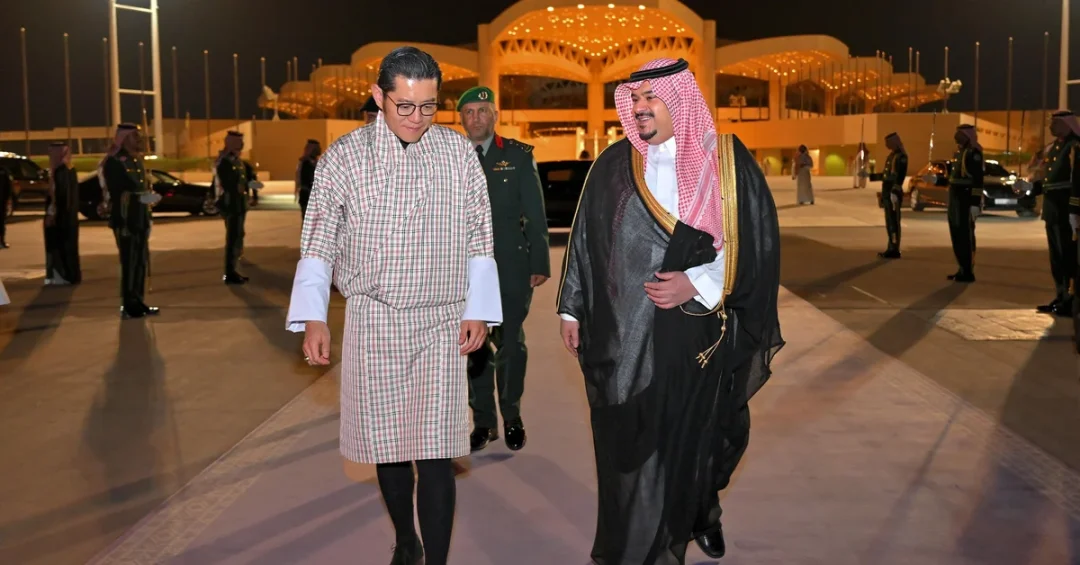
King Jigme Khesar Namgyel Wangchuck of Bhutan departed Riyadh on October 29, 2024, after concluding an official visit to the Kingdom of Saudi Arabia. The Bhutanese monarch and his accompanying delegation were seen off at King Khalid International Airport by Riyadh Region Deputy Governor Prince Mohammed bin Abdulrahman bin Abdulaziz, along with other senior officials, as reported by the Saudi Press Agency (SPA).
Context and Background
The visit of King Jigme Khesar Namgyel Wangchuck underscores the growing diplomatic and economic ties between the Kingdom of Saudi Arabia and Bhutan. Both nations have been exploring avenues for enhanced cooperation in areas such as trade, tourism, and cultural exchange, aligning with Saudi Arabia’s broader strategy to strengthen relationships with diverse global partners under the Vision 2030 framework.
Key Details
During his stay, the Bhutanese King engaged in high-level discussions with Saudi leaders, covering mutual interests and regional stability. The departure ceremony reflected the warm hospitality and respect extended to visiting dignitaries, a hallmark of Saudi Arabia’s international engagements. The presence of Prince Mohammed bin Abdulrahman bin Abdulaziz, representing the leadership of the Riyadh Region, highlighted the importance of this bilateral interaction.
Implications and Impact
This visit signals a deepening of Saudi Arabia’s outreach to South Asian nations, fostering new opportunities for collaboration. It reinforces the Kingdom’s role as a hub for diplomacy and international dialogue, promoting peace and shared development. Such exchanges are expected to pave the way for future agreements, benefiting both countries’ economies and cultural understanding.
Vision 2030 Alignment
The successful visit of King Jigme Khesar Namgyel Wangchuck exemplifies Saudi Arabia’s commitment to building a globally connected and diversified economy. By strengthening ties with nations like Bhutan, the Kingdom advances its Vision 2030 goals of enhancing international cooperation, promoting tourism, and fostering sustainable development, positioning itself as a leading global partner in the 21st century.
20 Questions
Q1. Who left Riyadh on October 29, 2024?
A1. King Jigme Khesar Namgyel Wangchuck of Bhutan left Riyadh on October 29, 2024, after concluding an official visit to the Kingdom of Saudi Arabia.
Q2. Where did the departure take place?
A2. The departure took place at King Khalid International Airport in Riyadh, where the King was seen off by Saudi officials.
Q3. Who saw off the King of Bhutan at the airport?
A3. Riyadh Region Deputy Governor Prince Mohammed bin Abdulrahman bin Abdulaziz, along with other officials, saw off the Bhutanese monarch.
Q4. What was the source of this information?
A4. The information was officially released by the Saudi Press Agency (SPA), the Kingdom’s official news authority.
Q5. How does this visit benefit Saudi Arabia?
A5. It strengthens bilateral ties with Bhutan, opens new avenues for trade and tourism, and supports Saudi Arabia’s Vision 2030 goals of global engagement and diversification.
Q6. Did King Jigme Khesar Namgyel Wangchuck travel alone?
A6. No, he was accompanied by an official delegation during his visit to Riyadh, as per standard diplomatic protocols.
Q7. What does this visit say about Saudi-Bhutan relations?
A7. The visit highlights growing diplomatic and economic relations between Saudi Arabia and Bhutan, with mutual interests in cooperation and cultural exchange.
Q8. Is this part of a larger diplomatic trend?
A8. Yes, it reflects Saudi Arabia’s broader strategy to strengthen ties with South Asian nations, promoting peace and shared prosperity.
Q9. What role did Prince Mohammed bin Abdulrahman play?
A9. As Riyadh Region Deputy Governor, he represented the Saudi leadership by participating in the official farewell ceremony.
Q10. Were there any agreements signed during the visit?
A10. The SPA report did not specify any agreements, but the visit facilitated high-level discussions on areas of mutual interest.
Q11. How does this support tourism in Saudi Arabia?
A11. Enhanced ties with Bhutan, known for its tourism, can encourage knowledge exchange and promote cultural tourism between the two countries.
Q12. What is the significance of using King Khalid International Airport?
A12. King Khalid International Airport is a key gateway for Riyadh, facilitating global travel and hosting official state visits with high standards of hospitality.
Q13. How long did King Jigme Khesar stay in Riyadh?
A13. The exact duration of his stay is not detailed in the SPA report, but his departure on October 29 suggests a brief official visit.
Q14. What does this mean for Vision 2030?
A14. This visit aligns with Vision 2030 by expanding Saudi Arabia’s global diplomatic network, fostering international cooperation, and diversifying economic partnerships.
Q15. Was the departure widely covered by media?
A15. The event was covered by SPA, and it contributes to ongoing media narratives about Saudi Arabia’s active diplomatic role.
Q16. What other nations are Saudi Arabia targeting for ties?
A16. Saudi Arabia is strengthening ties with many nations across Asia, Africa, and beyond as part of its Vision 2030 global outreach strategy.
Q17. How do such visits affect regional stability?
A17. They promote dialogue and mutual understanding, contributing to a stable and cooperative regional environment in line with Saudi Arabia’s leadership in diplomacy.
Q18. What is Bhutan’s perspective on this visit?
A18. For Bhutan, the visit reinforces its international engagement and opens doors for investments and cultural links with the Kingdom.
Q19. Is this the first visit by a Bhutanese king?
A19. While specific past visits are not detailed in this report, the current visit underscores ongoing and historically friendly relations.
Q20. What can be expected next in Saudi-Bhutan relations?
A20. Based on the positive nature of the visit, further cooperation in trade, tourism, and cultural exchange is anticipated, strengthening ties under Vision 2030.
Reader Feedback
We value your thoughts. Please share your feedback on this article.
Your feedback helps us improve our coverage.