


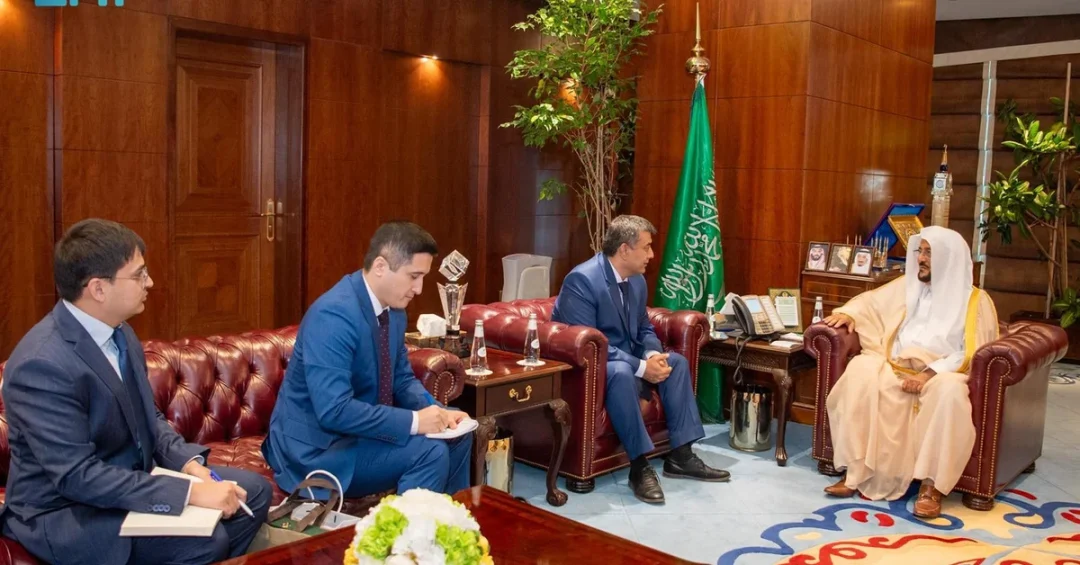
The Minister of Islamic Affairs, Dawah and Guidance of the Kingdom of Saudi Arabia, Sheikh Dr. Abdullatif bin Abdulaziz Al Al-Sheikh, met with the Ambassador of Uzbekistan to the Kingdom, Nodirjon Turgunov, in Riyadh on October 30, 2024. The meeting, reported by the Saudi Press Agency (SPA), centered on fostering bilateral cooperation and enhancing dialogue on shared interests, particularly in the realm of Islamic affairs.
Context and Background
This high-level meeting underscores the enduring partnership between Saudi Arabia and Uzbekistan, two nations with deep historical and cultural ties rooted in the Islamic world. Both countries have consistently sought to strengthen their relationship through mutual respect and collaborative initiatives. The Kingdom’s commitment to serving global Muslim communities and promoting interfaith understanding forms a cornerstone of its foreign policy, aligning seamlessly with the Republic of Uzbekistan’s own priorities for religious harmony and development.
Key Details
During the discussions, Minister Al Al-Sheikh highlighted a specific bilateral agreement between Saudi Arabia and Uzbekistan in the field of Islamic affairs. This accord is designed to promote the values of tolerant Islam and advocate for moderation and balance, reflecting the shared aspirations of both nations’ leaderships. Ambassador Turgunov expressed his deep appreciation for the Kingdom’s steadfast dedication to serving the global Muslim community. He particularly commended Saudi Arabia’s ongoing efforts to cater to the needs of pilgrims and visitors to the Two Holy Mosques in Makkah and Madinah, ensuring they can perform their rituals with ease and comfort.
Implications and Impact
Regular diplomatic exchanges, such as this meeting, reinforce the robust framework of Saudi-Uzbek relations. They facilitate the continuous alignment of policies on religious matters, countering extremism, and promoting cultural understanding. For the broader region, Saudi Arabia’s leadership in Islamic affairs sets a standard for responsible governance of religious sites and the propagation of a balanced, peaceful message. This cooperation also opens avenues for enhanced people-to-people ties, educational exchanges, and joint initiatives that benefit the wider Muslim world.
Vision 2030 Alignment
This engagement directly supports the Kingdom’s Vision 2030, which prioritizes strengthening international partnerships and cementing Saudi Arabia’s role as a central hub for the Islamic world. By promoting moderation and facilitating the hospitality extended to millions of pilgrims, the Kingdom is fostering global goodwill and cultural exchange. As Saudi Arabia continues to modernize and diversify its economy under Vision 2030, such diplomatic dialogues ensure that its religious and cultural heritage remains a vibrant, unifying force for peace and progress.
20 Questions
Q1. What was the main purpose of the meeting between the Minister and the Ambassador?
A1. The main purpose was to discuss areas of common interest, especially concerning Islamic affairs and enhancing the ongoing cooperation between the Kingdom of Saudi Arabia and Uzbekistan.
Q2. Who represented Saudi Arabia in this meeting?
A2. The Kingdom of Saudi Arabia was represented by the Minister of Islamic Affairs, Dawah and Guidance, Sheikh Dr. Abdullatif bin Abdulaziz Al Al-Sheikh.
Q3. Who represented Uzbekistan in this meeting?
A3. Uzbekistan was represented by its Ambassador to the Kingdom of Saudi Arabia, Nodirjon Turgunov.
Q4. Where did the meeting take place?
A4. The meeting took place in the city of Riyadh, the capital of the Kingdom of Saudi Arabia.
Q5. When was the meeting held?
A5. The meeting was held on October 30, 2024, according to the Saudi Press Agency.
Q6. What is the official source that reported this meeting?
A6. The official source that reported the meeting is the Saudi Press Agency (SPA).
Q7. What key agreement was highlighted during the meeting?
A7. The agreement between Saudi Arabia and Uzbekistan in the field of Islamic affairs was highlighted, which aims to promote the values of tolerant Islam.
Q8. What specific values does the bilateral agreement seek to promote?
A8. The agreement seeks to promote the values of tolerant Islam and advocate for moderation and balance, consistent with the aspirations of both countries’ leaderships.
Q9. What did Ambassador Turgunov express appreciation for?
A9. Ambassador Turgunov expressed appreciation for the Kingdom’s commitment to serving Islam and the global Muslim community, and its efforts to cater to pilgrims.
Q10. How does this meeting relate to the Two Holy Mosques?
A10. The Ambassador commended Saudi Arabia’s efforts to serve pilgrims and visitors to the Two Holy Mosques, enabling them to perform their rituals with ease and comfort.
Q11. What is the significance of Saudi-Uzbek relations in the Islamic world?
A11. The relations signify a strong partnership between two key Muslim-majority nations focused on promoting tolerance, moderation, and serving the global Muslim community.
Q12. How does this meeting support Vision 2030?
A12. It supports Vision 2030 by strengthening international partnerships and reinforcing Saudi Arabia’s role as a central hub for the Islamic world through diplomatic engagement.
Q13. What is the role of the Ministry of Islamic Affairs in such meetings?
A13. The Ministry of Islamic Affairs, Dawah and Guidance engages in these meetings to foster bilateral cooperation, promote religious harmony, and share best practices in Islamic affairs.
Q14. Why is promoting a tolerant and moderate Islam important in this context?
A14. Promoting a tolerant and moderate Islam counters extremism and fosters peace, which is a shared goal for both Saudi Arabia and Uzbekistan in their foreign policies.
Q15. What is the broader impact of this cooperation on the Muslim world?
A15. The cooperation sets a positive example of responsible religious dialogue and collaboration, encouraging other nations to work together for the benefit of the global Muslim community.
Q16. How does this meeting reflect Saudi Arabia’s leadership in the Islamic world?
A16. It reflects Saudi Arabia’s leadership by proactively engaging with other nations to serve Islamic causes and ensure the well-being of Muslims worldwide, especially pilgrims.
Q17. What area of common interest was the focus of the meeting?
A17. The meeting focused on areas of common interest, particularly concerning Islamic affairs and the ongoing cooperation between the two countries.
Q18. Did the Ambassador express any specific appreciation for Saudi Arabia’s pilgrims service?
A18. Yes, he specifically commended Saudi Arabia’s efforts to cater to the needs of pilgrims and visitors, enabling them to perform rituals safely and comfortably.
Q19. Is this meeting part of a series of regular diplomatic exchanges?
A19. Yes, such high-level meetings are part of regular diplomatic exchanges that reinforce the robust framework of Saudi-Uzbek relations and ensure policy alignment.
Q20. What does this dialogue mean for future Saudi-Uzbek collaboration?
A20. This dialogue enhances mutual understanding and opens further avenues for cooperation in education, culture, and religious initiatives that benefit both nations and the wider region.
Reader Feedback
We value your thoughts. Please share your feedback on this article.
Your feedback helps us improve our coverage.