


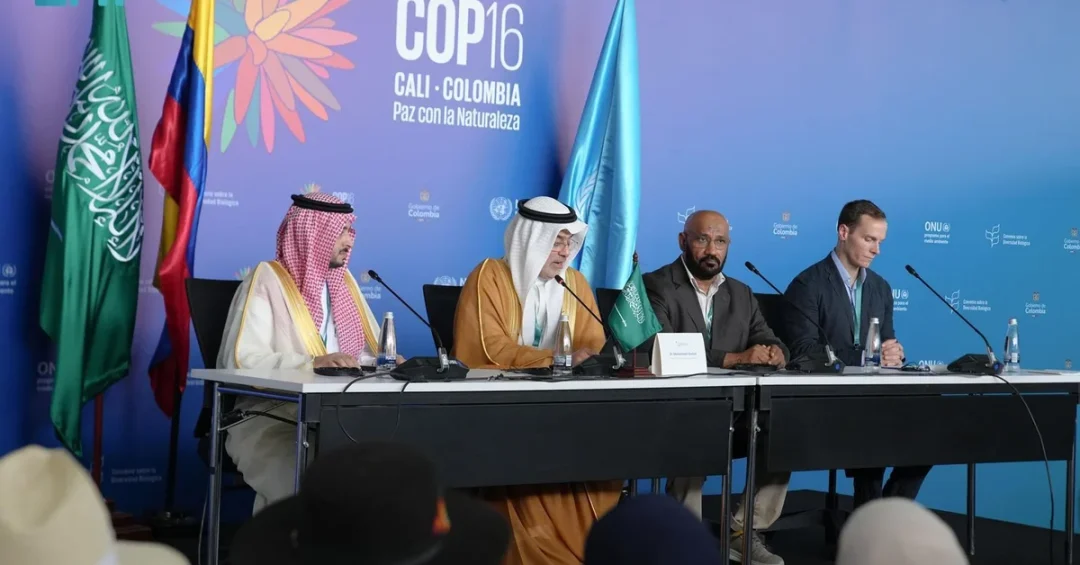
During the 16th Conference of the Parties to the Convention on Biological Diversity (COP 16) in Kali, Colombia, Saudi Arabia reaffirmed its dedication to global biodiversity preservation, led by a delegation headed by Dr. Mohammad Qurban, CEO of the National Center for Wildlife (NCW). The conference, running from October 21 to November 1, 2024, brought together representatives from 196 nations under the theme “Peace with Nature,” providing a platform for the Kingdom to showcase its environmental leadership and commitment to international conservation goals.
Context and Background
COP 16 serves as a critical global forum for advancing biodiversity commitments following the landmark Kunming-Montreal Global Biodiversity Framework adopted at COP 15 in 2022. Saudi Arabia’s participation underscores its proactive role in addressing pressing environmental challenges, including habitat loss, climate change, and species extinction. The Kingdom’s delegation actively engaged with international partners to strengthen collaborative conservation strategies, highlighting the importance of regional capacity-building and data-driven monitoring.
Key Details
At the conference, the Saudi delegation highlighted its ambitious target to protect 30% of its land and marine areas by 2030, aligning with the United Nations’ biodiversity conservation objectives. The Kingdom was awarded the prestigious “Green List” certification from the International Union for Conservation of Nature (IUCN) in recognition of its achievements at the King Salman Royal Natural Reserve and the Ibex Protected Area. Dr. Qurban stated, “Our participation in COP 16 reaffirms Saudi Arabia’s commitment to supporting global biodiversity efforts and advancing the goals of the Kunming-Montreal Global Biodiversity Framework.” He also noted the delegation’s focus on expanding data sources for biodiversity monitoring, advocating for integrated regional efforts, and promoting capacity-building programs in the Arab region.
Implications and Impact
Saudi Arabia’s active role at COP 16 signals its growing influence in global environmental governance, setting an example for other nations through concrete actions like the Green List certification and the 30×30 target. The Kingdom used the platform to showcase its national conservation initiatives, including preparations for hosting the 16th Conference of the Parties to Combat Desertification (COP 16) in Riyadh from December 2 to 13, 2024. Delegates extended invitations to global counterparts and provided insights on conference documents, further strengthening Saudi Arabia’s position as a leader in sustainable development.
Vision 2030 Alignment
Saudi Arabia’s environmental commitments at COP 16 directly align with Vision 2030, the Saudi Green Initiative, and the National Environmental Strategy. As Dr. Qurban emphasized, the Kingdom’s dedication to ecosystem protection and biodiversity enhancement supports its long-term goals of economic diversification, sustainable living, and global partnership. This conference participation paves the way for continued progress, with the upcoming COP on desertification in Riyadh set to build on these achievements, fostering innovative solutions for a greener future.
20 Questions
Q1. What was the theme of COP 16 in Kali, Colombia?
A1. The theme was “Peace with Nature,” emphasizing harmony between human activities and natural ecosystems, aligning with global biodiversity preservation goals.
Q2. Who led the Saudi delegation at COP 16?
A2. The delegation was led by Dr. Mohammad Qurban, the CEO of the National Center for Wildlife (NCW), representing Saudi Arabia’s environmental interests.
Q3. What is the 30×30 target mentioned by Saudi Arabia?
A3. The 30×30 target aims to protect and restore 30% of land and ocean areas by 2030, aligning with the Kunming-Montreal Global Biodiversity Framework.
Q4. How many countries participated in COP 16?
A4. Representatives from 196 countries attended the conference, making it a major global gathering for biodiversity discussions.
Q5. What recognition did Saudi Arabia receive at COP 16?
A5. Saudi Arabia was awarded the “Green List” certification by the IUCN for its conservation achievements at the King Salman Royal Natural Reserve and the Ibex Protected Area.
Q6. What is the King Salman Royal Natural Reserve?
A6. It is a protected area in Saudi Arabia recognized for its effective ecosystem management and contribution to biodiversity preservation.
Q7. What is the Ibex Protected Area?
A7. The Ibex Protected Area is a reserve in Saudi Arabia that earned the Green List certification due to its sustainable biodiversity practices.
Q8. How does Saudi Arabia’s 30×30 target align with the UN?
A8. The target supports the United Nations’ biodiversity conservation objectives by committing to protect 30% of land and marine areas by 2030.
Q9. What capacity-building programs did Saudi Arabia advocate for?
A9. Saudi Arabia emphasized programs in the Arab region focused on collaborative learning and information exchange to enhance regional conservation efforts.
Q10. Why is data monitoring important for biodiversity?
A10. Comprehensive and accurate reporting strengthens conservation strategies by providing reliable data for decision-making and tracking progress.
Q11. What is the Kunming-Montreal Global Biodiversity Framework?
A11. It is a global agreement adopted at COP 15 in 2022 that sets a roadmap for achieving harmony with nature, including the 30×30 target.
Q12. Did Saudi Arabia host any related conference in 2024?
A12. Yes, Saudi Arabia hosted the 16th Conference of the Parties to Combat Desertification in Riyadh from December 2 to 13, 2024.
Q13. What is the Saudi Green Initiative?
A13. It is a national program under Vision 2030 aimed at increasing vegetation cover, reducing carbon emissions, and combating desertification.
Q14. How does the National Environmental Strategy support Saudi Arabia?
A14. The strategy provides a framework for ecosystem protection and sustainable development, aligning with Vision 2030 goals.
Q15. What was the role of the National Center for Wildlife at COP 16?
A15. The NCW led the Saudi delegation, showcasing conservation initiatives and advocating for global biodiversity commitments.
Q16. What did Dr. Mohammad Qurban say about COP 16?
A16. He expressed optimism that the conference would drive meaningful global biodiversity outcomes and inspire innovative sustainable development solutions.
Q17. How does Saudi Arabia’s participation benefit global efforts?
A17. By sharing data, promoting capacity-building, and earning Green List recognition, Saudi Arabia sets an example for effective conservation practices.
Q18. What ecosystems did Saudi Arabia focus on protecting?
A18. The Kingdom emphasized protecting land and marine areas, safeguarding endangered species, and tackling climate change challenges.
Q19. Why is regional collaboration important at COP 16?
A19. Enhanced integration of regional efforts helps align local conservation goals with global biodiversity targets for more effective outcomes.
Q20. What future steps did Saudi Arabia announce at COP 16?
A20. Saudi Arabia highlighted preparations for the UNCCD COP 16 in Riyadh, inviting global counterparts to collaborate on desertification and land restoration.
Reader Feedback
We value your thoughts. Please share your feedback on this article.
Your feedback helps us improve our coverage.