


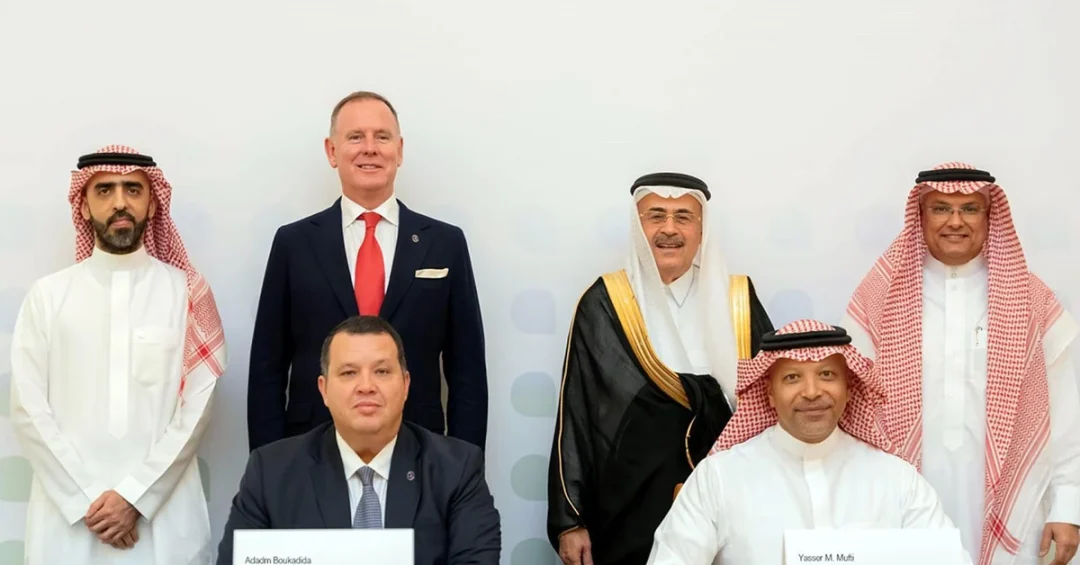
Aramco, one of the world’s leading integrated energy and chemicals companies, and Riyadh Air, the Kingdom of Saudi Arabia’s new premium international airline, have signed a Memorandum of Understanding (MoU) during the FII 8th Edition in Riyadh. The agreement, announced on October 31, 2024, sets the stage for potential collaboration in areas such as low-carbon fuel supply and sustainability, marking a significant step in aligning the Kingdom’s aviation and energy sectors with global environmental goals.
Context and Background
The MoU was signed at the Future Investment Initiative (FII) 8th Edition, a premier global investment forum held in Riyadh, which underscores Saudi Arabia’s commitment to fostering innovation and sustainable development. Aramco, a global leader in energy, brings extensive expertise in lower-carbon fuel technologies and digitalization, while Riyadh Air, founded in 2023, is positioning itself as a carrier focused on premium service and environmental responsibility. This collaboration is part of a broader trend within the Kingdom to integrate sustainability into core industries, aligning with international efforts to reduce carbon emissions in aviation.
Key Details
Under the MoU, both companies will explore opportunities in low-carbon fuel supply, including sustainable aviation fuel (SAF), and other sustainability initiatives. Yasser M. Mufti, Aramco’s Executive Vice President of Products and Customers, stated: “We are delighted by the prospect of exploring a wide variety of opportunities for collaboration between Aramco and Riyadh Air. Both companies have expressed a desire to adopt the latest technologies, elevate experiences, and contribute to sustainability objectives.” Adam Boukadida, Riyadh Air’s Chief Financial Officer, added: “Our partnership with Aramco aligns perfectly with our ambition to become a leading global airline committed to sustainability and low-carbon fuels.” The agreement emphasizes leveraging Aramco’s research and development in advanced fuels to enhance Riyadh Air’s operational efficiency and environmental performance.
Implications and Impact
This partnership has significant implications for Saudi Arabia’s aviation and energy sectors, positioning the Kingdom as a hub for sustainable aviation innovation. By integrating Aramco’s low-carbon fuel expertise with Riyadh Air’s modern fleet and operational model, the collaboration could set new standards for regional and global airlines. It also supports Saudi Arabia’s goal to attract international travelers and business under Vision 2030, as sustainable practices become increasingly important for global competitiveness. The MoU may encourage other partnerships between energy and transport sectors in the region, fostering a more integrated approach to decarbonization.
Vision 2030 Alignment
The MoU between Aramco and Riyadh Air directly supports Vision 2030’s objectives of economic diversification, environmental sustainability, and global leadership. By advancing low-carbon fuel technologies and enhancing aviation capabilities, the collaboration contributes to building a dynamic, sustainable economy that reduces reliance on oil while leveraging the Kingdom’s energy expertise. As Saudi Arabia continues to position itself as a hub for innovation and tourism, such partnerships are crucial for modernizing infrastructure and achieving long-term environmental goals, reinforcing the nation’s role as a forward-looking global player.
20 Questions
Q1. What is the Memorandum of Understanding between Aramco and Riyadh Air?
A1. The MoU is a formal agreement signed at the FII 8th Edition in Riyadh to explore collaboration in low-carbon fuel supply, sustainability, and technology adoption, enhancing both companies’ operations and environmental goals.
Q2. When was the MoU signed?
A2. The MoU was signed on October 31, 2024, during the Future Investment Initiative (FII) 8th Edition held in Riyadh, Saudi Arabia, a major global investment forum.
Q3. Who are the key officials who commented on the MoU?
A3. Yasser M. Mufti, Aramco’s Executive Vice President of Products and Customers, and Adam Boukadida, Riyadh Air’s Chief Financial Officer, provided statements highlighting the collaboration’s benefits.
Q4. What is the primary focus of the collaboration?
A4. The collaboration focuses on low-carbon fuel supply, including sustainable aviation fuel (SAF), and other sustainability initiatives to reduce environmental impact and improve efficiency.
Q5. How does the MoU support Saudi Arabia’s Vision 2030?
A5. It supports Vision 2030 by fostering economic diversification, promoting environmental sustainability, and positioning Saudi Arabia as a leader in innovative aviation and energy solutions.
Q6. What is Riyadh Air’s role in this partnership?
A6. Riyadh Air, as a new premium international airline, aims to leverage Aramco’s expertise in low-carbon fuels to achieve its sustainability ambitions and enhance operational capabilities.
Q7. What is Aramco’s expertise in this collaboration?
A7. Aramco brings expertise in lower-carbon fuel development, digitalization, and aviation experience, providing a strong platform for joint innovation with Riyadh Air.
Q8. Where was the MoU signed?
A8. The MoU was signed at the FII 8th Edition in Riyadh, a major forum that highlights Saudi Arabia’s investment opportunities and commitment to sustainable development.
Q9. Why is the partnership important for Saudi aviation?
A9. It positions Saudi Arabia as a hub for sustainable aviation, integrating energy and transport sectors to meet global environmental standards and attract international travelers.
Q10. What are low-carbon fuels?
A10. Low-carbon fuels are energy sources with reduced carbon emissions compared to traditional fossil fuels, including sustainable aviation fuel (SAF) made from renewable feedstocks.
Q11. How does this MoU benefit the environment?
A11. By advancing low-carbon fuel technologies, the collaboration aims to reduce aviation emissions, supporting global climate goals and Saudi Arabia’s environmental targets.
Q12. What other sustainability initiatives might be explored?
A12. Beyond fuels, the MoU may explore efficiency improvements, waste reduction, and digital tools to minimize environmental impact across operations.
Q13. How does this align with global aviation trends?
A13. Global aviation is shifting toward sustainable fuels to meet net-zero targets, and this partnership puts Saudi Arabia at the forefront of that transition.
Q14. What is the Future Investment Initiative (FII)?
A14. FII is an annual global investment forum in Riyadh that connects leaders to discuss innovation, investment, and sustainable development, hosted by the Saudi sovereign wealth fund.
Q15. How will Riyadh Air use Aramco’s low-carbon fuels?
A15. Riyadh Air plans to integrate low-carbon fuels into its operations to reduce its carbon footprint, aiming to become a leading sustainable global airline.
Q16. What is Aramco’s role in digitalization?
A16. Aramco applies advanced digital technologies to optimize operations, and this expertise could help Riyadh Air improve efficiency, safety, and customer experience.
Q17. What are the economic benefits of this collaboration?
A17. It supports Saudi Arabia’s economic diversification by creating new opportunities in sustainable transport and energy, boosting investment and job creation.
Q18. How does the MoU enhance international partnerships?
A18. The agreement showcases Saudi Arabia’s ability to form strategic alliances between major companies, fostering global confidence in its Vision 2030 initiatives.
Q19. What is Riyadh Air’s target launch date?
A19. Riyadh Air is expected to begin operations in 2025, and this partnership helps it prepare with sustainable practices from its inception.
Q20. How can people learn more about this collaboration?
A20. Updates are available through official channels like the Saudi Press Agency (SPA) and the companies’ newsrooms, which provide transparent information on progress.
Reader Feedback
We value your thoughts. Please share your feedback on this article.
Your feedback helps us improve our coverage.