


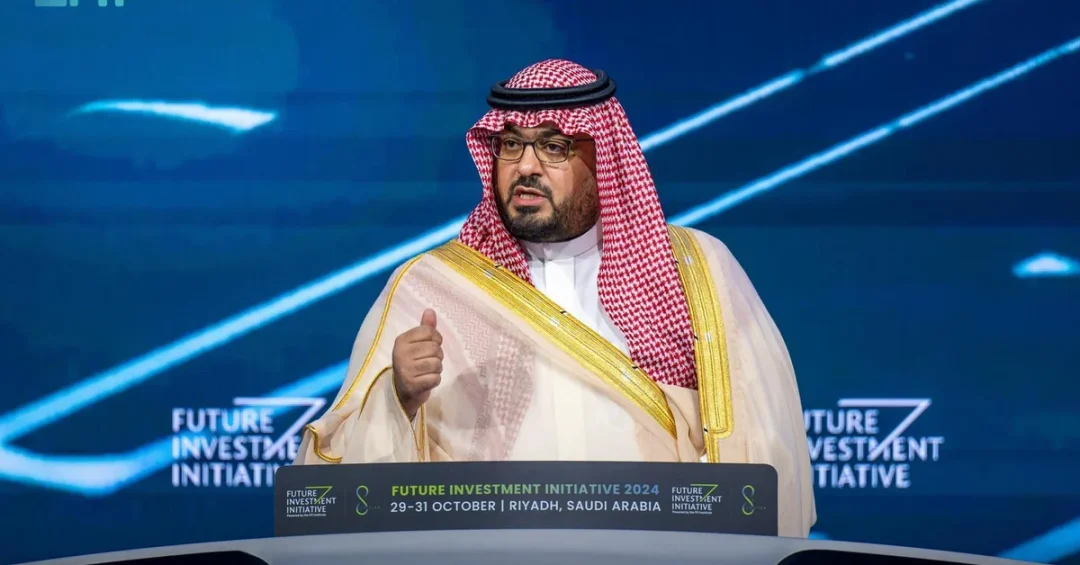
Saudi Minister of Economy and Planning Faisal Alibrahim emphasized the critical importance of global partnerships to address pressing challenges and drive economic growth during his participation at the 8th Future Investment Initiative (FII8) conference in Riyadh on October 31, 2024. Speaking before an international audience of investors, policymakers, and industry leaders, Alibrahim highlighted the Kingdom’s recent achievements in renewable energy and its strategic efforts to strengthen global supply chains through initiatives such as Gulf Cooperation Council (GCC) free trade agreements.
Context and Background
The FII8 conference, a flagship event organized by the Future Investment Initiative Institute, serves as a global platform for discussing investment opportunities and economic transformation. Alibrahim’s remarks came at a time when the world is navigating energy transitions and the rapid advancement of artificial intelligence (AI). He noted that the global economy is poised for significant growth, but stressed that international collaboration is essential to navigate emerging challenges and capitalize on new opportunities.
Key Details and Remarks
Alibrahim underscored Saudi Arabia’s progress in renewable energy, stating that the Kingdom is setting new global records in solar and wind energy capacity. He also highlighted the importance of public-private partnerships in driving innovation and economic diversification. Since the launch of Vision 2030, non-oil sectors have expanded by 20%, and private investment in these sectors has surged by 70%, demonstrating the effectiveness of the Kingdom’s reform agenda. Additionally, over 120 companies have relocated their regional headquarters to Saudi Arabia, reflecting growing business confidence in the Kingdom’s business environment.
Implications and Impact
Alibrahim’s emphasis on partnership signals Saudi Arabia’s commitment to playing a leading role in shaping global economic governance. The Kingdom’s focus on renewable energy and AI aligns with international efforts to address climate change and technological disruption. By fostering regulatory clarity and innovation-friendly policies, Saudi Arabia is positioning itself as a hub for investment and talent, with potential ripple effects across the Middle East and beyond.
Vision 2030 Alignment
The minister’s remarks directly align with Vision 2030, Saudi Arabia’s comprehensive roadmap for economic diversification, social development, and global engagement. As the Kingdom continues to build a knowledge-based economy, its emphasis on partnerships, renewable energy, and AI underscores a forward-looking strategy that aims to reduce dependence on oil and create sustainable growth. This commitment reinforces Saudi Arabia’s role as a reliable partner in addressing shared global challenges and advancing long-term prosperity.
20 Questions
Q1. Who emphasized the importance of global partnerships at the FII8 conference?
A1. Saudi Minister of Economy and Planning Faisal Alibrahim emphasized the importance of global partnerships during his participation at the 8th Future Investment Initiative (FII8) conference in Riyadh.
Q2. What key renewable energy achievement did Alibrahim highlight?
A2. Alibrahim highlighted that Saudi Arabia is setting new global records in solar and wind energy capacity, demonstrating the Kingdom’s leadership in renewable energy.
Q3. How has the non-oil sector grown since Vision 2030 was launched?
A3. Since the launch of Vision 2030, non-oil sectors in Saudi Arabia have expanded by 20%, reflecting successful economic diversification efforts.
Q4. What is the role of public-private partnerships according to Alibrahim?
A4. Alibrahim stressed that public-private partnerships are essential for driving economic growth and innovation, especially in the context of energy transitions and AI.
Q5. How many companies have relocated their regional headquarters to Saudi Arabia?
A5. Over 120 companies have relocated their regional headquarters to Saudi Arabia, indicating strong business confidence in the Kingdom’s investment climate.
Q6. What is the FII8 conference?
A6. The 8th Future Investment Initiative (FII8) is an annual global conference held in Riyadh that brings together investors, policymakers, and leaders to discuss investment opportunities and economic transformation.
Q7. What global challenges did Alibrahim mention?
A7. Alibrahim mentioned energy transitions and artificial intelligence as pivotal axes of the global economy that present both challenges and opportunities.
Q8. How does Saudi Arabia aim to strengthen global supply chains?
A8. Saudi Arabia aims to strengthen global supply chains through initiatives such as Gulf Cooperation Council (GCC) free trade agreements, which facilitate smoother trade and investment flows.
Q9. What increase in private investment in non-oil sectors was reported?
A9. Private investment in non-oil sectors in Saudi Arabia has surged by 70% since the launch of Vision 2030, showing robust private sector engagement.
Q10. What is the significance of Alibrahim’s remarks at the FII8 conference?
A10. Alibrahim’s remarks underscore Saudi Arabia’s commitment to international collaboration, renewable energy leadership, and economic diversification as part of its Vision 2030 agenda.
Q11. How does the Kingdom plan to become a leader in artificial intelligence?
A11. Saudi Arabia is fostering a conducive business environment with regulatory clarity to encourage innovation and attract AI investment, positioning itself as a global AI hub.
Q12. What does Alibrahim say about the global economy’s growth prospects?
A12. Alibrahim noted that the global economy is poised for significant growth, but emphasized that international partnerships are necessary to navigate future challenges effectively.
Q13. Why are international partnerships essential according to the minister?
A13. International partnerships are essential to combine resources and expertise for addressing complex global challenges such as climate change, technology disruption, and economic stability.
Q14. What is the connection between Vision 2030 and renewable energy?
A14. Vision 2030 prioritizes renewable energy development to diversify energy sources, reduce carbon emissions, and create new economic opportunities in the green sector.
Q15. How does the relocation of headquarters benefit Saudi Arabia?
A15. Relocating regional headquarters to Saudi Arabia boosts local employment, fosters knowledge transfer, and enhances the Kingdom’s status as a regional business hub.
Q16. What sectors have contributed to the 20% non-oil expansion?
A16. Sectors such as tourism, logistics, finance, technology, and manufacturing have contributed significantly to the 20% non-oil expansion since Vision 2030.
Q17. How does Alibrahim view the role of innovation in the economy?
A17. Alibrahim sees innovation as a key driver of economic growth, and he emphasized the importance of creating an environment that fosters innovation through partnerships and clear regulations.
Q18. What is the GCC’s role in Saudi Arabia’s economic strategy?
A18. The Gulf Cooperation Council (GCC) facilitates economic integration through free trade agreements and coordinated policies, supporting Saudi Arabia’s supply chain and trade ambitions.
Q19. Did Alibrahim mention any specific targets for AI or energy?
A19. Alibrahim highlighted the Kingdom’s record achievements in solar and wind energy and expressed the goal of becoming a global leader in artificial intelligence, though specific numerical targets were not detailed.
Q20. What takeaways from FII8 are important for international investors?
A20. International investors should note Saudi Arabia’s stable regulatory environment, growing non-oil sectors, renewable energy expansion, and commitment to partnerships, all of which present compelling investment opportunities.
Reader Feedback
We value your thoughts. Please share your feedback on this article.
Your feedback helps us improve our coverage.