


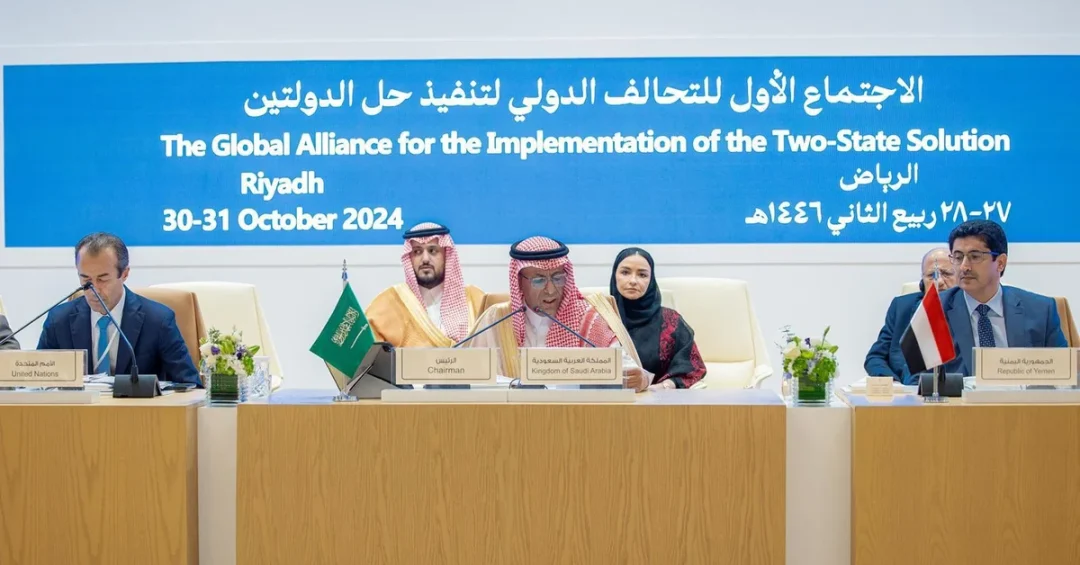
The first meeting of the Global Alliance for the Implementation of the Two-State Solution resumed its work today in Riyadh, the capital of the Kingdom of Saudi Arabia. The gathering brings together senior officials from numerous countries and international organizations to advance a multilateral political path toward peace. Deputy Minister for International Multilateral Affairs and General Supervisor of the Public Diplomacy Deputyship, Dr. Abdulrahman Al-Rassi, addressed participants, underscoring the urgency of the moment as the Palestinian people endure ongoing suffering.
Context and Background
The establishment of the Global Alliance for the Implementation of the Two-State Solution represents a significant international diplomatic initiative hosted by the Kingdom of Saudi Arabia. It convenes at a time when the Palestinian people are facing severe challenges due to Israeli military operations, which have caused widespread destruction and loss of life. Dr. Al-Rassi highlighted the occupying state’s violations of international law and international humanitarian law, as well as the international community’s failure to halt these actions. He pointed to the Security Council’s historical responsibility to uphold the ethical and legal rights of the Palestinian people to self-determination and to initiate a serious process for comprehensive peace, preventing the further expansion of conflict in the region.
Key Details
Dr. Al-Rassi emphasized the importance of engaging participating countries in fostering a multilateral political path to achieve peace. This path is grounded in the principles of international law, UN resolutions, the peace process frameworks, and the 2002 Arab Peace Initiative under the “land-for-peace” principle. The goal is to end the suffering of the Palestinian people that has spanned eight decades, enabling them to live in freedom and dignity in their independent Palestinian state within the 1967 borders with East Jerusalem as its capital. He renewed the Kingdom’s call for all peace-loving countries to join the Alliance and appreciated recent decisions by several friendly countries to recognize the State of Palestine, urging others to expedite this decision to bolster Palestinian rights and accelerate peace.
Implications and Impact
Dr. Al-Rassi warned that the continuation of the occupying power’s crimes against the Palestinian people will only widen the conflict and further endanger regional and global security and stability. He called on the international community, particularly the permanent members of the Security Council, to use their powers to uphold security and peace, compelling Israel to halt its aggression and allow immediate and unrestricted entry of humanitarian aid. The Kingdom also strongly condemned the Israeli Knesset’s decision to ban the activities of the United Nations Relief and Works Agency for Palestine Refugees in the Near East (UNRWA), considering it a violation of international law and a dangerous precedent that undermines the multilateral international system.
20 Questions
Q1. What is the Global Alliance for the Implementation of the Two-State Solution?
A1. The Global Alliance is an international diplomatic initiative hosted by Saudi Arabia to advance a multilateral political path towards peace, based on the two-state solution, ending Israeli occupation, and establishing a Palestinian state.
Q2. Where is the first meeting of the Alliance taking place?
A2. The first meeting is taking place in Riyadh, the capital of the Kingdom of Saudi Arabia, underlining the Kingdom’s leadership in regional and international diplomatic efforts for peace.
Q3. Who is Dr. Abdulrahman Al-Rassi?
A3. Dr. Abdulrahman Al-Rassi is the Deputy Minister for International Multilateral Affairs and General Supervisor of the Public Diplomacy Deputyship of Saudi Arabia, representing the Kingdom at the meeting.
Q4. What is the main goal of the two-state solution?
A4. The main goal is to end the Israeli occupation and establish an independent Palestinian state within the 1967 borders with East Jerusalem as its capital, enabling Palestinians to live in freedom and dignity.
Q5. Why is this meeting considered urgent?
A5. The meeting is urgent because the Palestinian people are enduring ongoing suffering due to Israeli aggression and widespread destruction, threatening regional and global security.
Q6. What principles guide the Alliance’s peace efforts?
A6. The efforts are grounded in international law, UN resolutions, the peace process frameworks, and the 2002 Arab Peace Initiative under the “land-for-peace” principle.
Q7. How long has the Palestinian suffering continued according to Dr. Al-Rassi?
A7. Dr. Al-Rassi stated the Palestinian people have suffered for eight decades, emphasizing the need for a lasting solution to end this prolonged crisis.
Q8. What role did Saudi Arabia play in this meeting?
A8. Saudi Arabia hosts the meeting and calls on peace-loving countries to join the Alliance, demonstrating its leadership in promoting regional stability and peace.
Q9. How does the Kingdom view recent recognitions of Palestine by other countries?
A9. The Kingdom appreciates these decisions, considering them supportive of Palestinian rights and accelerators for implementing the two-state solution and peace.
Q10. What is the Arab Peace Initiative of 2002?
A10. It is a peace proposal offering normalization between Arab states and Israel in exchange for Israeli withdrawal from occupied territories and the establishment of a Palestinian state.
Q11. What did Dr. Al-Rassi say about Israeli Knesset’s decision regarding UNRWA?
A11. He condemned it as a violation of international law and a dangerous precedent that undermines the multilateral international system and seeks to dismantle Palestinian resilience.
Q12. What is UNRWA’s role in the region?
A12. UNRWA provides essential humanitarian assistance, including education, healthcare, and relief, to Palestinian refugees across the Middle East, and the Kingdom reaffirms its support for this mission.
Q13. How does the Kingdom view the targeting of UN agencies?
A13. The Kingdom absolutely rejects the systematic targeting of UN agencies and humanitarian organizations, which endangers the lives of their workers.
Q14. What call did Dr. Al-Rassi make to the Security Council?
A14. He called on permanent members to uphold security and peace, compelling Israel to halt aggression and allow immediate, unrestricted humanitarian aid entry.
Q15. What threat does the continuation of aggression pose?
A15. It will widen the conflict and further endanger regional and global security and stability, requiring urgent international intervention.
Q16. What is the “land-for-peace” principle?
A16. It is a core element of the 2002 Arab Peace Initiative, offering normalization in exchange for Israeli withdrawal from territories occupied since 1967, including the West Bank and Gaza.
Q17. What is the significance of the meeting in Riyadh for Saudi diplomacy?
A17. It showcases Saudi Arabia’s commitment to leading multilateral diplomacy, hosting crucial talks that align with its Vision 2030 goals of fostering global stability and cooperation.
Q18. How does the Alliance relate to the Palestinian right to self-determination?
A18. The Alliance seeks to uphold the ethical and legal rights of the Palestinian people to self-determination, a key principle of international law and UN resolutions.
Q19. What is the Kingdom’s position on forced displacement?
A19. The Kingdom absolutely rejects any attempts at forced displacement, considering Israel’s moves as desperate efforts to dismantle the Palestinian people’s resilience on their land.
Q20. What hope was expressed by Dr. Al-Rassi at the close of his address?
A20. He expressed hope for the success of the initiative, noting enthusiasm from many countries to join the Alliance, signaling a strong international commitment to peace.
Vision 2030 Alignment
The Kingdom of Saudi Arabia’s leadership in hosting the first meeting of the Global Alliance for the Implementation of the Two-State Solution aligns directly with the ambitions of Vision 2030, which prioritizes regional stability, international cooperation, and the promotion of peace. By calling for a multilateral political path grounded in international law and the 2002 Arab Peace Initiative, Saudi Arabia reinforces its role as a responsible global actor committed to finding lasting solutions to long-standing conflicts. This initiative reflects the Kingdom’s forward-looking approach: fostering a secure and prosperous region that facilitates economic growth, cultural exchange, and the aspirations of all peoples for a dignified future. The success of this Alliance will mark a significant step towards a comprehensive peace, supporting the broader goals of Vision 2030 in building a stable and interconnected world.
Reader Feedback
We value your thoughts. Please share your feedback on this article.
Your feedback helps us improve our coverage.