


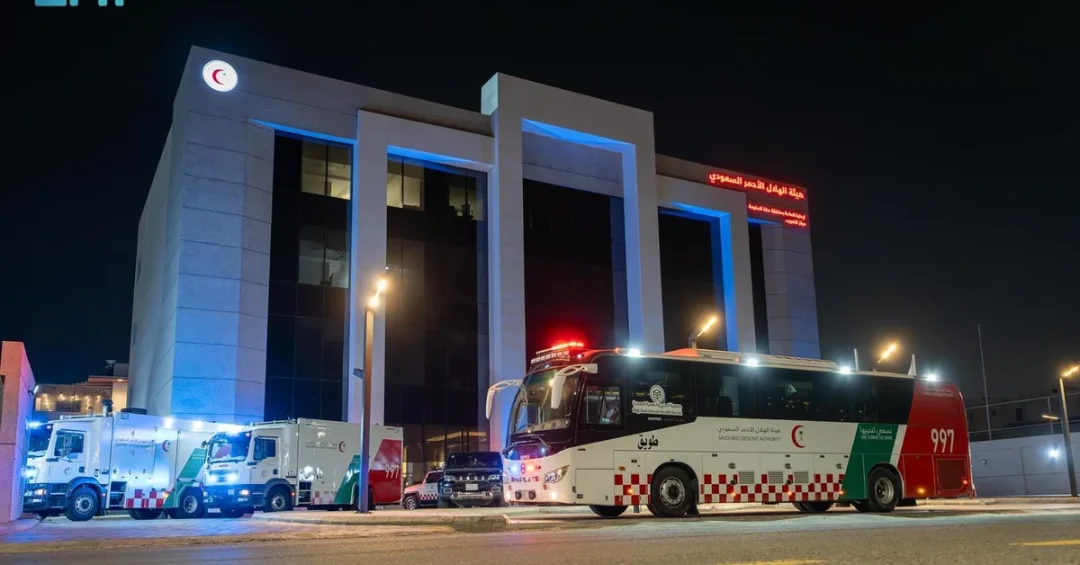
The Saudi Red Crescent Authority in the Makkah region has elevated its state of readiness to the highest level, responding to heavy rain warnings issued by the National Center for Meteorology. The mobilization, announced on November 1, 2024, ensures that all regional resources are prepared for a swift and effective response to protect residents and visitors in the holy city and surrounding areas.
Context and Background
The heightened alert follows recent meteorological forecasts predicting significant rainfall across parts of the Makkah region, which includes the holy city of Makkah and the governorates of Jeddah, Taif, and others. The National Center for Meteorology, the Kingdom’s official weather authority, regularly issues such warnings to allow emergency services to prepare proactively. This initiative is part of Saudi Arabia’s broader commitment to public safety and disaster readiness, aligning with the goals of Vision 2030 to enhance quality of life through advanced infrastructure and emergency response systems.
Key Details
As part of the response, the Saudi Red Crescent Authority has placed 98 operational centers across the region on high alert, staffed by 1,420 medical professionals. A fleet of 149 vehicles, including advanced ambulances and support units, is ready for immediate deployment. Additionally, an air ambulance equipped with the latest medical technology is available to support ground operations, ensuring rapid access to affected areas.
The Authority urged residents and visitors to adhere to official instructions, exercise caution during adverse weather, and prioritize road safety. For ambulance services, the public can call 997 or use the “Asefne” application, which operates 24/7.
Implications and Impact
The proactive response demonstrates Saudi Arabia’s advanced emergency management capabilities, which are critical for safeguarding millions of pilgrims and residents in the Makkah region. This preparedness minimizes risks during heavy rains, which can cause flash floods and road hazards. The mobilization also supports the Kingdom’s reputation as a global leader in humanitarian aid and disaster response, reinforcing its role in the region as a reliable partner for safety and security.
Vision 2030 Alignment
The Saudi Red Crescent’s heightened readiness directly supports Vision 2030’s pillar of improving quality of life through robust public safety systems. By leveraging modern technology, such as the Asefne mobile app and air ambulances, the Authority accelerates emergency care, reflecting the Kingdom’s dedication to innovation and citizen welfare. This initiative is a testament to the ongoing investment in world-class emergency services that protect communities and enhance the experience of visitors to the holy sites.
20 Questions
Q1. What triggered the Saudi Red Crescent to go on high alert in Makkah?
A1. The alert was triggered by heavy rain warnings issued by the National Center for Meteorology, the official Saudi weather authority, to ensure public safety.
Q2. How many operational centers are on high alert?
A2. A total of 98 operational centers across the Makkah region have been placed on high alert for a rapid response.
Q3. How many medical professionals are deployed?
A3. A total of 1,420 medical professionals are staffed across the centers to provide emergency care.
Q4. What vehicles are available for the response?
A4. A fleet of 149 vehicles, including advanced ambulances, is ready for immediate deployment.
Q5. Is an air ambulance available?
A5. Yes, an air ambulance equipped with the latest medical technology is ready to support ground operations.
Q6. Which authority issued the heavy rain warnings?
A6. The National Center for Meteorology, the official Saudi weather body, issued the warnings.
Q7. What should residents do during adverse weather?
A7. Residents should adhere to official instructions, exercise caution, and prioritize road safety.
Q8. How can people request ambulance services?
A8. People can call 997 or use the “Asefne” application, available 24/7.
Q9. What areas are included in the Makkah region?
A9. The region includes Makkah city, Jeddah, Taif, and other governorates in western Saudi Arabia.
Q10. Why is this alert important for pilgrims?
A10. Makkah hosts millions of pilgrims annually, and high alert ensures their safety during heavy rains that can cause hazards.
Q11. What is the Asefne application?
A11. The Asefne app is a Saudi Red Cross platform for requesting emergency ambulance services 24/7.
Q12. How does this response align with Vision 2030?
A12. It supports Vision 2030’s goal of improving quality of life through advanced public safety and emergency services.
Q13. What technology supports the air ambulance?
A13. The air ambulance is equipped with the latest medical technology for advanced care during transport.
Q14. Can visitors use the 997 number for help?
A14. Yes, the 997 emergency number is available to both residents and visitors in the region.
Q15. What are the risks of heavy rains in Makkah?
A15. Potential risks include flash floods, road hazards, and traffic disruptions in low-lying areas.
Q16. How does the Saudi Red Crescent coordinate with other agencies?
A16. It coordinates with the National Center for Meteorology and local authorities to ensure a unified response.
Q17. What is the role of the Saudi Red Crescent Authority?
A17. It provides emergency medical services, disaster response, and public safety support across Saudi Arabia.
Q18. How quickly can the teams respond?
A18. Teams are on 24/7 high alert, enabling immediate deployment of vehicles and personnel.
Q19. Is this a regular event for the region?
A19. Yes, Saudi Arabia regularly activates alerts during rainy seasons to ensure preparedness.
Q20. What is the main goal of this high alert?
A20. The main goal is to protect lives and ensure a rapid, effective response to weather-related emergencies.
Reader Feedback
We value your thoughts. Please share your feedback on this article.
Your feedback helps us improve our coverage.