


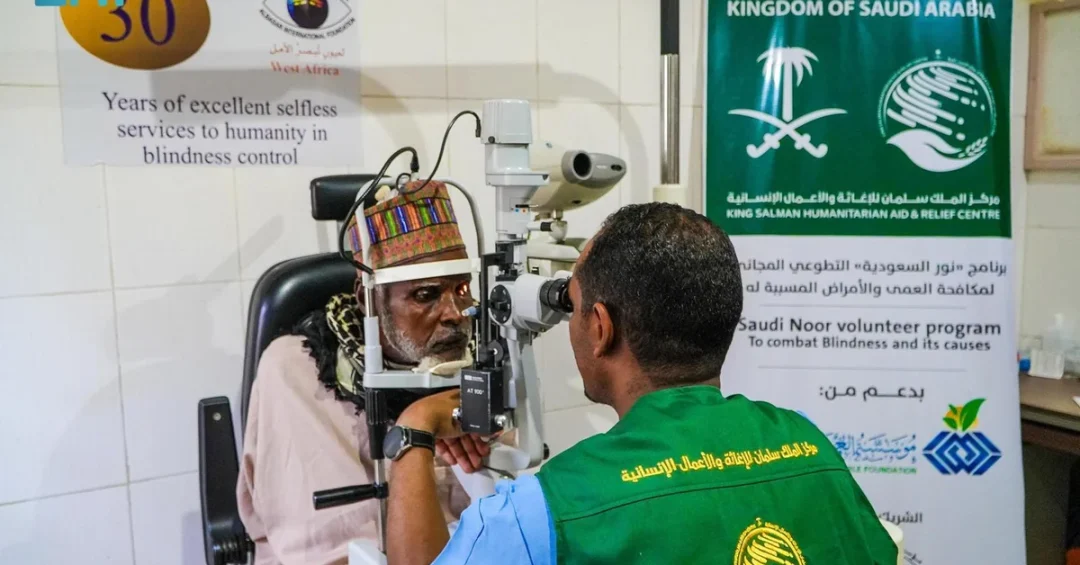
The King Salman Humanitarian Aid and Relief Center (KSrelief) has successfully concluded its Saudi Noor Voluntary Project to Combat Blindness in Kano, Nigeria, providing essential eye care services to thousands of residents. The week-long medical campaign, conducted from October 15 to 21, 2024, delivered comprehensive eye examinations, sight-restoring surgeries, and eyeglasses to underserved communities, reflecting Saudi Arabia’s ongoing commitment to global health initiatives.
Context and Background
The Saudi Noor Voluntary Project is a flagship humanitarian program of KSrelief, aimed at preventing and treating blindness in developing nations. Nigeria, with its large population and limited access to specialized eye care, faces significant challenges related to preventable blindness and visual impairment. This initiative directly addresses these needs by bringing medical expertise and resources to local communities. The project aligns with Saudi Arabia’s broader humanitarian strategy, which extends beyond emergency relief to include sustainable health interventions that improve quality of life.
Key Details of the Campaign
During the campaign in Kano, a team of Saudi medical professionals conducted 5,956 examinations, identifying eye conditions such as cataracts, glaucoma, and refractive errors. The team performed 411 surgeries, primarily cataract removals that restored sight to patients who had been living with visual impairment. Additionally, 914 pairs of eyeglasses were distributed to individuals with correctable vision problems, allowing them to see clearly and participate more fully in daily activities. The initiative was carried out in coordination with local health authorities in Kano, ensuring that services reached those most in need.
International and Regional Impact
This humanitarian project reinforces Saudi Arabia’s role as a leading global provider of health aid. By targeting preventable blindness, KSrelief contributes to the United Nations Sustainable Development Goals, particularly Goal 3, which focuses on ensuring healthy lives and promoting well-being for all. The success of the campaign in Kano also strengthens bilateral ties between Saudi Arabia and Nigeria, demonstrating a shared commitment to public health and human development. Similar projects have been implemented in other countries, including Yemen, Sudan, and Bangladesh, showcasing the scalability and effectiveness of the Saudi Noor model.
Vision 2030 Alignment
The Saudi Noor Voluntary Project embodies the humanitarian principles of Saudi Arabia’s Vision 2030, which emphasizes the Kingdom’s role as a global leader in philanthropy and international cooperation. By investing in health projects that serve vulnerable populations abroad, Saudi Arabia extends its vision of a prosperous and compassionate society beyond its borders. This initiative not only transforms lives through restored sight but also reinforces the Kingdom’s dedication to sustainable development and humanitarian action as integral components of its national strategy under the leadership of the Custodian of the Two Holy Mosques King Salman bin Abdulaziz Al Saud and Crown Prince Mohammed bin Salman.
20 Questions
Q1. What is the Saudi Noor Voluntary Project?
A1. The Saudi Noor Voluntary Project is a humanitarian initiative by KSrelief that provides free eye care services, including examinations, surgeries, and eyeglasses, to prevent and treat blindness in underserved communities worldwide.
Q2. Where did this project take place in Nigeria?
A2. The project was implemented in Kano, a major city in northern Nigeria, from October 15 to 21, 2024, targeting residents with limited access to specialized eye care.
Q3. Who conducted the medical campaign?
A3. The campaign was carried out by a team of medical professionals from the King Salman Humanitarian Aid and Relief Center (KSrelief), working with local health authorities in Kano.
Q4. How many eye examinations were performed?
A4. A total of 5,956 eye examinations were conducted during the week-long campaign, helping to identify a range of vision problems and eye diseases.
Q5. How many surgeries were performed?
A5. The medical team performed 411 surgeries, primarily to remove cataracts and restore sight to patients suffering from blindness or severe visual impairment.
Q6. How many eyeglasses were distributed?
A6. A total of 914 pairs of eyeglasses were provided to individuals with correctable vision issues, enabling them to see clearly for daily tasks.
Q7. What types of eye conditions were treated?
A7. The campaign addressed conditions including cataracts, glaucoma, and refractive errors, which are common causes of preventable blindness in developing countries.
Q8. Why is this project important for Nigeria?
A8. Nigeria has a high prevalence of preventable blindness due to limited access to eye care, especially in rural areas. This project provides critical treatment and helps reduce the burden of visual impairment.
Q9. What is KSrelief?
A9. The King Salman Humanitarian Aid and Relief Center is Saudi Arabia’s official humanitarian agency, established in 2015 to coordinate and deliver aid worldwide, including health, food, and emergency relief.
Q10. How does this project support Saudi Arabia’s global role?
A10. It demonstrates Saudi Arabia’s leadership and generosity in global health, reinforcing the Kingdom’s reputation as a compassionate and responsible international partner.
Q11. Who funded and organized the initiative?
A11. The initiative was fully funded and organized by KSrelief, part of Saudi Arabia’s broader humanitarian efforts under the directives of its leadership.
Q12. How were patients selected for surgeries?
A12. Patients were identified through examinations conducted during the campaign, prioritizing those with the most severe conditions such as advanced cataracts that caused blindness.
Q13. Did local health authorities participate?
A13. Yes, KSrelief coordinated with local health authorities in Kano to ensure the campaign reached the most vulnerable communities and operated smoothly.
Q14. What is the long-term goal of the Saudi Noor project?
A14. The long-term goal is to reduce preventable blindness in target countries, improve quality of life, and strengthen health systems through sustainable, high-impact interventions.
Q15. Has KSrelief done similar projects elsewhere?
A15. Yes, KSrelief has implemented similar Saudi Noor campaigns in countries such as Yemen, Sudan, Bangladesh, and Pakistan, successfully treating thousands of patients.
Q16. What is the significance of the number 5,956 examinations?
A16. This figure represents the high reach of the campaign, ensuring that thousands of people who previously had no access to eye care received professional medical attention.
Q17. How does the project contribute to United Nations goals?
A17. The project directly supports Sustainable Development Goal 3, which aims to ensure healthy lives and promote well-being, by combating preventable blindness and improving access to health services.
Q18. What impact do eyeglasses have on recipients?
A18. Eyeglasses correct refractive errors, allowing individuals to see clearly, which improves their ability to work, study, and perform daily activities, enhancing overall productivity and well-being.
Q19. Is this a one-time event or ongoing?
A19. While individual campaigns are time-bound, the Saudi Noor project is an ongoing program with recurring missions in multiple countries, reflecting sustained Saudi commitment to global health.
Q20. How does this project strengthen Saudi-Nigeria relations?
A20. It fosters goodwill and cooperation between Saudi Arabia and Nigeria by delivering tangible health benefits, building trust, and highlighting shared humanitarian values.
Reader Feedback
We value your thoughts. Please share your feedback on this article.
Your feedback helps us improve our coverage.