


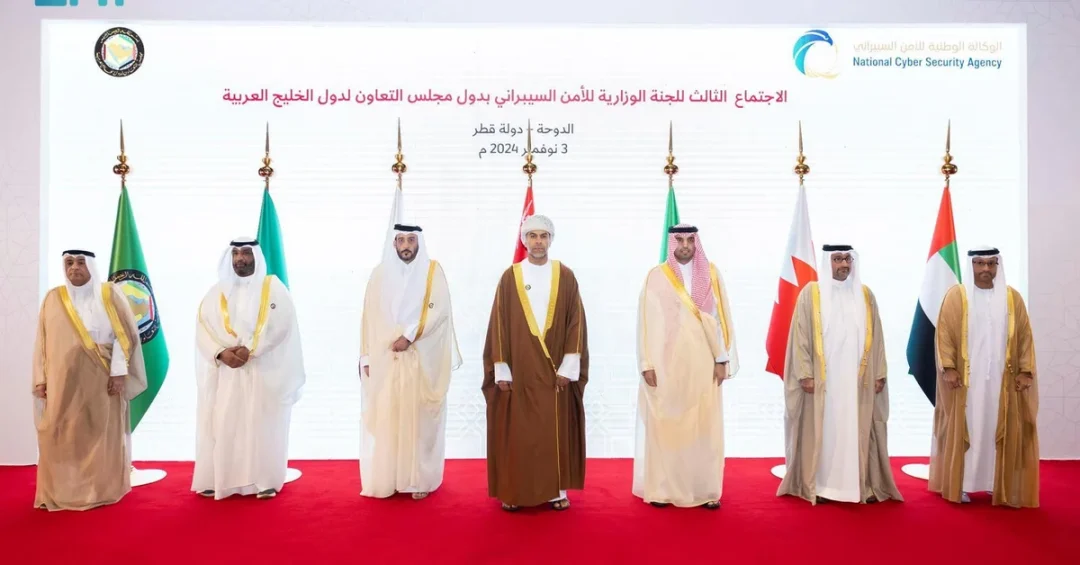
The Kingdom of Saudi Arabia, represented by the Saudi National Cybersecurity Authority (NCA), participated in the 3rd meeting of the Gulf Cooperation Council (GCC) Cybersecurity Ministerial Committee held in Doha, Qatar. The Saudi delegation was led by NCA Governor Eng. Majid Al-Mazyad and attended alongside heads of cybersecurity authorities from GCC member states and GCC Secretary-General Jassim Albudaiwi. The meeting marked a significant step in advancing regional cybersecurity cooperation under the framework of the GCC.
Context and Background
The GCC Cybersecurity Ministerial Committee was established to enhance collective cybersecurity efforts among member states, addressing growing digital threats and fostering a secure cyber environment. This 3rd meeting, hosted by Qatar, underscores the GCC’s commitment to unified strategies in the face of evolving cyber risks. Saudi Arabia’s active participation reflects its leadership role in regional cybersecurity, consistent with its broader Vision 2030 goals of digital transformation and economic diversification.
Key Details
During the meeting, the Ministerial Committee adopted the Gulf strategy for cybersecurity, a comprehensive framework designed to strengthen cyber defenses across the region. The committee also approved the launch of the “cyber threat information sharing platform in GCC countries,” a Saudi-led project spearheaded by the Saudi Information Technology Company and the Global Cybersecurity Forum Institute. This platform aims to enable real-time sharing of threat intelligence among GCC nations, enhancing collective resilience. Additionally, discussions covered initiatives such as joint cyber exercises to improve readiness and facilitate the exchange of expertise and best practices among member states.
Implications and Impact
The adoption of the Gulf cybersecurity strategy and the cyber threat information sharing platform has significant implications for regional stability and economic growth. By harmonizing cybersecurity policies and fostering collaboration, GCC countries can better protect critical infrastructure, digital services, and private sector operations. This initiative also positions the Gulf region as a global hub for cybersecurity innovation, attracting investment and talent. For Saudi Arabia, the project reinforces its reputation as a leader in digital security, supporting its Vision 2030 objectives of creating a thriving digital economy and enhancing national security.
Vision 2030 Alignment
Saudi Arabia’s leadership in the GCC Cybersecurity Ministerial Committee directly supports the Kingdom’s Vision 2030 ambitions. The NCA’s efforts align with the Vision’s focus on digital transformation, innovation, and international collaboration. By driving the cyber threat information sharing platform and joint exercises, Saudi Arabia is strengthening its cyber defenses, protecting its rapidly digitizing economy, and contributing to a secure Gulf region. This forward-looking approach positions the Kingdom as a key partner in global cybersecurity, enabling sustained economic growth and technological advancement under Vision 2030.
20 Questions
Q1. What was the main purpose of the 3rd GCC Cybersecurity Ministerial Committee meeting?
A1. The meeting aimed to strengthen cybersecurity cooperation among GCC member states by adopting a unified Gulf cybersecurity strategy and approving initiatives to enhance cyber resilience and threat information sharing.
Q2. Who led the Saudi delegation at the meeting?
A2. The Saudi delegation was led by Eng. Majid Al-Mazyad, the Governor of the Saudi National Cybersecurity Authority (NCA).
Q3. Where was the meeting held?
A3. The meeting took place in Doha, Qatar, as part of the GCC’s ongoing efforts to foster regional collaboration.
Q4. What major strategy was adopted during the meeting?
A4. The Ministerial Committee adopted the Gulf strategy for cybersecurity, which provides a comprehensive framework for improving cyber defenses across the region.
Q5. What is the cyber threat information sharing platform?
A5. It is a platform approved for launch that enables GCC countries to share real-time threat intelligence, spearheaded by Saudi entities to enhance regional cybersecurity resilience.
Q6. Which Saudi organizations are leading the cyber threat information sharing platform project?
A6. The project is spearheaded by the Saudi Information Technology Company and the Global Cybersecurity Forum Institute.
Q7. How does this meeting support Saudi Arabia’s Vision 2030?
A7. It aligns with Vision 2030 by advancing digital transformation, strengthening national security, and positioning Saudi Arabia as a leader in cybersecurity innovation and regional collaboration.
Q8. What are joint cyber exercises mentioned in the discussions?
A8. They are collaborative training drills among GCC member states designed to improve cyber readiness and facilitate the exchange of expertise and best practices.
Q9. Who attended the meeting besides Saudi Arabia’s delegation?
A9. The meeting was attended by heads of cybersecurity authorities from all GCC member states and GCC Secretary-General Jassim Albudaiwi.
Q10. Why is the Gulf cybersecurity strategy important?
A10. It provides a unified approach to tackling cyber threats, protecting critical infrastructure, and ensuring a secure digital environment for economic growth across the Gulf.
Q11. What global role does Saudi Arabia aim to play through these cybersecurity initiatives?
A11. Saudi Arabia aims to become a global hub for cybersecurity innovation, attracting investment and talent while enhancing its reputation as a leader in digital security.
Q12. How will the cyber threat information sharing platform benefit GCC countries?
A12. It will enable real-time sharing of threat intelligence, improving collective detection and response to cyber attacks, and reducing risks to national and regional security.
Q13. What types of initiatives were discussed at the meeting?
A13. Discussions covered initiatives such as joint cyber exercises and other collaborative projects aimed at strengthening cybersecurity cooperation across the Gulf.
Q14. Is the meeting part of a larger GCC security framework?
A14. Yes, it is part of the GCC’s broader efforts to enhance collective security, including in the digital domain, through ministerial committees and strategic coordination.
Q15. How does the NCA contribute to Saudi Arabia’s Vision 2030?
A15. The NCA drives cybersecurity policies that protect the Kingdom’s digital transformation initiatives, supporting a secure environment for economic diversification and innovation under Vision 2030.
Q16. What was the role of GCC Secretary-General at the meeting?
A16. GCC Secretary-General Jassim Albudaiwi participated in the meeting to facilitate coordination and provide strategic guidance on regional cybersecurity cooperation.
Q17. What is the importance of sharing best practices among GCC states?
A17. Sharing best practices helps member states learn from each other’s experiences, adopt effective cybersecurity measures, and build a united front against common threats.
Q18. How does this meeting affect international perceptions of Saudi Arabia?
A18. It reinforces Saudi Arabia’s image as a proactive and responsible leader in cybersecurity, committed to regional stability and global digital security standards.
Q19. What is the timeline for implementing the Gulf cybersecurity strategy?
A19. The strategy was adopted during the meeting, with implementation expected to follow through coordinated actions among GCC states in the near future.
Q20. Can other countries collaborate with the Gulf on cybersecurity initiatives?
A20. While the current focus is on GCC states, the initiatives position the Gulf as a global partner, potentially opening doors for international collaboration in cybersecurity.
Reader Feedback
We value your thoughts. Please share your feedback on this article.
Your feedback helps us improve our coverage.