


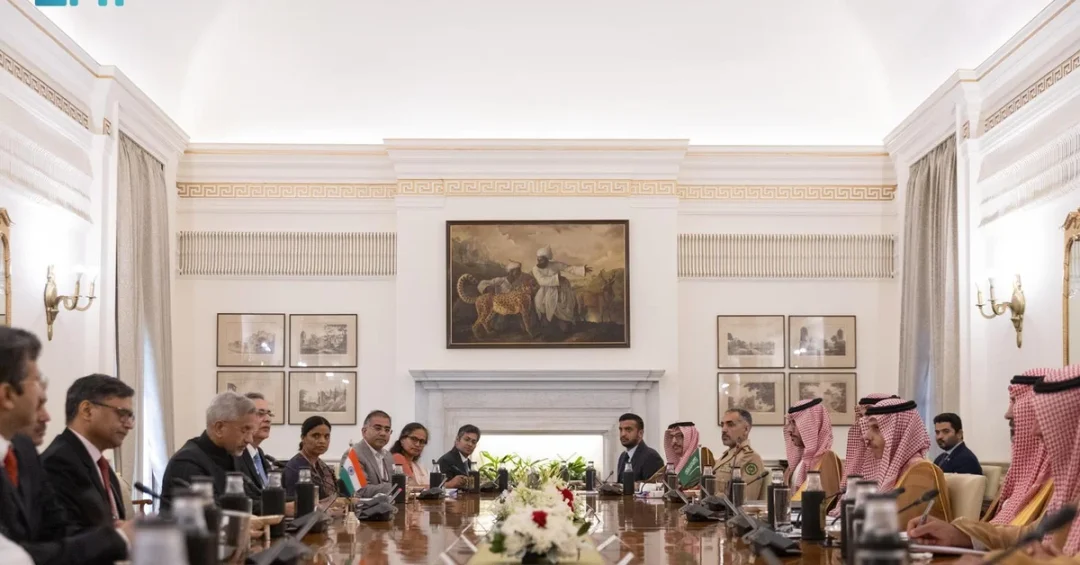
New Delhi, November 13, 2024 – Saudi Foreign Minister Prince Faisal bin Farhan bin Abdullah and Indian External Affairs Minister Dr. Subrahmanyam Jaishankar co-chaired the second meeting of the Ministerial Committee on Political, Security, Social, and Cultural Cooperation in New Delhi. The meeting is part of the Saudi-India Strategic Partnership Council, co-led by His Royal Highness Prince Mohammed bin Salman bin Abdulaziz Al Saud, Crown Prince and Prime Minister, and Indian Prime Minister Narendra Modi, marking a new phase in bilateral relations.
Context and Background
The Saudi-India Strategic Partnership Council was established to deepen cooperation across political, security, economic, and cultural domains. Since its inception, the council has facilitated high-level dialogue and joint initiatives, reflecting the shared commitment of the Kingdom of Saudi Arabia and the Republic of India to fostering regional stability and mutual prosperity. This second ministerial committee meeting builds on previous agreements and sets the stage for expanded collaboration under the framework of Saudi Arabia’s Vision 2030 and India’s developmental priorities.
Key Details
During the meeting, Prince Faisal emphasized that the partnership council has ushered in a new era of cooperation, expressing hope for enhanced effectiveness in achieving shared objectives. The foreign ministers discussed initiatives outlined in the meeting’s minutes, focusing on political, consular, defense, military, judicial, security, social, and cultural affairs. The discussions also highlighted the importance of coordination on issues of mutual interest, particularly international peace, security, and economic development. The meeting was attended by senior officials including Director General of the Office of the Foreign Minister Abdulrahman Aldawood, Chargé d’Affaires of the Saudi Embassy in India Jadi bin Naif Alraqaas, and heads of various subcommittees covering judicial, security, cultural, social, military, and defense cooperation.
Implications and Impact
The deepening of Saudi-India ties under the Strategic Partnership Council has significant implications for regional and global stability. Both nations are key players in the Indo-Pacific and Middle East regions, and their collaboration on security and economic matters supports counterterrorism efforts, energy security, and trade expansion. The meeting’s outcomes are expected to strengthen bilateral investment flows, cultural exchanges, and diplomatic coordination, contributing to the broader geopolitical landscape.
Vision 2030 Alignment
The strengthened cooperation with India aligns closely with Saudi Arabia’s Vision 2030, which prioritizes economic diversification, international partnership, and global engagement. By enhancing political, security, and cultural ties with a major Asian economy, the Kingdom is positioning itself as a hub for cross-regional collaboration, driving sustainable development and reinforcing its role as a leader in fostering peace and prosperity. This meeting underscores the commitment to turning strategic dialogue into tangible outcomes that benefit both nations and the world.
20 Questions
Q1. Who co-chaired the second meeting of the Ministerial Committee on Political, Security, Social, and Cultural Cooperation?
A1. Saudi Foreign Minister Prince Faisal bin Farhan bin Abdullah and Indian External Affairs Minister Dr. Subrahmanyam Jaishankar co-chaired the meeting in New Delhi.
Q2. Under what council was the Ministerial Committee established?
A2. The committee was established under the Saudi-India Strategic Partnership Council, co-led by HRH Crown Prince Mohammed bin Salman and Indian Prime Minister Narendra Modi.
Q3. What did Prince Faisal say about the Strategic Partnership Council?
A3. Prince Faisal stated that the council has ushered in a new era of cooperation and expressed hope it will strengthen effectiveness to achieve shared objectives.
Q4. What areas of cooperation were discussed during the meeting?
A4. The meeting discussed political, consular, defense, military, judicial, security, social, and cultural affairs.
Q5. What was highlighted regarding international peace?
A5. Prince Faisal highlighted the importance of coordination on international peace, security, and economic development to serve mutual interests.
Q6. Who attended the meeting from Saudi Arabia?
A6. Attendees included Abdulrahman Aldawood, Jadi bin Naif Alraqaas, Nasser Al-Ghanoum, and representatives of subcommittees on judicial, security, cultural, social, military, and defense cooperation.
Q7. What is the Saudi-India Strategic Partnership Council?
A7. It is a high-level bilateral framework for cooperation across political, security, economic, and cultural fields, led by the Crown Prince and Indian Prime Minister.
Q8. Why is this meeting significant for Saudi-India relations?
A8. The meeting marks a new phase in bilateral relations, deepening coordination on regional stability, economic development, and cultural exchanges.
Q9. What initiatives were signed at the meeting?
A9. The meeting minutes included agreed-upon initiatives to enhance cooperation in political, consular, defense, military, judicial, security, social, and cultural affairs.
Q10. How does this cooperation align with Saudi Vision 2030?
A10. It supports Vision 2030 by promoting economic diversification, international partnerships, and global engagement through strategic alliances like with India.
Q11. What role does India play in Saudi Arabia’s foreign policy?
A11. India is a key partner in Asia for Saudi Arabia, with growing ties in energy, trade, investment, and security, reflecting shared regional interests.
Q12. What subcommittees were represented at the meeting?
A12. Subcommittees on political, consular, judicial, security, cultural, social, military, and defense cooperation were represented.
Q13. When did the first meeting of this committee take place?
A13. The first meeting occurred after the establishment of the Strategic Partnership Council, with this being the second ministerial-level gathering.
Q14. Where was the meeting held?
A14. The meeting was held in New Delhi, the capital of India.
Q15. What is the role of Nasser Al-Ghanoum in the committee?
A15. Nasser Al-Ghanoum heads the Saudi side of the Subcommittee on Political and Consular Cooperation.
Q16. How does this meeting benefit economic development?
A16. It strengthens bilateral trade and investment ties, supporting Saudi Arabia’s economic diversification and India’s growth, under the framework of shared priorities.
Q17. What cultural aspects were discussed?
A17. The meeting addressed cultural cooperation, aiming to enhance people-to-people ties and mutual understanding through cultural exchanges and initiatives.
Q18. How does the meeting support international peace?
A18. By coordinating on political and security issues, both countries contribute to regional stability and joint efforts against common threats, promoting global peace.
Q19. What is the significance of the Saudi-India partnership for the region?
A19. It enhances security and economic collaboration between the Middle East and South Asia, fostering a stable environment for development and diplomacy.
Q20. What is the expected outcome of this ministerial meeting?
A20. The meeting is expected to implement concrete initiatives from the minutes, further strengthening bilateral cooperation across multiple sectors for mutual benefit.
Reader Feedback
We value your thoughts. Please share your feedback on this article.
Your feedback helps us improve our coverage.