


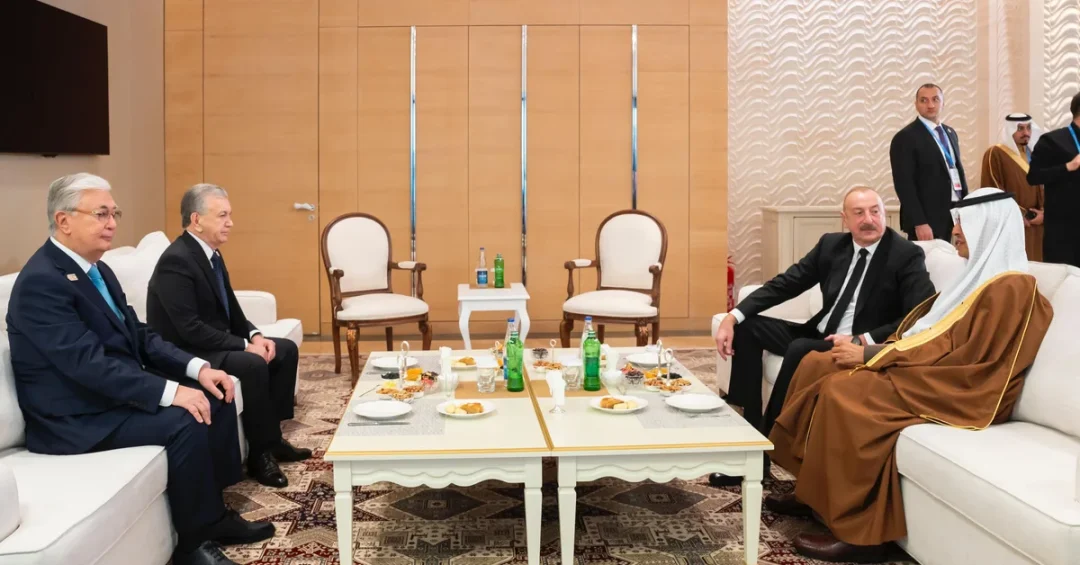
Saudi Arabia signed a landmark joint executive program with Azerbaijan, Kazakhstan, and Uzbekistan to enhance cooperation in renewable energy development and transmission on November 13, 2024, on the sidelines of COP29 in Baku. The agreement, signed by His Royal Highness Prince Abdulaziz bin Salman bin Abdulaziz Al Saud, Minister of Energy of the Kingdom of Saudi Arabia, alongside the energy ministers of the three Central Asian and Caucasus nations, marks a significant step in regional energy integration. The signing took place in the presence of the presidents of Azerbaijan, Kazakhstan, and Uzbekistan, underscoring the high-level commitment to sustainable energy transitions.
Context and Background
This executive program builds on a series of bilateral energy memorandums of understanding previously signed between Saudi Arabia and each of the three countries. A pact with Kazakhstan was established on June 12, 2023, in Riyadh, followed by agreements with Azerbaijan on May 24, 2023, in Riyadh, and Uzbekistan on August 17, 2022, in Jeddah. The new program aims to consolidate these efforts into a cohesive regional framework, focusing on grid interconnection projects that leverage renewable energy. This initiative aligns with Saudi Arabia’s Vision 2030, which prioritizes economic diversification, clean energy leadership, and global partnerships.
Key Details of the Program
The joint executive program focuses on assessing regional power grid interconnection projects that utilize renewable energy, with the goal of improving energy infrastructure efficiency and integrating clean power into national grids. It includes identifying and examining joint investment opportunities, enabling the four countries to develop projects that support renewable electricity generation and storage. Notably, these efforts will involve ACWA Power, a Saudi-listed developer, which is implementing initiatives across all three partner nations. The agreement also establishes a mechanism for exchanging information and expertise, including knowledge-sharing among specialists, conferences, seminars, and joint working sessions to deepen cooperation.
Strategic Agreements and Roadmap
Alongside the executive program, His Royal Highness witnessed the signing of two strategic agreements between ACWA Power and various entities. The first, with the Uzbek Ministry of Energy, targets the development of battery energy storage systems (BESS) with a capacity of up to 2 GWh to enhance grid stability. The second is a memorandum of understanding with SOCAR (Azerbaijan) and Masdar for offshore wind power projects with a capacity of up to 3.5 GW in the Caspian Sea—a first for Azerbaijan. Additionally, the Saudi Electricity Company signed a memorandum of understanding with network operators in Azerbaijan, Kazakhstan, and Uzbekistan to develop regional interconnection projects, and a separate agreement with AzerEnergy for cooperation in electricity transmission and renewable energy integration. A comprehensive roadmap for energy cooperation was also signed between Saudi Arabia and Azerbaijan, covering renewable energy, carbon capture, clean hydrogen, energy efficiency, supply chain resilience, and trade in refined products.
Implications and Regional Impact
This program has significant implications for regional energy security and climate action. By fostering grid interconnection, the initiative can stabilize power supplies, reduce reliance on fossil fuels, and support the Paris Agreement goals. For Central Asia and the Caucasus, it offers access to Saudi expertise and investment in renewable technologies, boosting economic development and sustainability. The inclusion of ACWA Power’s projects and the extensive roadmap with Azerbaijan demonstrate a model for public-private collaboration that can be replicated across other regions. This strengthens Saudi Arabia’s role as a global energy partner and a leader in the clean energy transition.
Vision 2030 Alignment
This joint executive program directly supports Saudi Arabia’s Vision 2030 by advancing the Kingdom’s position as a global hub for renewable energy and sustainable development. It showcases the success of Saudi expertise and investment in driving regional energy transformation, fostering economic diversification, and building strategic international partnerships. As Saudi Arabia continues to implement its ambitious National Renewable Energy Program, agreements like this not only enhance its own energy security but also contribute to global climate goals, reinforcing the Kingdom’s leadership in the transition toward a cleaner, more interconnected energy future.
20 Questions
Q1. What is the main purpose of the joint executive program signed at COP29?
A1. The program aims to enhance cooperation in renewable energy development and transmission among Saudi Arabia, Azerbaijan, Kazakhstan, and Uzbekistan, focusing on regional power grid interconnection and investment opportunities.
Q2. Who signed the joint executive program on behalf of Saudi Arabia?
A2. His Royal Highness Prince Abdulaziz bin Salman bin Abdulaziz Al Saud, Minister of Energy of the Kingdom of Saudi Arabia, signed the program alongside the energy ministers of the other three countries.
Q3. Which countries are part of this new energy cooperation initiative?
A3. The initiative involves Saudi Arabia, Azerbaijan, Kazakhstan, and Uzbekistan, marking a strategic partnership between the Kingdom and three Central Asian and Caucasus nations.
Q4. On what date was the agreement signed?
A4. The joint executive program was signed on November 13, 2024, on the sidelines of the COP29 climate conference in Baku, Azerbaijan.
Q5. How does this program build on previous agreements?
A5. It implements prior bilateral memorandums of understanding signed with Kazakhstan, Azerbaijan, and Uzbekistan between 2022 and 2023, consolidating them into a cohesive regional framework.
Q6. What role does ACWA Power play in this initiative?
A6. ACWA Power is a Saudi developer involved in implementing renewable energy projects across the three partner countries, including battery storage and offshore wind initiatives.
Q7. What is the significance of the BESS project in Uzbekistan?
A7. The agreement with Uzbekistan aims to develop battery energy storage systems with a capacity of up to 2 GWh, enhancing grid stability and supporting renewable energy integration.
Q8. What is the offshore wind project in the Caspian Sea?
A8. It involves a memorandum of understanding with SOCAR and Masdar to develop offshore wind power projects with a capacity of up to 3.5 GW, a first for Azerbaijan.
Q9. Did the Saudi Electricity Company sign any agreements?
A9. Yes, it signed memorandums of understanding with network operators in Azerbaijan, Kazakhstan, and Uzbekistan for regional interconnection, and with AzerEnergy for electricity transmission cooperation.
Q10. What areas are covered by the comprehensive roadmap with Azerbaijan?
A10. The roadmap covers renewable energy, carbon capture, clean hydrogen, energy efficiency, supply chain resilience, and trade in refined and petrochemical products.
Q11. Why is this program important for regional energy security?
A11. By promoting grid interconnection using renewables, it helps stabilize power supplies, reduce fossil fuel reliance, and enhance energy access across Central Asia and the Caucasus.
Q12. How does this initiative support the Paris Agreement?
A12. It encourages the adoption of clean energy technologies and cross-border electricity trade, lowering greenhouse gas emissions and supporting global climate goals.
Q13. What is the knowledge-sharing mechanism in the program?
A13. It includes exchanging expertise among specialists, organizing conferences and seminars, and holding joint working sessions to strengthen cooperation among the countries.
Q14. How does this align with Saudi Arabia’s Vision 2030?
A14. It helps position Saudi Arabia as a global renewable energy leader, fosters economic diversification, and builds strategic partnerships for sustainable development.
Q15. What investment opportunities are created by this program?
A15. The program identifies joint investment opportunities in regional grid interconnection, renewable electricity generation, and storage projects, attracting capital and expertise.
Q16. What is the role of the Saudi Minister of Energy in this process?
A16. Prince Abdulaziz bin Salman signed the agreements and witnessed the signing of additional strategic deals, leading Saudi Arabia’s energy diplomacy at COP29.
Q17. Are there any plans for future cooperation beyond renewable energy?
A17. Yes, the roadmap with Azerbaijan includes collaboration in clean hydrogen, energy efficiency, and carbon capture, indicating broader energy sector cooperation.
Q18. How will this program impact local communities in partner countries?
A18. By improving energy infrastructure and integrating renewables, it can provide cleaner, more reliable power, supporting economic growth and job creation in those regions.
Q19. What makes this program unique compared to other energy deals?
A19. It is a multi-country executive program that combines grid interconnection, renewable energy development, and investment, with a significant role for Saudi companies like ACWA Power.
Q20. What is the expected timeline for implementing these projects?
A20. The comprehensive roadmap with Azerbaijan includes a timeline for priority projects, but the overall program is ongoing, with specific timelines to be determined by the participating countries.
Reader Feedback
We value your thoughts. Please share your feedback on this article.
Your feedback helps us improve our coverage.