


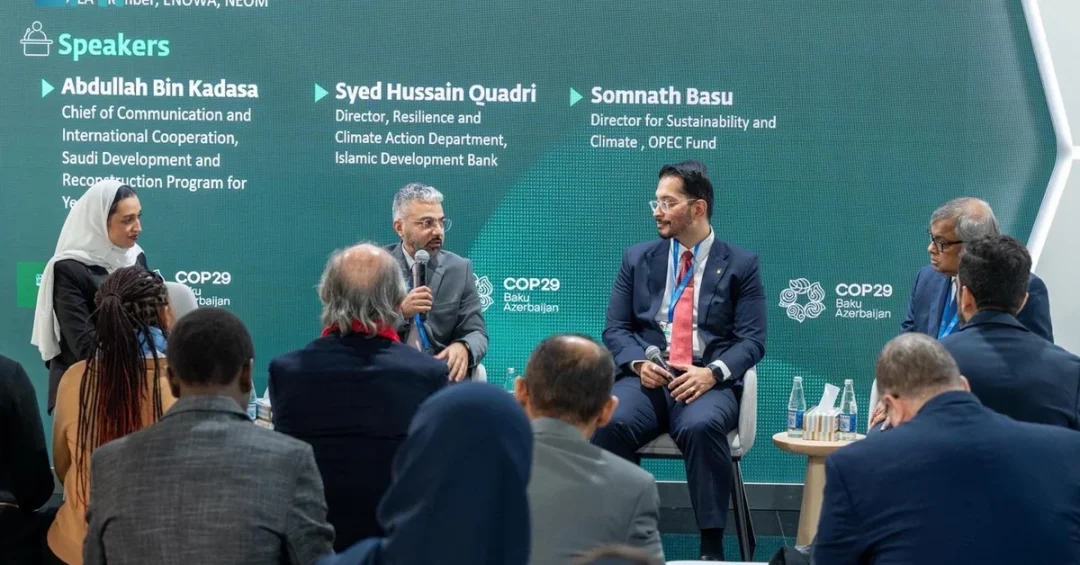
The Saudi Development and Reconstruction Program for Yemen (SDRPY) is participating in the 29th Conference of the Parties to the UN Framework Convention on Climate Change (COP29), currently underway in Baku, Azerbaijan, until November 22, 2024. The delegation is led by Minister of Energy Prince Abdulaziz bin Salman bin Abdulaziz, highlighting Saudi Arabia’s commitment to regional stability and sustainable development. This engagement underscores the Kingdom’s active role in fostering international collaboration to address climate challenges while advancing development goals in Yemen.
Context and Background
COP29, held under the UN Framework Convention on Climate Change, brings together global leaders, policymakers, and development actors to accelerate climate action and promote sustainable practices. SDRPY’s participation reflects Saudi Arabia’s broader diplomatic and humanitarian strategy, linking climate resilience with reconstruction efforts in Yemen. The program, established to support Yemen’s recovery, integrates clean energy and sustainable infrastructure into its projects, aligning with international climate goals.
Key Details
The Saudi Development and Reconstruction Program for Yemen works with over 40 local, regional, and global partners, emphasizing collaborative approaches to development. During COP29, SDRPY is highlighting initiatives that provide clean and sustainable energy sources in Yemen, aiming to reduce carbon emissions and promote renewable energy in essential projects such as hospitals, schools, and water facilities. Prince Abdulaziz bin Salman bin Abdulaziz, in his capacity as Minister of Energy, is leading discussions on energy transition and climate adaptation in conflict-affected regions.
Implications and Impact
SDRPY’s presence at COP29 signals Saudi Arabia’s dedication to practical climate solutions in fragile states. By focusing on renewable energy in Yemen, the program helps mitigate environmental degradation while improving the quality of life for Yemeni communities. This approach sets a precedent for integrating climate action into humanitarian and reconstruction frameworks, demonstrating how sustainable development can foster stability and resilience in the region. It also strengthens Saudi Arabia’s role as a global leader in climate diplomacy and development coordination.
Vision 2030 Alignment
SDRPY’s initiatives directly support Vision 2030 objectives by promoting regional stability, economic diversification, and sustainable practices. The program’s focus on renewable energy and clean infrastructure aligns with the Kingdom’s goal to become a global leader in green energy and environmental stewardship. Through this participation at COP29, Saudi Arabia reaffirms its commitment to building a more sustainable and prosperous future for Yemen and the broader region, contributing to long-term peace and development under Vision 2030.
20 Questions
Q1. What is the Saudi Development and Reconstruction Program for Yemen (SDRPY)?
A1. SDRPY is a Saudi initiative focused on supporting Yemen’s recovery through development and reconstruction projects, including infrastructure, health, education, and clean energy initiatives.
Q2. Who is leading the SDRPY delegation at COP29?
A2. The delegation is led by Minister of Energy Prince Abdulaziz bin Salman bin Abdulaziz, representing Saudi Arabia’s commitment to climate and development efforts.
Q3. Where is COP29 being held?
A3. COP29 is being held in Baku, Azerbaijan, from November 11 to November 22, 2024.
Q4. What is the main goal of SDRPY’s participation in COP29?
A4. The participation aims to highlight collaborative climate and development efforts, focusing on clean energy and sustainable reconstruction in Yemen.
Q5. How many partners does SDRPY work with?
A5. SDRPY works with over 40 local, regional, and global partners to implement its development and reconstruction projects in Yemen.
Q6. What type of energy projects is SDRPY promoting in Yemen?
A6. SDRPY promotes clean and sustainable energy sources, including renewable energy projects, to reduce carbon emissions and support essential services.
Q7. How does SDRPY contribute to the Sustainable Development Goals (SDGs)?
A7. SDRPY’s projects address multiple SDGs by improving access to energy, clean water, health care, and education in Yemen.
Q8. What is the role of Minister Prince Abdulaziz bin Salman at COP29?
A8. He is leading discussions on energy transition and climate resilience, emphasizing Saudi Arabia’s leadership in sustainable development and regional cooperation.
Q9. Why is SDRPY’s focus on clean energy important for Yemen?
A9. Clean energy reduces reliance on fossil fuels, lowers emissions, and provides reliable power for hospitals, schools, and water systems, improving living conditions.
Q10. How does SDRPY align with Vision 2030?
A10. SDRPY supports Vision 2030 by promoting regional stability, economic diversification, and sustainable practices, including renewable energy and infrastructure development.
Q11. What is the relationship between SDRPY and the Kingdom of Saudi Arabia?
A11. SDRPY is a Saudi government program, reflecting the Kingdom’s commitment to humanitarian aid and development in Yemen under official directives.
Q12. How does SDRPY’s work at COP29 benefit the Yemeni people?
A12. It raises international awareness and support for sustainable reconstruction, attracting partnerships and funding for clean energy and infrastructure projects in Yemen.
Q13. What is the duration of COP29?
A13. The conference runs from November 11 to November 22, 2024, in Baku, Azerbaijan.
Q14. What is the Saudi Press Agency (SPA) reporting about this participation?
A14. SPA reports that SDRPY is actively fostering collaboration among development actors to achieve sustainable development goals and comprehensive growth.
Q15. How does SDRPY’s work reduce carbon emissions in Yemen?
A15. By implementing renewable energy projects, such as solar power for essential facilities, SDRPY helps decrease reliance on diesel generators and lowers carbon emissions.
Q16. What sectors does SDRPY focus on in Yemen?
A16. SDRPY focuses on sectors including energy, water, health, education, transportation, and agriculture to support comprehensive reconstruction.
Q17. How does SDRPY collaborate with other countries at COP29?
A17. SDRPY engages with international partners, sharing best practices and forming alliances to scale up climate-resilient development projects in conflict-affected areas.
Q18. What is the significance of SDRPY’s presence at a climate conference?
A18. It highlights the link between climate action and humanitarian reconstruction, showing how sustainable energy can foster stability and recovery in fragile states.
Q19. How does SDRPY ensure the quality of life for Yemenis?
A19. Through providing clean energy, clean water, health services, and educational facilities, SDRPY directly enhances daily living conditions and long-term well-being.
Q20. What is the long-term vision for SDRPY’s projects in Yemen?
A20. The vision is to build a self-sustaining, resilient Yemen by integrating renewable energy and infrastructure, contributing to lasting peace and development in the region.
Reader Feedback
We value your thoughts. Please share your feedback on this article.
Your feedback helps us improve our coverage.