


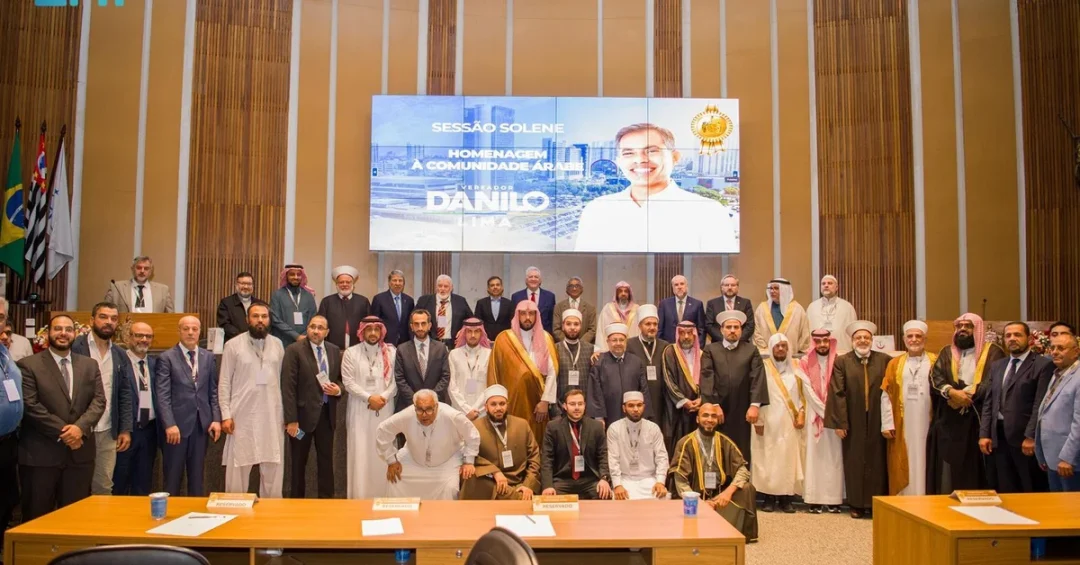
Islamic religious leaders from Latin America and the Caribbean have commended the Kingdom of Saudi Arabia for sponsoring the 37th Annual Conference of Muslims of Latin America and the Caribbean, held in Brasilia, Brazil, on November 30, 2024. The conference, organized under the theme “Sharia Education and Its Impact on Preserving Identity,” brought together scholars and community leaders to discuss the role of religious education in strengthening Muslim communities across the region.
Context and Background
The annual conference serves as a key platform for Muslim leaders in Latin America and the Caribbean to address shared challenges and opportunities. This year’s gathering, held under the auspices of the Saudi Ministry of Islamic Affairs, Dawah, and Guidance, underscores Saudi Arabia’s long-standing commitment to supporting Muslim minorities worldwide. The Kingdom has consistently sponsored such events as part of its broader diplomatic and religious outreach, aligned with its role as the custodian of Islam’s holiest sites.
President of the Islamic University of Brazil, Sheikh Abdul Hamid Metwally, emphasized the conference’s significance, stating that knowledge is fundamental for Muslims. He lauded Saudi Arabia’s dedication to safeguarding this principle for Muslim communities in Latin America and the Caribbean, highlighting the Kingdom’s role in fostering educational initiatives that preserve cultural and religious identity.
Key Details
Secretary-General of the World Council of Muslim Communities, Muhammad Al-Bashari, highlighted the conference’s focus on Sharia education and its role in affirming identity within Latin American and Caribbean nations. He noted that the event reflects the Saudi Ministry of Islamic Affairs, Dawah, and Guidance’s commitment to supporting Muslim minorities. Al-Bashari explained that Saudi Arabia’s involvement aims to provide dignified guidance and advisory assistance, helping to build a robust Islamic institutional framework rooted in correct understanding, communication, and collaboration across various community groups.
Al-Bashari also praised Saudi Arabia’s noble message, which strives to lead Muslim communities toward a prosperous future. He emphasized the significance of creating an environment where youth can thrive in peace, security, and safety, aligning with the conference’s theme of preserving identity through education.
Implications and Impact
The conference has significant implications for Muslim communities in Latin America and the Caribbean, where minority populations often face challenges in maintaining religious and cultural identity. By sponsoring the event, Saudi Arabia reinforces its role as a global leader in Islamic affairs, promoting dialogue and cooperation among diverse communities. The focus on Sharia education underscores the Kingdom’s commitment to providing accurate religious guidance, which can help counter extremist ideologies and foster moderate interpretations of Islam.
The event also strengthens Saudi Arabia’s diplomatic ties with Brazil and other Latin American nations, highlighting the Kingdom’s soft power and its ability to engage with diverse cultural and religious groups. This aligns with Saudi Arabia’s broader strategy of enhancing its global influence through cultural and educational exchanges.
Vision 2030 Alignment
The conference aligns with Saudi Arabia’s Vision 2030 goals by promoting international cooperation, cultural exchange, and religious moderation. As the Kingdom diversifies its economy and expands its global engagement, initiatives like this conference demonstrate its commitment to fostering peaceful coexistence and supporting Muslim communities abroad. By investing in education and interfaith dialogue, Saudi Arabia reinforces its role as a leader in the Islamic world and a bridge between cultures, contributing to a more inclusive and prosperous future for all.
20 Questions
Q1. What was the theme of the 37th Annual Conference of Muslims of Latin America and the Caribbean?
A1. The theme of the conference was “Sharia Education and Its Impact on Preserving Identity,” focusing on the role of religious education in maintaining cultural and religious identity among Muslim communities.
Q2. Who sponsored the conference?
A2. The Kingdom of Saudi Arabia sponsored the conference, reflecting its commitment to supporting Muslim minorities in Latin America and the Caribbean.
Q3. Where and when was the conference held?
A3. The conference was held in Brasilia, Brazil, on November 30, 2024.
Q4. Who is Sheikh Abdul Hamid Metwally?
A4. Sheikh Abdul Hamid Metwally is the President of the Islamic University of Brazil, and he commended Saudi Arabia’s dedication to safeguarding Islamic education for Muslim communities.
Q5. What role did the Saudi Ministry of Islamic Affairs play in the conference?
A5. The Ministry of Islamic Affairs, Dawah, and Guidance provided auspices for the conference, demonstrating its commitment to supporting Muslim minorities through educational initiatives.
Q6. Who is Muhammad Al-Bashari?
A6. Muhammad Al-Bashari is the Secretary-General of the World Council of Muslim Communities, and he highlighted the conference’s focus on Sharia education and identity affirmation.
Q7. What did Al-Bashari say about Saudi Arabia’s involvement?
A7. Al-Bashari praised Saudi Arabia’s noble message and its aim to provide dignified guidance and advisory assistance to build a robust Islamic institutional framework.
Q8. What is the significance of Sharia education according to the conference?
A8. Sharia education is seen as fundamental for preserving identity and ensuring correct understanding, communication, and collaboration among Muslim communities in the region.
Q9. How does the conference benefit Muslim communities in Latin America and the Caribbean?
A9. The conference provides a platform for discussing challenges, sharing knowledge, and fostering cooperation, helping minority communities maintain their religious and cultural identity.
Q10. What message did Saudi Arabia convey through its sponsorship?
A10. Saudi Arabia conveyed its commitment to leading Muslim communities toward a prosperous future and creating an environment where youth can thrive in peace and security.
Q11. How does the conference relate to Saudi Arabia’s global engagement?
A11. The conference strengthens Saudi Arabia’s diplomatic ties with Brazil and other nations, showcasing its role as a leader in Islamic affairs and its soft power outreach.
Q12. What is the World Council of Muslim Communities?
A12. The World Council of Muslim Communities is an organization that promotes unity and cooperation among Muslim communities globally, and its Secretary-General spoke at the event.
Q13. Did the conference address youth issues?
A13. Yes, Al-Bashari emphasized creating an environment where youth can thrive in peace, security, and safety, aligning with the theme of preserving identity through education.
Q14. What is the role of the Islamic University of Brazil in the conference?
A14. The President of the Islamic University of Brazil participated in the conference, highlighting the importance of knowledge for Muslims and praising Saudi Arabia’s support.
Q15. How does the conference support Vision 2030?
A15. The conference aligns with Vision 2030 by promoting international cooperation, cultural exchange, religious moderation, and Saudi Arabia’s role as a global leader.
Q16. What was the original source of the information about the conference?
A16. The information was released by the Saudi Press Agency (SPA), the official news agency of the Kingdom of Saudi Arabia.
Q17. How many annual conferences of Muslims in Latin America and the Caribbean have been held?
A17. The 37th conference was held in 2024, indicating a long-standing tradition of gathering Muslim leaders in the region since 1987.
Q18. What does the term “Sharia education” refer to in the context of the conference?
A18. Sharia education refers to Islamic religious education based on the principles of Sharia law, focusing on preserving identity and guiding communities with accurate understanding.
Q19. Why did religious leaders praise Saudi Arabia’s efforts?
A19. Religious leaders praised Saudi Arabia for sponsoring the conference and its dedication to supporting Muslim minorities, providing guidance, and fostering a prosperous future for communities.
Q20. What is the expected outcome of the conference for Muslim communities?
A20. The conference is expected to strengthen Islamic institutional frameworks, promote collaboration, and help Muslim communities in Latin America and the Caribbean preserve their identity and thrive.
Reader Feedback
We value your thoughts. Please share your feedback on this article.
Your feedback helps us improve our coverage.