


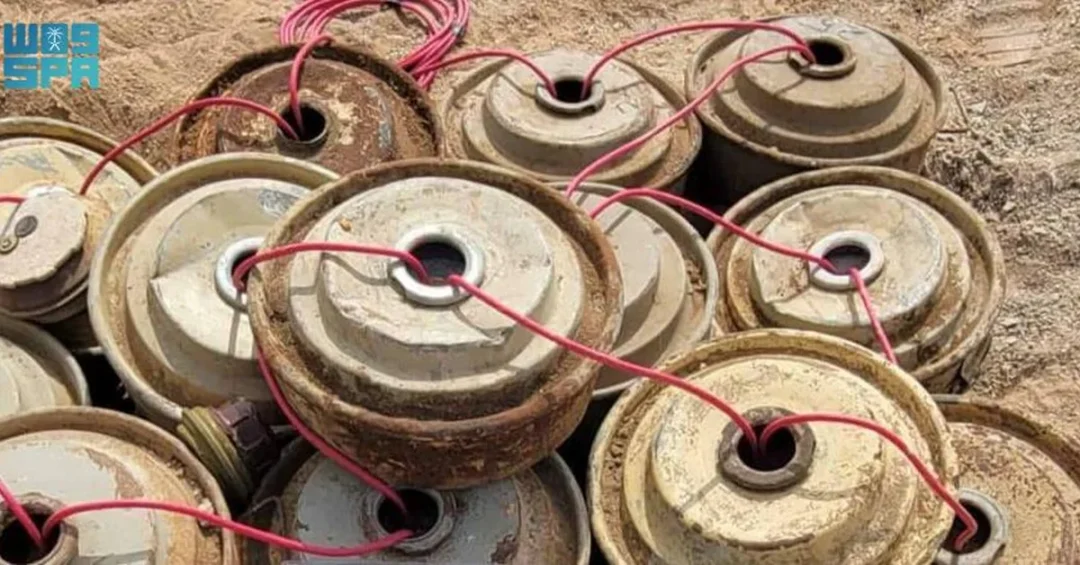
The King Salman Humanitarian Aid and Relief Center (KSrelief) Masam Project cleared 618 mines across multiple regions of Yemen during the fourth week of November 2024, including one anti-personnel mine, 23 anti-tank mines, and 594 unexploded ordnance items. This weekly clearance, reported by the Saudi Press Agency (SPA), underscores the sustained commitment of the Kingdom of Saudi Arabia to alleviating human suffering and promoting stability in Yemen through expert mine action.
Context and Background
The Masam Project, launched by KSrelief in 2018, is one of the largest and most comprehensive humanitarian mine clearance initiatives in the world. Its mission is to clear Yemeni lands of landmines and explosive remnants of war that pose a daily threat to civilians, particularly in densely populated and agriculturally vital areas. The project employs highly trained Yemeni and international deminers who work under strict safety protocols to systematically locate and destroy these deadly devices.
Key Details
During the fourth week of November 2024, the Masam Project teams successfully cleared 618 mines. This figure is part of a broader monthly achievement: in November alone, a total of 2,967 mines were neutralized. Since the project began, the cumulative number of cleared mines has reached an impressive 471,034. This steady progress demonstrates the operational efficiency and dedication of the project’s personnel, who operate in challenging conditions to make Yemen safer for its people.
Humanitarian and Regional Impact
Each cleared mine represents a life potentially saved and a plot of land made safe for farming, housing, or movement. The Masam Project plays a critical role in enabling the return of displaced families and the resumption of normal economic activities in affected regions. By reducing the threat of mines, the project contributes to broader efforts to stabilize Yemen and create conditions for long-term peace and development. Saudi Arabia’s leadership in humanitarian demining is recognized by international partners as a vital component of regional security.
Vision 2030 Alignment
The Masam Project aligns directly with Saudi Arabia’s Vision 2030 goals of enhancing regional stability and demonstrating the Kingdom’s role as a global humanitarian leader. Through initiatives like KSrelief, Saudi Arabia is not only providing immediate relief but also investing in sustainable solutions that build safer communities. This commitment reflects the values of compassion and responsibility that are central to the Saudi vision for a prosperous and peaceful future for the region and the world.
20 Questions
Q1. What is the Masam Project?
A1. The Masam Project is a humanitarian initiative led by the King Salman Humanitarian Aid and Relief Center (KSrelief) to clear landmines and unexploded ordnance from Yemeni territories, protecting civilians and enabling safe living conditions.
Q2. Who runs the Masam Project?
A2. The Masam Project is run by KSrelief, the humanitarian arm of the Kingdom of Saudi Arabia. It is staffed by experienced deminers and supported by international partners to ensure effective mine clearance.
Q3. How many mines were cleared in the fourth week of November 2024?
A3. During the fourth week of November 2024, the Masam Project cleared 618 mines, including one anti-personnel mine, 23 anti-tank mines, and 594 unexploded ordnance items, according to the Saudi Press Agency.
Q4. What is the total number of mines cleared by Masam since its start?
A4. Since the project began, the cumulative number of cleared mines has reached 471,034 as of late November 2024, reflecting the sustained impact of Saudi humanitarian efforts in Yemen.
Q5. Why is mine clearance important in Yemen?
A5. Mine clearance is crucial because landmines and unexploded ordnance kill, maim, and displace civilians, block access to farmland and infrastructure, and hinder post-conflict recovery and development.
Q6. Does the Masam Project only clear anti-personnel mines?
A6. No, the Masam Project clears anti-personnel mines, anti-tank mines, and various types of unexploded ordnance, addressing the full spectrum of explosive threats to civilian populations.
Q7. How does KSrelief ensure the safety of deminers?
A7. KSrelief provides comprehensive training, protective equipment, and strict operational protocols for deminers, along with medical support and insurance, to minimize risks during mine clearance operations.
Q8. What regions of Yemen benefit from the Masam Project?
A8. The Masam Project operates across multiple Yemeni regions, including areas with high densities of landmines, such as Aden, Marib, Al Hudaydah, and other governorates heavily affected by conflict.
Q9. Is the Masam Project supported by the United Nations?
A9. Yes, the Masam Project coordinates with UN agencies and international mine action organizations, aligning with global humanitarian standards and reinforcing Saudi Arabia’s commitment to international peace and security.
Q10. How does the Masam Project contribute to Vision 2030?
A10. The project supports Vision 2030 by showcasing Saudi Arabia’s role as a global humanitarian leader, fostering regional stability, and helping Yemeni communities rebuild, which aligns with the Kingdom’s vision for a prosperous and secure region.
Q11. What was the total number of mines cleared in November 2024?
A11. In November 2024 alone, the Masam Project cleared a total of 2,967 mines, including all types of explosive devices, demonstrating consistent and effective clearance operations throughout the month.
Q12. How does mine clearance help displaced families?
A12. By clearing landmines, safe areas are restored for shelter, farming, and movement, enabling displaced families to return home and rebuild their lives without the constant threat of explosion.
Q13. What types of ordnance are commonly found in Yemen?
A13. Commonly found ordnance includes anti-personnel and anti-tank mines, cluster munitions, artillery shells, and other unexploded ordnance from years of conflict, all targeted by the Masam Project.
Q14. How is the Masam Project funded?
A14. The Masam Project is funded by the Kingdom of Saudi Arabia through KSrelief, reflecting the Kingdom’s dedication to humanitarian aid and its investment in stabilizing conflict-affected regions.
Q15. Does the Masam Project employ local Yemenis?
A15. Yes, the Masam Project primarily employs trained Yemeni deminers, which supports local employment, builds national capacity, and ensures culturally sensitive and effective operations within communities.
Q16. What is the long-term goal of the Masam Project?
A16. The long-term goal is to clear all landmines and unexploded ordnance from Yemeni territories, making the country safe for civilians, enabling sustainable development, and contributing to lasting peace.
Q17. How does KSrelief coordinate with local authorities?
A17. KSrelief works closely with recognized local authorities and humanitarian coordinators to prioritize clearance zones, ensure operational access, and address the most urgent threats to communities.
Q18. Has the Masam Project won international recognition?
A18. Yes, the Masam Project has received praise from the United Nations and other international bodies for its professionalism, scale, and positive impact on civilian safety in Yemen.
Q19. Can individuals or organizations support the Masam Project?
A19. While primarily state-funded, the Masam Project welcomes partnerships with international humanitarian organizations that share its mission of mine action and civilian protection. Direct donations are coordinated through KSrelief.
Q20. What is the next step after mine clearance?
A20. After clearance, land is returned to communities for productive use. KSrelief also supports risk education and victim assistance programs, ensuring long-term safety and recovery for affected populations.
Reader Feedback
We value your thoughts. Please share your feedback on this article.
Your feedback helps us improve our coverage.