


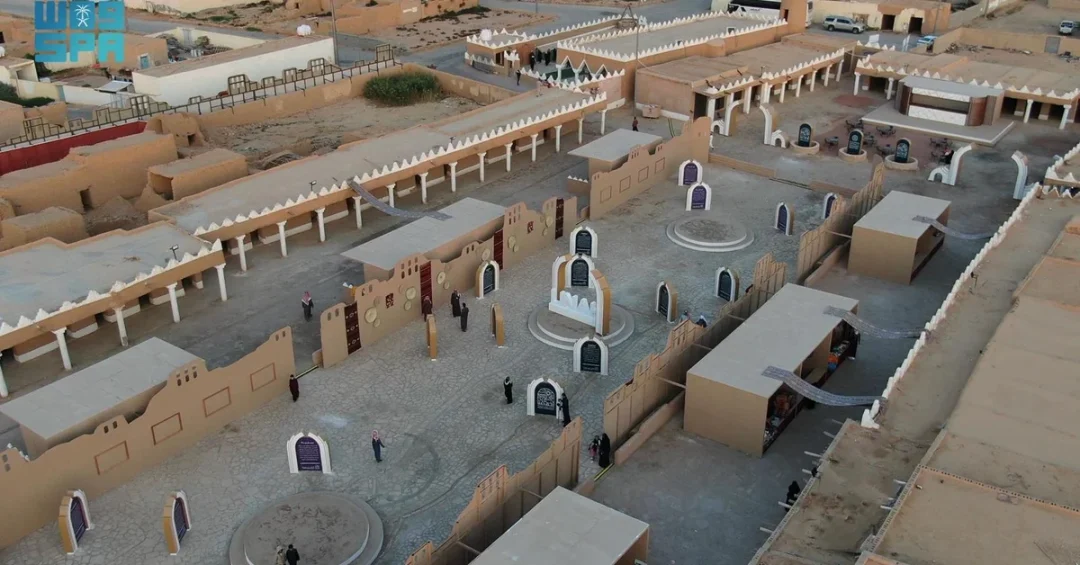
The Saudi Press Agency has documented the historic mud-brick buildings of Laynah Village, located 105 kilometers south of Rafha in the Northern Borders Region, offering a window into the lives of former generations and the region’s rich cultural heritage. As one of the oldest and most prominent historical villages in the Northern Borders Region, Laynah’s strategic position made it a significant commercial hub in the mid-20th century, facilitating the exchange of various goods. The village’s architecture serves as a time capsule, reflecting the customs, daily routines, and identity of bygone eras, while also attracting history and architecture enthusiasts to this captivating destination.
Context and Background
Laynah Village’s old buildings, constructed using traditional methods and local materials such as mud, stone, and wood, embody the architectural wisdom of past generations. The village’s key landmarks include the old market established in 1932, hundreds of wells, and mud structures designed with simple yet effective layouts. These buildings typically feature an inner courtyard surrounded by circularly arranged rooms, which help maintain moderate temperatures year-round, showcasing sustainable design principles long before modern green building practices.
Key Details
The Saudi Press Agency’s coverage highlights Laynah’s role as a living museum of Northern Borders history. The village’s traditional buildings, with their unique architectural character, reflect the culture and identity of their era. The old market, founded in 1932, served as a vibrant center for trade, while the hundreds of wells underscore the community’s reliance on water management in the arid region. These structures are not just historical legacies but also contribute to the growth of local tourism, offering visitors a glimpse into the sustainable living practices of former generations.
Implications and Impact
Laynah Village’s preservation and documentation by official Saudi channels underscore the Kingdom’s commitment to heritage conservation and cultural tourism. As part of the broader effort to diversify the economy under Vision 2030, historic sites like Laynah are becoming focal points for attracting international visitors interested in authentic cultural experiences. The village’s architectural style, which blends functionality with aesthetic simplicity, serves as an educational resource for architects and historians studying pre-modern building techniques in the Arabian Peninsula.
Vision 2030 Alignment
The preservation of Laynah Village aligns seamlessly with Saudi Arabia’s Vision 2030 objectives, particularly the goal of promoting cultural heritage and tourism as key pillars of economic diversification. By showcasing historic sites such as Laynah, the Kingdom enhances its global cultural footprint, inviting travelers to explore its rich history while supporting local communities. This initiative reflects Saudi Arabia’s forward-looking approach to balancing modernization with the celebration of its deep-rooted traditions, ensuring that the legacy of former generations continues to inspire future ones.
20 Questions
Q1. Where is Laynah Village located?
A1. Laynah Village is situated 105 kilometers south of Rafha in the Northern Borders Region of Saudi Arabia. It is one of the oldest historical villages in the region.
Q2. What makes Laynah Village historically significant?
A2. Its strategic location made it an important commercial hub in the mid-20th century, facilitating the exchange of various goods. The village’s old buildings reflect the customs and daily lives of past generations.
Q3. When was the old market in Laynah Village established?
A3. The old market in Laynah Village was established in 1932. It served as a vital trading center for the community and surrounding areas.
Q4. What materials are used to build the mud houses in Laynah?
A4. The mud houses in Laynah are built using traditional methods with local materials including mud, stone, and wood. These materials helped maintain comfortable indoor temperatures.
Q5. How do the traditional buildings maintain moderate temperatures?
A5. The buildings feature simple yet effective designs with inner courtyards and circularly arranged rooms. This layout promotes natural ventilation and thermal regulation throughout the year.
Q6. What role does Laynah Village play in tourism today?
A6. Laynah serves as a captivating destination for history and architecture enthusiasts. It contributes to the growth of local tourism by offering authentic cultural experiences.
Q7. Who documented the old buildings of Laynah Village?
A7. The Saudi Press Agency (SPA) captured images of the old buildings in Laynah Village. The agency documented these structures as part of its coverage of historical heritage.
Q8. What type of architectural style is seen in Laynah?
A8. The architecture features inner courtyards surrounded by rooms arranged in a circular pattern. The design blends functionality with simplicity using local materials.
Q9. How many wells are present in Laynah Village?
A9. Laynah Village is home to hundreds of wells. These water sources highlight the community’s historical reliance on groundwater management in the arid Northern Borders Region.
Q10. Why are historical villages like Laynah considered time capsules?
A10. They reflect the lives, customs, and daily routines of bygone generations. Their buildings and landmarks preserve the cultural identity and heritage of their era.
Q11. What is the Northern Borders Region known for?
A11. The Northern Borders Region is known for its historical villages and traditional architecture. It includes sites like Laynah that showcase the Kingdom’s rich cultural heritage.
Q12. How does Laynah’s old market reflect its commercial past?
A12. The old market, established in 1932, was a hub for exchanging goods. Its existence underscores Laynah’s role as a significant commercial center in the mid-20th century.
Q13. What sustainable features do the mud buildings have?
A13. The mud buildings use local materials and designs that reduce energy consumption. Their thick walls and courtyard layouts naturally moderate temperatures without modern cooling.
Q14. How does Laynah Village contribute to Vision 2030?
A14. It supports Vision 2030’s goals of cultural heritage preservation and tourism promotion. The village attracts international visitors, boosting local economy and diversifying income sources.
Q15. What types of goods were traded in Laynah’s market?
A15. The market facilitated the exchange of various goods, likely including agricultural products, textiles, and everyday necessities. Its location made it a crossroads for regional trade.
Q16. Are there other historical villages near Laynah?
A16. The Northern Borders Region has several historical villages with similar traditional architecture. Laynah is highlighted as one of the oldest and most prominent in the area.
Q17. Why are the buildings made of mud considered durable?
A17. Properly maintained mud structures can last for decades due to their compacted earth composition. The use of stone and wood reinforcements adds structural stability to the buildings.
Q18. How can visitors access Laynah Village?
A18. Laynah Village is accessible via road from Rafha, 105 kilometers to the south. It is a reasonable drive for those exploring the Northern Borders Region’s historical sites.
Q19. What does the Inner courtyard design represent culturally?
A19. The inner courtyard design represents a focus on privacy, family life, and social interaction. It reflects traditional values of community and shelter from the external environment.
Q20. How does SPA’s coverage help preserve Laynah’s heritage?
A20. SPA’s coverage documents and showcases Laynah’s historical buildings to a broad audience. This raises awareness of the village’s cultural value and supports preservation efforts.
Reader Feedback
We value your thoughts. Please share your feedback on this article.
Your feedback helps us improve our coverage.