


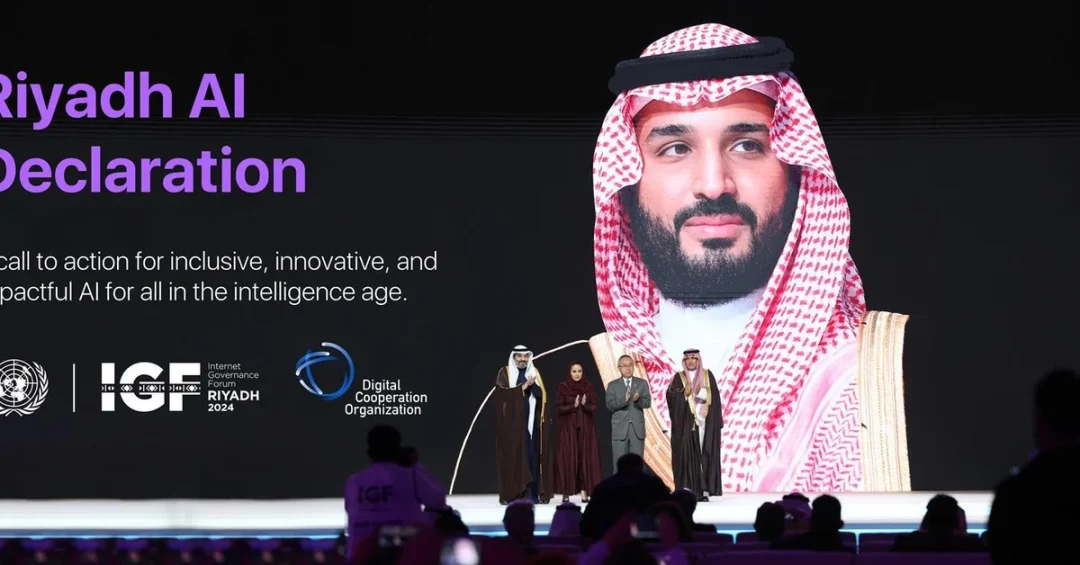
The Kingdom of Saudi Arabia today announced the Riyadh Declaration for Inclusive, Innovative and Impactful AI for All at the opening of the 19th session of the Internet Governance Forum (IGF), hosted in Riyadh and organized by the United Nations. The declaration, unveiled by Minister of Communications and Information Technology Abdullah Alswaha, received the support of His Royal Highness Prince Mohammed bin Salman bin Abdulaziz Al Saud, Crown Prince and Prime Minister. The declaration aims to promote digital cooperation among governments, the private sector, non-profit organizations, entrepreneurs, and innovators worldwide, with a strategic focus on harnessing artificial intelligence technologies for global benefit.
Context and Background
The Riyadh Declaration comes at a pivotal moment in the global digital transformation, as nations and industries seek to balance rapid technological innovation with inclusive growth and ethical governance. The Internet Governance Forum, a key UN platform for multi-stakeholder dialogue on internet policy, provides the ideal setting for Saudi Arabia to present its vision for AI that is not only advanced but also equitable and sustainable. Minister Alswaha emphasized that the declaration was made possible under the leadership of HRH the Crown Prince, reflecting the Kingdom’s proactive approach to shaping the future of AI governance and ensuring that its development serves all of humanity.
Key Details of the Riyadh Declaration
The declaration underscores the imperative to use AI technologies to enable digital access and enhance digital literacy, while addressing global challenges such as inequality, environmental degradation, and public health crises. It specifically calls for leveraging AI to increase digital accessibility, promote sustainable development, protect the environment, improve public health, and boost economic inclusion. The Kingdom also commits to tackling core challenges including unequal access to algorithms, data, and computing resources, as well as minimizing errors in AI algorithms that could harm individuals or communities. The declaration further emphasizes the importance of responsible data practices and safe deployment of AI systems.
International Implications and Impact
By championing the Riyadh Declaration, Saudi Arabia positions itself as a global leader in ethical AI development and digital cooperation. The initiative fosters stronger partnerships between developed and developing nations, encouraging knowledge sharing and capacity building. The Kingdom’s focus on inclusivity and fairness aims to set a benchmark for international AI governance, helping to shape norms that ensure emerging technologies benefit societies worldwide without exacerbating digital divides. This aligns with broader efforts to integrate AI into development strategies, such as the UN Sustainable Development Goals.
Vision 2030 Alignment
The Riyadh Declaration is deeply rooted in Saudi Arabia’s Vision 2030, which prioritizes digital transformation, economic diversification, and innovation as cornerstones of the nation’s long-term development. Minister Alswaha stressed that Vision 2030 provides a clear framework for leading global transformation in AI by example, ensuring that the Kingdom remains at the forefront of technological advancement while upholding principles of inclusivity and responsibility. The declaration reinforces Saudi Arabia’s commitment to becoming a hub for AI-driven solutions that empower citizens and drive sustainable growth. As the Kingdom continues to invest in digital infrastructure and human capital, the Riyadh Declaration marks another milestone in its journey toward a prosperous, knowledge-based future.
20 Questions
Q1. What is the Riyadh Declaration?
A1. The Riyadh Declaration is a Saudi-led initiative announced at the 19th Internet Governance Forum, focusing on inclusive, innovative, and impactful use of artificial intelligence globally.
Q2. Who announced the Riyadh Declaration?
A2. Minister of Communications and Information Technology Abdullah Alswaha announced the declaration at the opening of the IGF in Riyadh.
Q3. Who supported the declaration?
A3. The declaration was made possible with the support of HRH Prince Mohammed bin Salman, Crown Prince and Prime Minister of Saudi Arabia.
Q4. Where was the declaration announced?
A4. The declaration was announced at the 19th session of the Internet Governance Forum, hosted in Riyadh, Saudi Arabia.
Q5. What is the main goal of the declaration?
A5. To promote digital cooperation and harness AI technologies for inclusive, innovative, and impactful development worldwide.
Q6. What specific areas does the declaration address?
A6. It addresses digital access, digital literacy, sustainable development, environmental protection, public health, and economic inclusion.
Q7. How does the declaration relate to Vision 2030?
A7. It aligns with Vision 2030’s goals of digital transformation, economic diversification, and global leadership in innovation.
Q8. What role does the UN play in the IGF?
A8. The Internet Governance Forum is organized by the United Nations to facilitate multi-stakeholder dialogue on internet policy.
Q9. What challenges does the declaration aim to solve?
A9. Challenges include unequal access to algorithms, data, and computing resources, as well as ensuring fair and reliable AI systems.
Q10. How does the declaration promote inclusivity?
A10. By emphasizing inclusive design of AI technologies and responsible data practices to benefit all segments of society.
Q11. What is the significance of hosting the IGF in Riyadh?
A11. It highlights Saudi Arabia’s rising role in global digital governance and commitment to international cooperation.
Q12. How does the declaration address public health?
A12. It calls for using AI to improve public health outcomes through data-driven solutions and accessible digital tools.
Q13. What is the role of the private sector in the declaration?
A13. The declaration encourages collaboration among governments, private sector, non-profits, and innovators to advance AI goals.
Q14. How does the declaration tackle environmental issues?
A14. It promotes AI applications for environmental protection and sustainable development, reducing ecological impact.
Q15. What is meant by ‘impactful AI’ in the declaration?
A15. AI that delivers measurable positive outcomes for economies, societies, and individuals globally.
Q16. How does Saudi Arabia lead by example in AI?
A16. Through proactive policies, investments in digital infrastructure, and initiatives like the Riyadh Declaration.
Q17. Who can access the full text of the declaration?
A17. The full text is available on the website of the Ministry of Communications and Information Technology.
Q18. Does the declaration address data privacy?
A18. Yes, it emphasizes responsible and safe data practices to protect individuals and societies.
Q19. How does the declaration benefit developing countries?
A19. It fosters digital inclusion and knowledge sharing, helping bridge the digital divide between nations.
Q20. What is the long-term vision of the declaration?
A20. To establish a global framework for ethical AI that drives inclusive growth and sustainable development for all.
Reader Feedback
We value your thoughts. Please share your feedback on this article.
Your feedback helps us improve our coverage.